
One-off, silly questions for Gemini might be easier to make if Google’s tests are positive
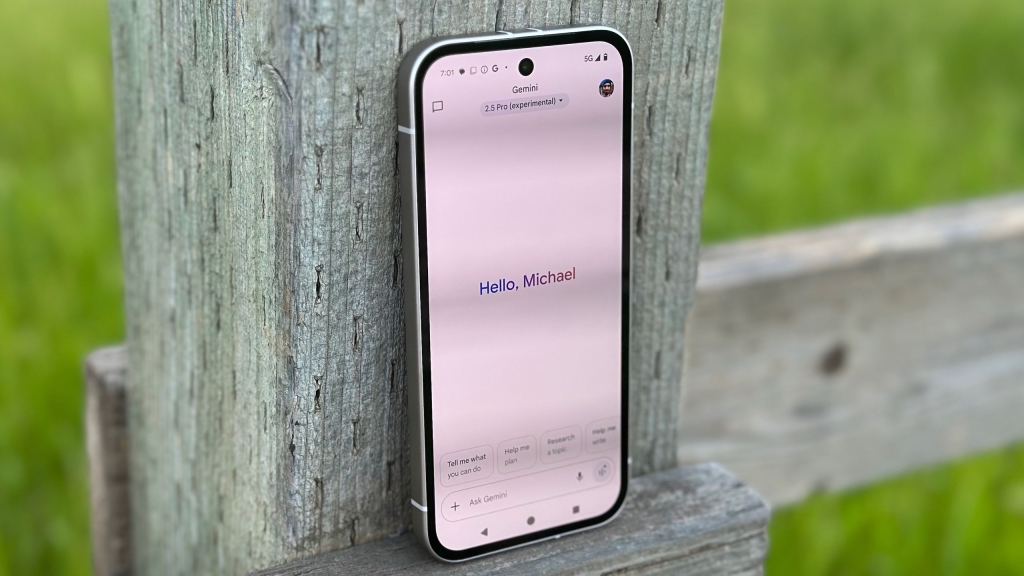
Google Is Testing a Major Gemini App Redesign That Puts Privacy at Your Fingertips
In a move that could significantly reshape how millions interact with its AI assistant, Google is reportedly testing a major redesign of the Gemini app that brings its “temporary chat” feature front and center. According to sources cited by 9to5Google, the search giant is experimenting with moving the temporary chat icon from the side menu directly onto the main Gemini app interface, positioning it right beside your account icon for one-tap access.
This subtle yet strategic change represents Google’s latest effort to make privacy-conscious AI interactions more accessible to everyday users. The temporary chat feature, which Google introduced last year, allows users to engage with Gemini without having their conversations stored or used to train the AI model—essentially providing an “incognito mode” for AI interactions.
The redesign appears to prioritize user convenience while maintaining transparency about the feature’s functionality. When activated, the temporary chat icon would shift to a pale blue background, and the standard Gemini greeting and suggestions would disappear, replaced by a clear message explaining how temporary chats work. Even the text input box would change its prompt from “Ask Gemini” to “Ask in a temporary chat,” leaving no ambiguity about which mode users are operating in.
Google’s approach to temporary chats centers on a 72-hour retention window. While conversations aren’t remembered for future reference or used to personalize the AI’s responses, the company maintains a brief holding period before permanently deleting the data. This balances user privacy concerns with potential operational needs, though Google emphasizes that the content won’t be incorporated into Gemini’s training datasets.
The timing of this test is particularly interesting given Google’s recent expansion of Personal Intelligence features to free-tier users across the United States. As AI becomes increasingly integrated into daily digital life, the company appears to be walking a fine line between leveraging user data for improved experiences and providing privacy-preserving alternatives.
Industry analysts suggest this move could indicate that temporary chats haven’t seen the adoption Google hoped for. By making the feature more prominent and easier to access, the company may be trying to encourage more privacy-conscious behavior among its user base. The comparison to Chrome’s Incognito mode is apt—both features serve users who want certain interactions to leave no lasting trace.
For power users and privacy advocates, this change could be welcome news. The ability to quickly switch to temporary chats without navigating through menus reduces friction for those who frequently use the feature. It also serves as a constant visual reminder that privacy-preserving options exist within the app.
However, some privacy experts note that the 72-hour retention period, while better than indefinite storage, still represents a window during which data could potentially be accessed through legal channels or internal processes. The effectiveness of temporary chats ultimately depends on users understanding exactly what “temporary” means in Google’s implementation.
The testing phase suggests Google is carefully measuring user response before rolling out the change more broadly. Factors like whether the new placement increases temporary chat usage, how it affects overall user engagement, and whether it creates any confusion between standard and temporary chat modes will likely influence the final decision.
This redesign also reflects a broader trend in tech toward giving users more control over their data while maintaining the convenience that makes AI assistants valuable. As competition in the AI space intensifies, features that differentiate on privacy could become increasingly important for user retention and trust.
For now, the change remains in testing, and there’s no confirmed timeline for a wider rollout. But if implemented, this small interface tweak could mark a significant step toward making privacy-preserving AI interactions the default rather than the exception for millions of Gemini users worldwide.
#Google #Gemini #AI #Privacy #TechNews #ArtificialIntelligence #GoogleUpdates #MobileApps #DataPrivacy #TechInnovation #AIRedesign #UserExperience #DigitalPrivacy #TechTrends #Android #AIAssistant #PrivacyFeatures #TechRedesign #GoogleAI #MobileTechnology
“Privacy at your fingertips” “AI incognito mode” “One-tap privacy” “Google’s privacy pivot” “AI without the memory” “Temporary chats front and center” “The future of private AI” “72-hour data window” “AI meets privacy by design” “Google’s privacy play” “Making privacy convenient” “The incognito of AI” “AI that doesn’t remember” “Privacy-conscious tech” “User data control” “AI interaction reimagined” “Digital privacy simplified” “The new normal in AI” “Tech’s privacy evolution” “AI accessibility meets privacy”,


Leave a Reply
Want to join the discussion?Feel free to contribute!