
OpenAI launches new macOS app for agentic coding
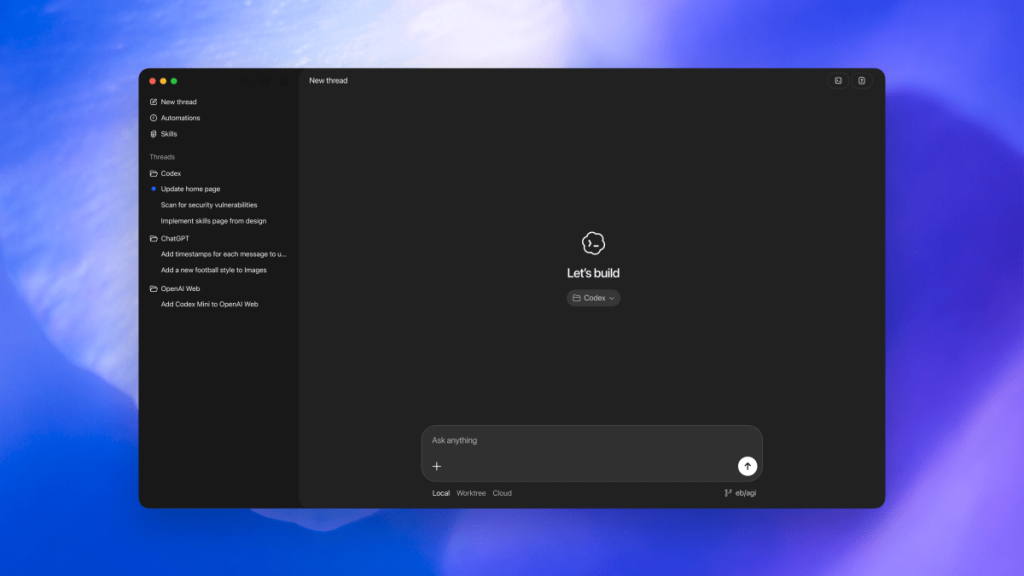
OpenAI Unleashes Codex App: The Future of AI-Powered Coding Just Got Real
In a move that’s sending shockwaves through the tech world, OpenAI has just dropped the hammer with its brand-new Codex app for macOS, and it’s not just another coding tool—it’s a full-blown revolution in how we build software. If you thought AI was already changing the game, buckle up. This is next-level stuff.
The AI Coding Arms Race Heats Up
Let’s be real: AI has already transformed software development. The days of manually typing out every single line of code are fading fast. Now, swarms of intelligent agents and subagents are doing the heavy lifting, leaving developers free to focus on the big-picture stuff. But here’s the kicker—while everyone’s been busy experimenting with new ways for humans and AI to collaborate, even the biggest AI labs have struggled to keep up.
Enter the era of agentic software development. Think of it as having a team of hyper-intelligent coding assistants that can work independently on complex tasks. Apps like Claude Code and Cowork have been leading the charge, but OpenAI hasn’t been sitting on its hands. They’ve been quietly building out Codex, first as a command-line tool last April, then expanding to a web interface a month later.
Now, they’re making their boldest move yet.
Codex App: OpenAI’s Answer to the Competition
On Monday, OpenAI launched a brand-new macOS app for Codex, and it’s packed with features that bring it up to speed—and in some cases, ahead—of the competition. This isn’t just a minor update; it’s a major leap forward in AI-powered coding.
The new Codex app is designed to work with multiple agents in parallel, integrating cutting-edge agent skills and workflows that have become the gold standard in the past year. And it’s launching hot on the heels of GPT-5.2-Codex, OpenAI’s most powerful coding model yet. The company is betting big that this combo will be enough to lure users away from Claude Code and other competitors.
Sam Altman, OpenAI’s CEO, didn’t mince words when talking about GPT-5.2: “If you really want to do sophisticated work on something complex, 5.2 is the strongest model by far.” But he also acknowledged that it’s been harder to use—until now. By putting this powerhouse model into a more flexible, user-friendly interface, OpenAI is aiming to change the game entirely.
The Numbers Game: Is GPT-5.2 Really the Best?
Here’s where things get interesting. While Altman’s confidence in GPT-5.2 is understandable, the coding benchmarks tell a more nuanced story. GPT-5.2 currently holds the top spot on TerminalBench, a test that measures how well AI handles command-line programming tasks. But agents from Gemini 3 and Claude Opus aren’t far behind—they’re within the margin of error, which means the competition is tighter than you might think.
The same goes for SWE-bench, another coding benchmark that tests AI’s ability to fix real-world software bugs. Again, no clear winner emerges. The truth is, agentic use cases are still difficult to benchmark effectively, and the user experience can vary significantly between models. So while GPT-5.2 is impressive, it’s not the undisputed king of the hill—at least not yet.
New Features That Will Blow Your Mind
But benchmarks aside, the Codex app comes loaded with features that OpenAI says will help it stand out from the crowd. Here are just a few:
-
Background Automations: Set tasks to run automatically on a schedule, with results queued up for review when you’re ready. It’s like having a coding assistant that never sleeps.
-
Customizable Agent Personalities: Want a pragmatic, no-nonsense coder? Or maybe an empathetic, collaborative partner? You can choose the personality that fits your working style.
-
Parallel Agent Workflows: Run multiple agents at once, each tackling different aspects of a project. It’s like having an entire team of specialists working for you simultaneously.
But for OpenAI, the real selling point is speed. As Altman put it: “You can use this from a clean sheet of paper, brand new, to make a really quite sophisticated piece of software in a few hours.” In other words, as fast as you can type in your ideas, that’s the limit of what can get built. It’s a bold claim, but if it holds true, it could change everything.
What This Means for Developers
For developers, the implications are massive. Imagine being able to go from a blank slate to a fully functional, sophisticated piece of software in just a few hours. That’s not just faster—it’s a complete paradigm shift. It means smaller teams can tackle bigger projects, solo developers can compete with larger studios, and innovation can happen at a pace we’ve never seen before.
But it also raises questions. Will this make human developers obsolete? Absolutely not. If anything, it frees them up to focus on the creative, strategic, and problem-solving aspects of coding—the stuff that AI still struggles with. It’s not about replacing humans; it’s about augmenting them.
The Future Is Here, and It’s AI-Powered
OpenAI’s Codex app is more than just a tool—it’s a glimpse into the future of software development. It’s a world where AI and humans work hand-in-hand, where ideas can be turned into reality at lightning speed, and where the only limit is your imagination.
So, whether you’re a seasoned developer or just someone with a great idea, the message is clear: the future is here, and it’s AI-powered. The question is, are you ready to embrace it?
Tags: OpenAI, Codex, AI coding, GPT-5.2, agentic software development, coding automation, macOS app, software development, AI agents, coding benchmarks, TerminalBench, SWE-bench, Sam Altman, Claude Code, Cowork, Gemini 3, Claude Opus, developer tools, AI revolution, coding speed, parallel agents, background automations, customizable personalities, software innovation
Viral Phrases: “The future is here, and it’s AI-powered,” “As fast as I can type in new ideas, that is the limit of what can get built,” “Swarms of intelligent agents and subagents,” “A complete paradigm shift in software development,” “The AI coding arms race heats up,” “Next-level stuff,” “Game-changer,” “Hyper-intelligent coding assistants,” “The only limit is your imagination,” “Embrace the future of coding.”
,

Leave a Reply
Want to join the discussion?Feel free to contribute!