
Opinion: Here’s what’s missing from the tax debate in Washington state
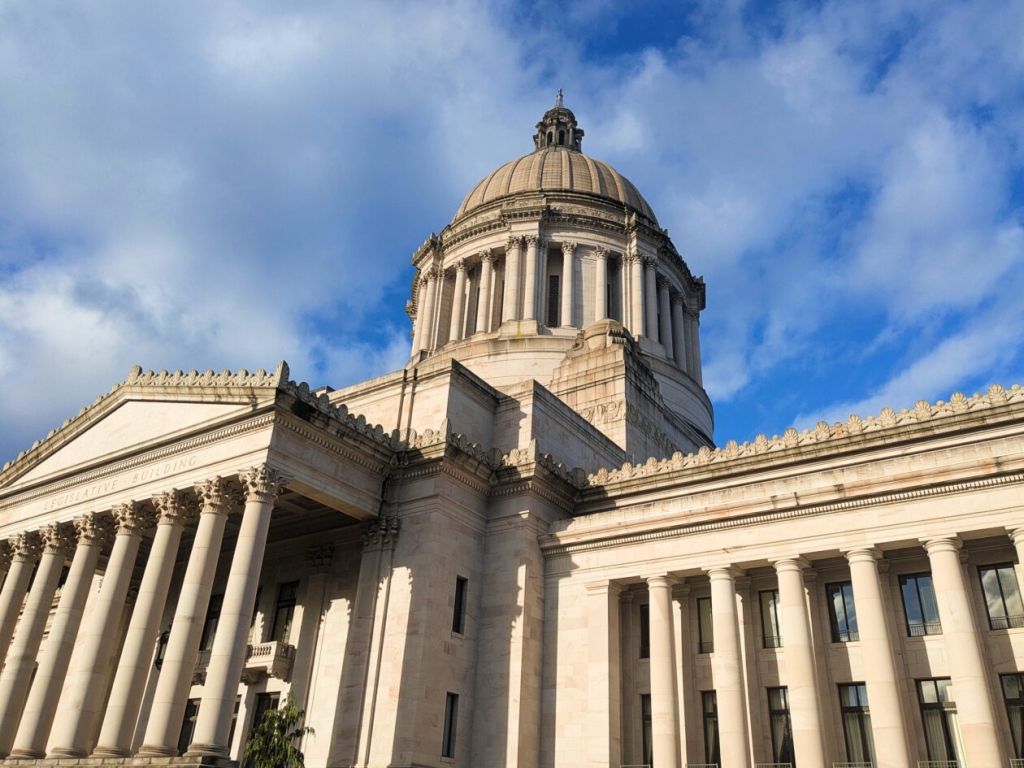
Washington’s Tax Wars: Why the State Needs a Strategy, Not Just Another Levy
Washington state finds itself once again mired in the familiar cycle of tax debates, as lawmakers grapple with rising business-and-occupation (B&O) rates, expanded payroll taxes, climbing property taxes, and the cost impacts of the Climate Commitment Act. Now, with the proposed “millionaires tax” targeting top earners, the same old questions resurface: Is it fair? Is it legal? Is it progressive enough?
But this narrow framing misses the bigger picture entirely.
The Problem With Piecemeal Tax Policy
Washington’s approach to taxation resembles a series of disconnected battles rather than a coherent strategy. Each levy—whether it’s the B&O tax, payroll taxes, or the capital gains tax—is debated in isolation, as if it exists in a vacuum. Yet for families, workers, and businesses, what matters isn’t any single tax but the total burden and how it’s structured.
The state’s heavy reliance on consumption taxes and business taxes creates a regressive system where lower- and middle-income households pay a larger share of their income compared to higher earners. Adding an income tax could address this inequity, but opponents rightly worry about the “ratchet effect”—new taxes layered atop old ones, pushing Washington toward the ranks of the highest-tax states.
Both perspectives have merit, yet the debate remains trapped in partisan skirmishes rather than addressing tax policy as an interconnected system.
The Missing Strategy
What Washington lacks is a clear vision for its tax system. State leaders offer revenue ideas but no comprehensive tax strategy. A real strategy would begin with defining an end state: What should Washington’s total tax burden be as a percentage of income? How should it compare to competitor states like California, Texas, Colorado, Oregon, and Arizona? Should Washington aim to be a low-tax, middle-of-the-pack, or high-tax state promising premium public services?
These questions remain unanswered, leaving businesses and residents in the dark about the state’s fiscal direction.
The Startup Squeeze
For small businesses and startups, the absence of a coherent tax strategy creates immediate challenges. Unlike large corporations, young companies can’t shift operations across state lines or absorb sudden cost increases. They face the full tax stack simultaneously: B&O taxes apply before profitability, payroll taxes rise with each new hire, and energy costs flow directly to margins.
The goal isn’t to avoid taxes but to operate within a predictable, intentional system. Sudden changes—like reclassifying businesses from services to retail for B&O purposes—can render viable business models unworkable overnight. Uncertainty and compliance complexity often matter as much as tax rates themselves.
Beyond Incrementalism
Washington’s current approach is reactive and incremental. When spending rises, a new tax appears. When equity concerns emerge, another layer gets added. There’s no framework tying these decisions together, only justifications for why the next increase is unavoidable.
Take the Climate Commitment Act as an example. Some analysts argue it functions as a regressive revenue mechanism because compliance costs get passed through to consumers via higher energy and transportation prices. If lawmakers are serious about addressing tax regressivity, they need to explain how the CCA’s cost impacts fit into the broader tax framework and whether adjustments are warranted.
The Path Forward
A more serious administration would approach this differently. It would publish a comprehensive tax strategy defining the desired total burden, benchmark Washington honestly against peer states, identify which taxes should expand or contract, and explain tradeoffs plainly. Such a plan wouldn’t please everyone, but it would signal competence, demonstrate leadership, and provide the predictability that voters and businesses desperately need.
There’s also a political opportunity being squandered. Comprehensive tax reform is one of the few areas where bipartisan agreement is possible. Democrats concerned about equity and Republicans focused on growth could find common ground if the goal were a coherent system rather than the next revenue “win.”
Instead, the current approach reinforces public cynicism. Each new proposal confirms suspicions that taxes rise without limit, reforms are never finished, and promises of restraint are temporary.
If Washington wants to be seen as a model of effective governance, the answer isn’t another narrow tax fight. It’s a pause, a reset, and a commitment to present a full plan worthy of public trust.
The country is tired of partisan trench warfare. One way to lower the temperature is to govern like adults: set goals, measure outcomes, and explain decisions. Washington has the resources and talent to do that. What it lacks, at least for now, is a strategy.
Tags & Viral Phrases:
Washington state taxes, millionaires tax, B&O tax, payroll taxes, property taxes, Climate Commitment Act, regressive tax system, tax strategy, small business burden, startup challenges, bipartisan tax reform, comprehensive tax plan, fiscal predictability, Washington governance, tax burden comparison, economic competitiveness, progressive taxation, tax policy framework, business compliance costs, state revenue strategy
,


Leave a Reply
Want to join the discussion?Feel free to contribute!