
Overland AI raises $100M to meet military demand for autonomous ground vehicles
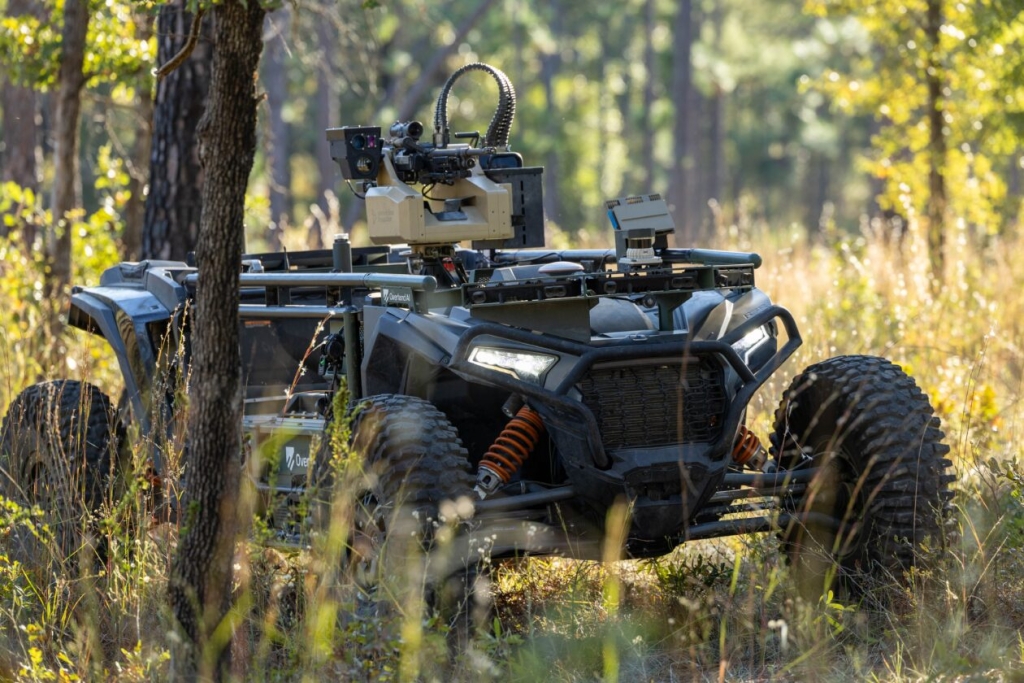
Seattle’s Overland AI Secures $100 Million to Scale Autonomous Military Vehicles and Wildfire Response Tech
In a major funding milestone that underscores the accelerating convergence of robotics, defense, and disaster response, Seattle-based startup Overland AI has raised $100 million in a Series B round led by venture capital firm 8VC. The funding—which includes participation from Point72 Ventures, Ascend, Shasta Ventures, Overmatch Ventures, Valor Equity Partners, StepStone Group, and TriplePoint Capital—comes just a year after the company’s $42 million raise and marks a pivotal leap in its mission to deploy autonomous ground vehicles for both military and civilian applications.
Founded in 2022 as a spinout from the University of Washington’s robotics program, Overland AI has evolved from a stealthy research collective into a 100-person operation that has now raised over $140 million in total funding. The company’s rise is fueled by its flagship platform, ULTRA—a fully autonomous tactical vehicle engineered for complex, off-road, and GPS-denied environments.
Military Demand Drives Rapid Growth
At the heart of Overland’s expansion is surging demand from the U.S. Department of Defense. The company has secured a $2 million contract with the U.S. Army and is working closely with elite units including the 82nd Airborne Division, 1st Cavalry Division, 173rd Airborne Brigade, 36th Engineer Brigade, and the 2nd Marine Logistics Group. Its technology enables a single human operator to remotely control multiple robotic vehicles capable of navigating treacherous terrain without GPS—critical for high-risk “breaching missions” in combat zones.
These missions often involve clearing obstacles like minefields, barbed wire, or barriers to create safe passage for troops. By deploying autonomous systems in these scenarios, Overland’s tech removes human operators from life-threatening environments while maintaining operational speed and precision.
The company’s capabilities were rigorously tested during the DARPA RACER program (Robotic Autonomy in Complex Environments with Resiliency), a three-year initiative that concluded last November. The successful completion of this program validated Overland’s ability to deliver autonomous maneuverability in environments that would challenge even the most advanced human drivers.
Beyond the Battlefield: Wildfire Response Partnership
While military contracts form the backbone of Overland’s business, the company is also making significant inroads into civilian disaster response. Last month, Overland announced a groundbreaking partnership with CAL FIRE, the California Department of Forestry and Fire Protection, to test its autonomous vehicles in wildfire scenarios.
During a demonstration at Camp Pendleton in Southern California, CAL FIRE deployed two of Overland’s self-driving all-terrain vehicles for critical resupply missions—delivering food, water, and batteries to frontline firefighting teams in areas too dangerous for human access. This marks one of the first large-scale integrations of autonomous ground vehicles into wildfire logistics, a sector ripe for disruption as climate change intensifies fire seasons across the American West.
“Overland’s technology has the potential to revolutionize how we approach wildfire response,” said a CAL FIRE spokesperson. “The ability to send autonomous vehicles into hazardous zones could save lives and improve operational efficiency.”
Scaling Production in Seattle
To meet the growing demand for its technology, Overland AI recently opened a 22,000-square-foot production facility in Seattle. This facility will serve as the manufacturing hub for ULTRA vehicles and other autonomous systems, positioning the company to scale rapidly as contracts ramp up.
The funding will also accelerate software development, expand engineering teams, and support the integration of Overland’s systems into a broader range of military and civilian platforms. According to CEO Byron Boots, a renowned robotics researcher and Amazon Professor of Machine Learning at the University of Washington’s Paul G. Allen School of Computer Science and Engineering, the capital infusion will allow Overland to “scale alongside the units adopting our technology.”
Co-founder and President Stephanie Bonk echoed this sentiment in a company press release: “Demand for ground autonomy has moved decisively from experimentation to operational integration. This funding allows us to scale alongside the units adopting our technology.”
The Visionaries Behind the Venture
Overland AI is led by a team of world-class technologists. CEO Byron Boots brings deep expertise in robot learning and machine learning, having founded the UW’s Robot Learning Laboratory. His academic credentials are matched by President Stephanie Bonk’s operational acumen, making for a leadership duo uniquely equipped to navigate both the technical and business challenges of autonomous systems.
The company’s rise has not gone unnoticed in the startup ecosystem. Overland is currently ranked No. 14 on the GeekWire 200, a ranking of top privately held startups in the Pacific Northwest, reflecting its rapid growth and industry impact.
The Future of Autonomy: Military Precision Meets Civilian Utility
Overland AI’s trajectory reflects a broader trend in the tech industry: the migration of cutting-edge robotics from research labs to real-world deployment in both defense and disaster response. As geopolitical tensions rise and climate-related disasters become more frequent, the demand for autonomous systems capable of operating in unpredictable, high-risk environments is only expected to grow.
With this latest funding round, Overland AI is not just scaling its operations—it’s positioning itself at the forefront of a new era in autonomy. Whether navigating mine-laden battlefields or delivering critical supplies through wildfire-ravaged terrain, Overland’s vehicles represent a bold vision of how technology can protect lives, enhance operational efficiency, and redefine the boundaries of what’s possible on the ground.
As the lines between military innovation and civilian application continue to blur, Overland AI stands as a compelling example of how startups can drive transformative change across sectors—ushering in a future where autonomous machines are as much a part of disaster relief as they are of defense strategy.
Tags: Overland AI, autonomous vehicles, military tech, ULTRA, DARPA RACER, Byron Boots, Stephanie Bonk, CAL FIRE, wildfire response, Seattle startup, robotics, off-road autonomy, GPS-denied navigation, defense contracting, University of Washington, 8VC, Series B funding, disaster response, breaching missions, tactical vehicles, Pacific Northwest startups
Viral Sentences:
- “Overland AI just raised $100 million to turn science fiction into battlefield reality.”
- “Self-driving ATVs are now fighting wildfires—and winning.”
- “From UW spinout to military contractor, Overland AI is the autonomous vehicle company you didn’t know you needed.”
- “DARPA-tested, wildfire-approved: Overland’s tech is redefining what robots can do on rough terrain.”
- “Seattle’s secret weapon in the autonomy arms race? A startup that builds tanks without drivers.”
- “Imagine a world where robots clear minefields and deliver water to firefighters—Overland AI is making it happen.”
- “The future of warfare and wildfire response is autonomous, and it’s driving out of Seattle.”
- “Overland AI’s ULTRA vehicle: Because sometimes, the best soldier is the one that never risks a life.”
- “From stealth mode to $100M funding, Overland AI is the robotics unicorn the military can’t ignore.”
- “GPS-denied, off-road, and unstoppable—Overland’s vehicles are built for the world’s toughest missions.”
,

Leave a Reply
Want to join the discussion?Feel free to contribute!