
Parseword: Is Wordle creator’s new game too much of a ‘chin-scratcher’ to go viral? | Quiz and trivia games
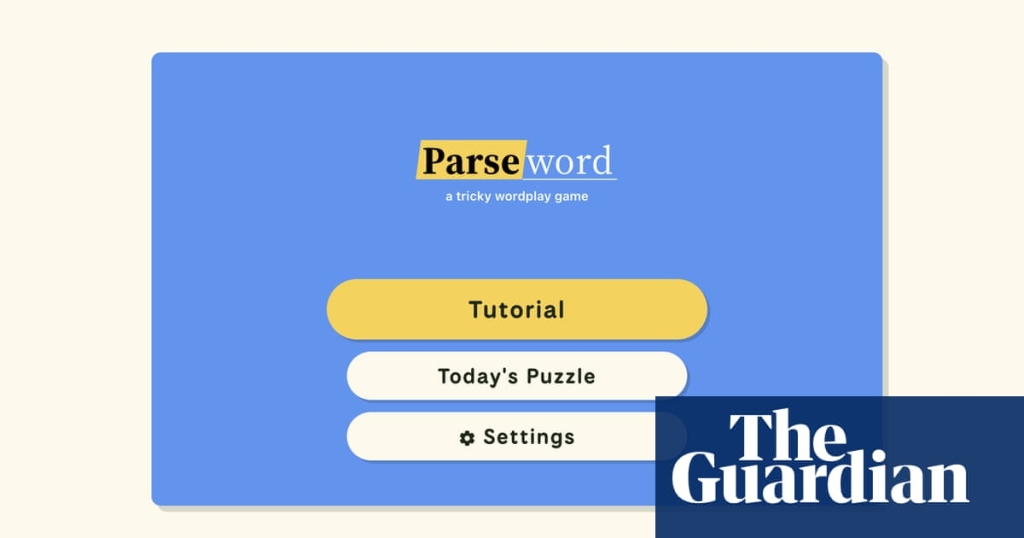
Josh Wardle, the creator of the viral sensation Wordle, is back with a fresh digital puzzle that promises to challenge even the most seasoned word game enthusiasts. His latest creation, Parseword, is a modern twist on the classic cryptic crossword—a puzzle format steeped in tradition but often seen as intimidating to newcomers. With Parseword, Wardle aims to make the intricate world of cryptic clues more accessible, offering a “gradual on-ramp” for those curious to dive into this beloved yet complex pastime.
Wordle’s meteoric rise in 2021 turned it into a global phenomenon, with millions sharing their daily grids on social media. Its simplicity—six guesses, one word—was key to its viral success. Now, Wardle is betting that there’s an appetite for something a little more sophisticated. Parseword retains the spirit of wordplay but introduces layers of complexity through synonyms, reversals, homophones, letter deletions, and hidden fragments. It’s a puzzle that rewards patience and lateral thinking, inviting players to unravel clues that are as much about language as they are about logic.
The cryptic crossword has long been a staple in British newspapers, but its appeal has been limited by its steep learning curve. Wardle acknowledges this barrier, explaining that cryptic crosswords require “an immense amount of work upfront” before a new player can even begin to solve them. With Parseword, he hopes to lower that barrier, making the beauty of cryptic puzzles accessible to a wider audience. “I’ve found that behind this complex exterior is an incredibly beautiful puzzle format,” Wardle says. “I’d love for more people to be able to experience them.”
But can Parseword replicate the viral magic of Wordle? Some experts are skeptical. Christian Donlan, features editor at Eurogamer.net, points out that the success of a game often hinges on how quickly and intuitively players can grasp its rules. “George Fan, the creator of Plants vs Zombies, says the largest number of words you can expect a player to read when it comes to instructions is eight,” Donlan notes. “Parseword not only has to explain the rich rules of Cryptics but also how it’s reworking them.” The challenge, he says, is whether the game can teach its mechanics in a way that feels instinctive rather than instructional.
There’s also the question of cultural fit. Cryptic crosswords are a British institution, but they’ve never quite caught on in the United States. Donlan wonders whether Parseword can bridge this transatlantic divide. “I guess Parseword is trying to change that—so the really interesting question is what America makes of it,” he says.
Puzzle writer and broadcaster Chris Maslanka adds another layer to the discussion. He suggests that the key to viral success in the digital age is how “convenient and natural” a game feels within its environment. Whether Parseword becomes a sensation depends on whether it builds on familiar features or introduces new tweaks that make it more “infectious” than the classic crossword.
Wardle himself is refreshingly pragmatic about the prospect of another viral hit. He admits that if his goal had been to compete with Wordle’s reach, he wouldn’t have made Parseword. “However, that was never my goal—and, to be fair, it wasn’t my goal with Wordle either,” he says. Instead, his motivation is simple: to share the joy of cryptic puzzles with as many people as possible.
As Parseword makes its debut, it poses a compelling question: Is the internet ready for a puzzle that’s a little harder? If Wordle proved that simplicity could captivate millions, Parseword is a bold experiment in whether complexity can do the same. Whether it becomes the next viral sensation or a niche favorite, one thing is certain—Wardle’s latest creation is a testament to the enduring appeal of wordplay and the endless possibilities of digital puzzles.
#crypticcrossword #wordgames #parseword #joshwardle #puzzles #wordle #gaming #viral #digitalpuzzles #wordplay #brain Teasers #onlinegames #puzzlelovers #crypticclues #wordnerd #gamification #techinnovation #culturalphenomenon #puzzlecommunity #digitaltransformation
“Wordle turned a simple guessing game into a global morning ritual.”
“Parseword is a real chin-scratcher.”
“Cryptic crosswords have been around for a long time but they require an immense amount of work upfront.”
“Behind this complex exterior is an incredibly beautiful puzzle format.”
“Whether Parseword is a viral sensation depends on whether it further facilitates old features or adds new tweaks.”
“The largest number of words you can expect a player to read when it comes to instructions is eight.”
“What makes a new game go viral is how convenient and natural it is in a digital environment.”
“If Wordle proved that a simple puzzle could captivate millions, Parseword poses a different question: whether the internet is ready for something a little harder.”
“I simply think Cryptics are an amazing puzzle format and I’d love it if more people had the chance to experience them.”
“The really interesting question is what America makes of it.”
“Parseword is a digital take on the cryptic crossword.”
“Cryptic crosswords have long been beloved by a dedicated minority—and baffling to almost everyone else.”
“Parseword is a modern twist on the classic cryptic crossword.”
“Whether lowering that barrier to entry will translate into the same kind of viral success as Wordle is another question.”
“Parseword is a bold experiment in whether complexity can do the same.”
“The challenge is whether the game can teach its mechanics in a way that feels instinctive rather than instructional.”
“Parseword’s debut is a testament to the enduring appeal of wordplay and the endless possibilities of digital puzzles.”,
Leave a Reply
Want to join the discussion?Feel free to contribute!