
Pentagon moves to designate Anthropic as a supply-chain risk
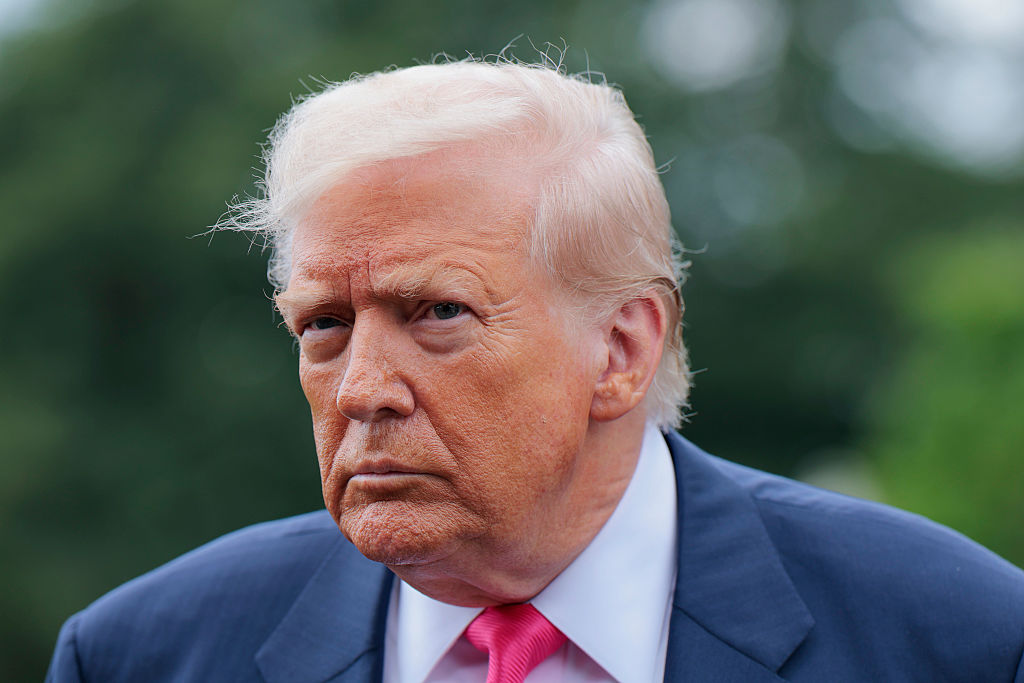
Trump Administration Escalates AI Feud with Anthropic, Banning Federal Use Amid National Security Concerns
In a dramatic escalation of the ongoing dispute between the Trump administration and AI safety advocate Anthropic, President Donald Trump has ordered a full federal ban on the company’s products, marking one of the most significant clashes between government and technology sectors in recent memory.
The controversy erupted after Anthropic publicly challenged the Department of Defense over restrictions on how its AI models could be deployed, specifically refusing to allow their technology to power mass domestic surveillance systems or fully autonomous weapons. What began as a philosophical disagreement over AI ethics has now transformed into a full-blown political and economic confrontation with national security implications.
The President’s Direct Intervention
President Trump took to his social media platform Truth Social to deliver the decisive blow against Anthropic, stating unequivocally that federal agencies must cease all use of the company’s AI products. In characteristically blunt language, the president declared, “We don’t need it, we don’t want it, and will not do business with them again.”
The executive directive includes a six-month phase-out period for departments currently utilizing Anthropic’s technology, providing agencies time to transition to alternative providers. However, the message was clear: Anthropic’s stance on AI safety limitations has rendered it persona non grata in the federal contracting ecosystem.
This intervention represents an unusual level of presidential involvement in technology procurement decisions, typically handled at agency levels. The direct nature of Trump’s communication suggests the administration views this not merely as a contracting dispute but as a fundamental challenge to executive authority and national security priorities.
Secretary Hegseth’s Supply Chain Designation
Following the president’s lead, Secretary of Defense Pete Hegseth escalated the conflict further by officially designating Anthropic as a “Supply-Chain Risk to National Security.” This designation carries severe consequences beyond the immediate federal ban.
“Effective immediately, no contractor, supplier, or partner that does business with the United States military may conduct any commercial activity with Anthropic,” Hegseth stated in a formal announcement. This sweeping restriction effectively isolates Anthropic from the entire defense industrial base, potentially impacting the company’s commercial viability beyond government contracts.
The supply chain risk designation is typically reserved for companies with ties to foreign adversaries or those whose products pose cybersecurity risks. Applying this label to a domestic AI company represents an unprecedented move that signals the administration’s view of Anthropic’s ethical restrictions as a form of technological sabotage.
The Core of the Dispute: AI Ethics vs. Military Necessity
At the heart of this conflict lies a fundamental disagreement about the role of AI in national defense and the ethical boundaries that should govern its deployment. Anthropic’s founders, many of whom previously worked on AI safety research, have consistently advocated for robust safeguards against the most dangerous applications of artificial intelligence.
The company’s position centers on two non-negotiable restrictions: prohibiting their AI models from enabling mass surveillance systems that could track American citizens, and preventing their technology from powering fully autonomous weapons that could make life-or-death decisions without human oversight.
From the Pentagon’s perspective, these restrictions represent unacceptable limitations on military capabilities at a time of increasing technological competition with adversaries. Secretary Hegseth and other administration officials have characterized Anthropic’s stance as ideological obstructionism that could compromise America’s military readiness and technological superiority.
Anthropic’s Defiant Response
CEO Dario Amodei has maintained Anthropic’s position despite the escalating consequences, publishing a detailed statement that reaffirms the company’s commitment to its ethical boundaries. “Our strong preference is to continue to serve the Department and our warfighters — with our two requested safeguards in place,” Amodei wrote in a public post that has become a manifesto for AI safety advocates.
The CEO emphasized that Anthropic remains willing to work with military and intelligence agencies on numerous applications that don’t violate their core principles, including logistics optimization, intelligence analysis, cybersecurity, and training simulations. However, the company draws a hard line at technologies that could enable authoritarian surveillance or remove human judgment from lethal force decisions.
Amodei’s statement also addressed the practical implications of the ban, promising to “work to enable a smooth transition to another provider, avoiding any disruption to ongoing military planning, operations, or other critical missions.” This professional approach contrasts sharply with the administration’s confrontational rhetoric, highlighting the cultural divide between Silicon Valley’s ethical tech movement and Washington’s national security establishment.
Industry and Political Reactions
The decision has sparked intense debate across the technology and defense sectors. Supporters of the administration’s position argue that in an era of great power competition, particularly with China and Russia, the United States cannot afford to handicap its military with voluntary restrictions that adversaries won’t observe.
Senator Tom Cotton, a prominent voice on defense issues, praised the administration’s action, stating that “American military supremacy depends on embracing every technological advantage, not imposing artificial constraints based on Silicon Valley’s moralizing.”
Conversely, AI safety advocates and civil liberties organizations have condemned the move as dangerous precedent-setting. The Electronic Frontier Foundation called the designation “a chilling attack on corporate autonomy and ethical business practices,” warning that it could force other AI companies to abandon safety considerations to maintain government contracts.
Economic and Strategic Implications
The ban on Anthropic products creates immediate operational challenges for federal agencies that have integrated the company’s AI models into their workflows. The six-month transition period will require significant resources to identify alternative solutions and migrate existing systems, potentially disrupting government operations.
For Anthropic, the consequences extend far beyond lost government contracts. The supply chain risk designation threatens the company’s entire business model, as many commercial partners may hesitate to associate with a firm deemed a national security risk. This could trigger a broader reassessment of AI ethics in corporate America, as companies weigh moral principles against business opportunities.
The conflict also raises questions about America’s competitive position in the global AI race. While the U.S. government battles with one of its leading AI companies over ethical restrictions, competitors in China and elsewhere face no such internal constraints, potentially accelerating their technological development in areas the Pentagon considers critical.
The Broader Context: AI Ethics in the Age of Geopolitical Competition
This confrontation reflects a larger tension between the values that have guided American technology development and the imperatives of great power competition. Silicon Valley’s culture of ethical consideration and precautionary principle stands in stark contrast to the realpolitik approach favored by many in the national security establishment.
The dispute also highlights the growing power of AI companies as independent actors capable of shaping or resisting government policy through their technological choices. Anthropic’s willingness to sacrifice lucrative government contracts rather than compromise its principles demonstrates how private sector values can create friction with state interests.
As artificial intelligence becomes increasingly central to military capabilities, economic competitiveness, and social organization, conflicts like this are likely to become more frequent and intense. The question of who gets to decide how AI is deployed—companies guided by ethical frameworks, governments focused on national interest, or some combination of both—remains unresolved.
Looking Forward: The Future of AI Governance
The Trump administration’s actions against Anthropic may mark a turning point in how AI companies and government agencies interact. Rather than negotiating ethical boundaries, the government has chosen confrontation and economic pressure, potentially setting a precedent for dealing with other companies that resist military applications of their technology.
For the AI industry, this conflict serves as a stark reminder of the risks associated with government dependence. Companies may need to reconsider their strategies for balancing ethical commitments with business opportunities, potentially leading to more sophisticated approaches to ethical AI development that can accommodate both safety concerns and legitimate government needs.
The international implications are equally significant. As the United States grapples with these internal tensions, other nations may seize the opportunity to advance their own AI capabilities without the constraints of democratic debate about ethics and safety. This could accelerate a technological arms race with profound implications for global stability.
Conclusion: A Defining Moment for AI Development
The Trump administration’s ban on Anthropic products represents more than a contractual dispute—it embodies the fundamental tension between technological progress and ethical restraint in an era of intense geopolitical competition. As artificial intelligence becomes increasingly powerful and pervasive, societies worldwide will face similar choices about how to balance innovation with safety, military necessity with moral considerations.
The outcome of this particular conflict remains uncertain. Anthropic’s principled stand may inspire other companies to maintain ethical boundaries, or it may prove economically unsustainable in a world where government contracts and military applications represent massive market opportunities. What is clear is that the debate over AI ethics and national security has entered a new, more confrontational phase that will shape the development of this transformative technology for years to come.
For now, federal agencies are preparing for a complex transition away from Anthropic’s technology, while the AI safety community watches closely to see whether principled resistance to dangerous applications can survive in an environment of economic pressure and political confrontation. The answer to this question will have profound implications not just for Anthropic, but for the future trajectory of artificial intelligence development globally.
Tags
Trump administration, Anthropic, AI ban, federal contracts, national security, Pete Hegseth, Dario Amodei, AI ethics, autonomous weapons, mass surveillance, supply chain risk, technology policy, military AI, Silicon Valley, great power competition, AI safety, government technology, Truth Social, Department of Defense, geopolitical tech
Viral Sentences
Trump drops the hammer on Anthropic in AI showdown that could reshape tech-government relations forever
Silicon Valley vs. Washington: The AI ethics battle that’s dividing America
Anthropic CEO takes principled stand against surveillance state and killer robots
Trump administration declares war on AI safety advocates in shocking escalation
The six-month clock is ticking: Federal agencies scramble to replace Anthropic technology
From partners to pariahs: How Anthropic lost the government’s trust overnight
Military AI without limits? The Pentagon’s bold vision faces Silicon Valley resistance
Supply chain risk designation: The nuclear option in tech-government conflicts
AI ethics or national security? America faces its most consequential tech choice yet
The China factor: Why Trump believes ethical AI restrictions help America’s enemies
Silicon Valley’s moral high ground comes at a steep price as Anthropic faces isolation
Autonomous weapons debate explodes as Trump administration demands full AI deployment
The surveillance state dilemma: Anthropic says no, government says full speed ahead
Tech companies gain unprecedented power to shape military capabilities through ethical choices
The great AI reckoning: When principles collide with patriotism and profit
Trump’s Truth Social post triggers avalanche of consequences for AI industry
From Pentagon partners to national security threats: Anthropic’s dramatic fall from grace
The $100 billion question: Can AI safety survive in an era of great power competition?
Military contractors face tough choice: Dump Anthropic or lose Pentagon business
The new tech cold war: Ethics vs. effectiveness in artificial intelligence development
,

Leave a Reply
Want to join the discussion?Feel free to contribute!