
Pentagon Reportedly Hopping Mad at Anthropic for Not Blindly Supporting Everything Military Does
Anthropic’s AI Dilemma: Pentagon Tensions Over Military Use of Claude Spark Ethical Debate
In a surprising twist within the high-stakes world of artificial intelligence, Anthropic—the company behind the widely-used Claude AI models—finds itself at the center of a brewing conflict with the U.S. Department of Defense. According to an anonymously sourced report by Axios, Pentagon officials are reportedly threatening to discontinue the use of Anthropic’s AI tools, citing the company’s “insistence on maintaining some limitations on how the military uses its models.”
The friction underscores a broader tension between Silicon Valley’s AI labs and the defense establishment, raising questions about the ethical boundaries of AI deployment in national security. Anthropic, founded by former OpenAI researchers and known for its cautious approach to AI safety, has long positioned itself as a responsible steward of powerful technologies. Yet, its stance on limiting military applications has reportedly frustrated Pentagon officials, who view the company as the most “ideological” among AI vendors they engage with.
The controversy comes at a time when Anthropic’s influence is surging. The company’s Claude AI and its coding assistant, Claude Code, have become integral tools for developers and enterprises alike. Wall Street has taken notice, with stock prices of companies in sectors threatened by AI automation often dipping following Anthropic’s product updates. This pattern has fueled speculation that Anthropic is not just a tech company but a potential disruptor poised to reshape entire industries.
Despite its commercial success, Anthropic has maintained a cautious public posture regarding military applications of its technology. Last year, the company announced a $200 million contract with the Pentagon, framing it as “a new chapter in Anthropic’s commitment to supporting U.S. national security.” However, internal policies reportedly restrict the use of its models for fully autonomous weapons and mass domestic surveillance—two areas of particular concern for the company’s leadership.
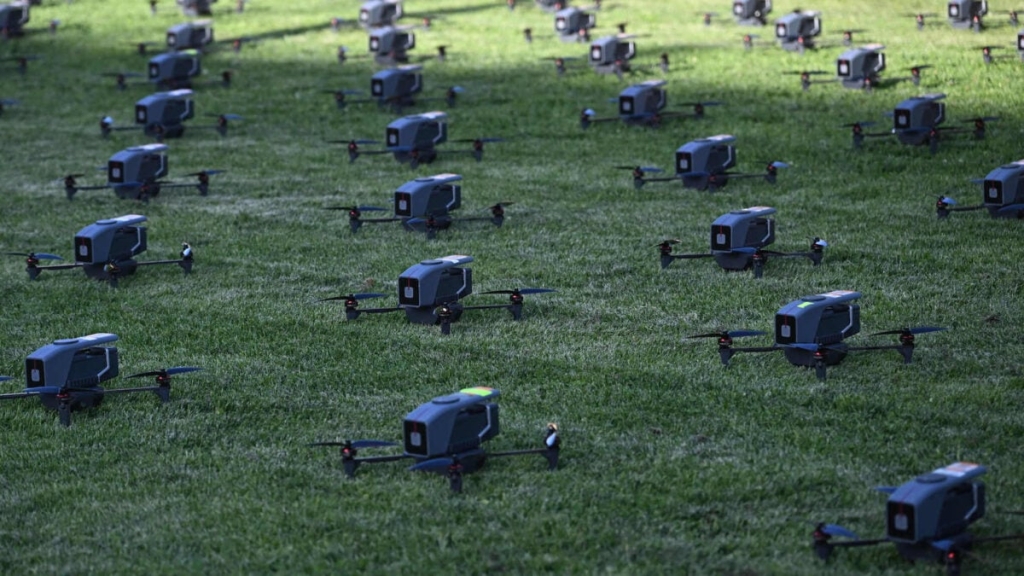
Anthropic CEO Dario Amodei has been vocal about these concerns. In a recent appearance on The New York Times’ Interesting Times podcast, Amodei warned about the dangers of autonomous drone swarms and the erosion of constitutional protections in a world where AI systems could execute military orders without human oversight. “The constitutional protections in our military structures depend on the idea that there are humans who would—we hope—disobey illegal orders,” Amodei said. “With fully autonomous weapons, we don’t necessarily have those protections.”
Amodei also highlighted the risks of AI-enabled mass surveillance. “It is not illegal to put cameras around everywhere in public space and record every conversation,” he noted. “But today, the government couldn’t record that all and make sense of it. With AI, the ability to transcribe speech, to look through it, correlate it all, you could say: This person is a member of the opposition.”
These concerns are not new. In a widely discussed essay titled “The Adolescence of Technology,” Amodei argued that humanity may not yet be mature enough to handle the power of advanced AI. The essay, along with his podcast remarks, has sparked intense debate about the role of AI in society and the responsibilities of its creators.
The Axios report adds another layer of intrigue, suggesting that the Pentagon’s frustrations may stem from a specific incident. According to the report, Anthropic allegedly sought information from Palantir about whether its technology was used in the January 3 U.S. attack on Venezuela. While Anthropic denies expressing concerns about “current operations,” Pentagon officials claim the inquiry was framed in a way that implied disapproval of the company’s software being used in kinetic military actions.
The situation highlights the complex dynamics at play as AI companies navigate the demands of government contracts while adhering to their ethical principles. For Anthropic, the stakes are particularly high. The company’s models are reportedly considered the most advanced among its peers, making its potential withdrawal from military projects a significant blow to the Pentagon’s AI ambitions.
As the debate unfolds, it raises fundamental questions about the future of AI in defense and the balance between innovation, security, and ethics. Will Anthropic’s cautious approach prevail, or will the Pentagon seek alternatives that align more closely with its operational needs? And more broadly, how will society grapple with the immense power of AI as it becomes increasingly integrated into critical systems?
One thing is clear: the clash between Anthropic and the Pentagon is more than a contractual dispute—it’s a microcosm of the broader struggle to define the role of AI in shaping the future of humanity.
Tags: Anthropic, Claude AI, Pentagon, AI ethics, autonomous weapons, mass surveillance, Dario Amodei, national security, AI safety, technology ethics, U.S. Department of Defense, AI regulation, Silicon Valley, Wall Street, AI disruption, military AI, ethical AI, AI governance, AI and democracy, AI and privacy, AI and surveillance, AI and warfare, AI and society, AI and humanity, AI and the future.
Viral Sentences:
- “Anthropic’s AI tools are too ethical for the Pentagon’s taste.”
- “The future of AI in defense hangs in the balance as Anthropic refuses to compromise on ethics.”
- “Dario Amodei warns: Autonomous weapons could erode constitutional protections.”
- “AI-powered surveillance could turn public spaces into tools of oppression.”
- “Anthropic’s Claude models are the gold standard—but at what cost?”
- “The clash between Silicon Valley and the Pentagon is just beginning.”
- “Humanity may not be ready for the power of advanced AI, says Anthropic’s CEO.”
- “Wall Street trembles as Anthropic’s tools threaten to disrupt entire industries.”
- “The ethical AI debate just got a whole lot more intense.”
- “Anthropic’s $200 million Pentagon contract is on the line—and so is the future of AI in defense.”
,


Leave a Reply
Want to join the discussion?Feel free to contribute!