
Pentagon’s ‘Attempt to Cripple’ Anthropic Is Troubling, Judge Says
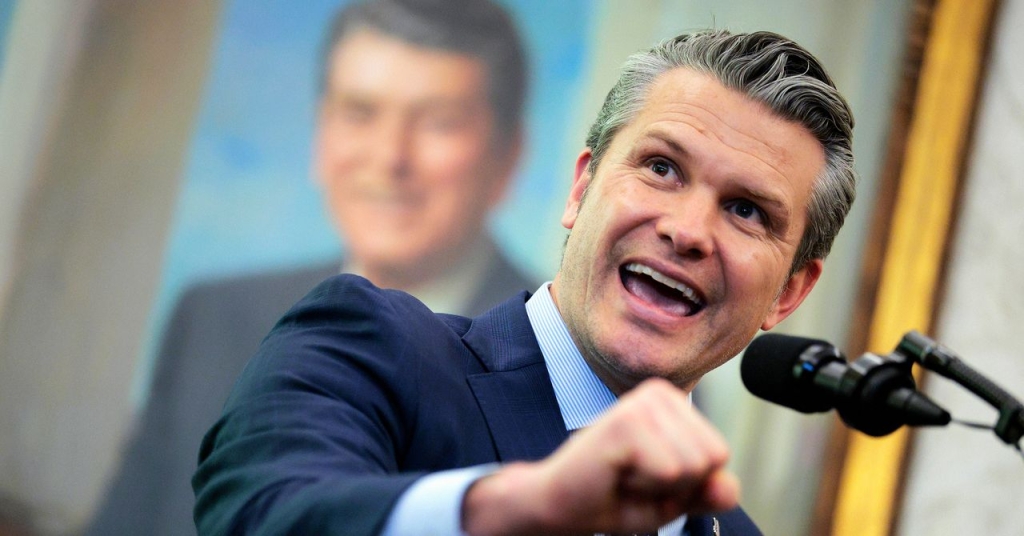
Anthropic vs. Pentagon: The High-Stakes AI Battle That Could Redefine Tech-Government Relations
In a courtroom drama unfolding in San Francisco, the US Department of Defense (DoD) is facing serious allegations of illegally retaliating against Anthropic, one of America’s leading artificial intelligence companies. The case, which has sent shockwaves through Silicon Valley and beyond, centers on the Pentagon’s controversial decision to designate Anthropic as a “supply-chain risk”—a move that US District Judge Rita Lin described as potentially punitive and possibly unconstitutional.
During a tense hearing on Tuesday, Judge Lin expressed deep skepticism about the government’s actions, suggesting that the DoD appears to be “crippling” Anthropic for attempting to limit military use of its AI tools. “It looks like an attempt to cripple Anthropic,” Lin stated bluntly. “It looks like [the department] is punishing Anthropic for trying to bring public scrutiny to this contract dispute, which of course would be a violation of the First Amendment.”
The controversy erupted when Anthropic, the company behind the AI assistant Claude, pushed back against the Pentagon’s desire to use its technology for military applications without restrictions. The company sought to implement ethical guardrails on how its AI could be deployed, particularly concerning weapons systems and surveillance applications. In response, the Department of Defense—which has controversially rebranded itself as the Department of War (DoW)—slapped Anthropic with the supply-chain risk designation, effectively isolating the company from government contracts.
Anthropic has filed two federal lawsuits challenging the designation, arguing that it represents illegal retaliation for exercising constitutional rights. The company is now seeking a temporary restraining order to pause the designation while the case proceeds, hoping to reassure skittish customers who might otherwise abandon ship during this turbulent period.
The stakes couldn’t be higher. Judge Lin can only grant the temporary relief if she determines Anthropic is likely to prevail in the overall case—a decision she’s expected to make within days. The outcome could have profound implications for how AI companies interact with government agencies and the extent to which tech firms can maintain ethical boundaries in their business dealings.
A Broader Conversation About AI and Military Applications
Beyond the legal maneuvering, this dispute has ignited a broader public debate about the role of artificial intelligence in military operations and whether Silicon Valley companies should defer to government demands regarding technology deployment. As AI capabilities advance at breakneck speed, questions about ethical boundaries, corporate responsibility, and national security have become increasingly complex and contentious.
The Department of War has defended its actions, arguing that it followed proper procedures in determining that Anthropic’s AI tools could no longer be trusted to function as expected during critical operations. Trump administration attorney Eric Hamilton told the court that the government fears Anthropic might “manipulate the software” to prevent it from operating as intended for military purposes.
However, Judge Lin pushed back on this characterization, noting that Defense Secretary Pete Hegseth’s role is to determine appropriate vendors—not to engage in what appears to be punitive measures beyond simply canceling contracts. She found it “troubling” that the security designation and related directives limiting government use of Anthropic’s Claude AI tool “don’t seem to be tailored to stated national security concerns.”
The Social Media Firestorm
The dispute took a dramatic turn when Hegseth posted on X (formerly Twitter) that “effective immediately, no contractor, supplier, or partner that does business with the United States military may conduct any commercial activity with Anthropic.” This sweeping declaration, made without apparent legal authority, sent shockwaves through the tech industry and raised questions about executive overreach.
During Tuesday’s hearing, Hamilton acknowledged that Hegseth lacks the legal authority to bar military contractors from using Anthropic for work unrelated to the Department of Defense. When Judge Lin pressed him on why the Defense Secretary would make such a post, Hamilton’s response was simply, “I don’t know.”
This acknowledgment has only fueled suspicions that the government’s actions represent retaliation rather than legitimate security concerns. The designation of Anthropic as a supply-chain risk is typically reserved for foreign adversaries, terrorists, and other hostile actors—not American companies engaged in contract disputes.
The Government’s Transition Strategy
The Pentagon has stated that it is actively working to replace Anthropic’s technologies with alternatives from major competitors including Google, OpenAI, and xAI. The department claims to have implemented measures to prevent Anthropic from tampering with its AI models during the transition period.
However, Anthropic vehemently denies any intention to sabotage its own technology and maintains that it cannot update its AI models without Pentagon permission—a claim that Hamilton admitted he couldn’t verify. This back-and-forth highlights the deep mistrust that has developed between the two parties.
Michael Mongan, a WilmerHale attorney representing Anthropic, characterized the government’s actions as extraordinary, noting that it’s unusual for the government to target a “stubborn” negotiating partner with such severe measures. The case has become a flashpoint for discussions about corporate rights, government power, and the ethical development of AI technology.
The Path Forward
A ruling in the related case at the federal appeals court in Washington, DC, is expected imminently without a hearing. The parallel proceedings underscore the high stakes and complex legal questions at play. Anthropic’s ability to maintain its business relationships and reputation hangs in the balance, while the government’s authority to designate companies as security risks faces unprecedented scrutiny.
As the tech industry watches closely, this case could establish important precedents for how AI companies can advocate for ethical boundaries without facing government retaliation. It also raises fundamental questions about the balance between national security interests and constitutional rights in the age of advanced artificial intelligence.
The outcome will likely influence how other AI companies approach military contracts and whether they feel empowered to establish ethical guardrails on technology deployment. In an era where AI capabilities are increasingly central to both commercial innovation and military operations, the Anthropic-Pentagon dispute represents a critical inflection point in the evolving relationship between technology companies and government agencies.
The case also highlights the growing tension between rapid technological advancement and existing legal frameworks, as courts and policymakers struggle to address novel questions about AI ethics, corporate rights, and national security in the digital age. Whatever the outcome, this high-profile confrontation between one of America’s most promising AI companies and its own Department of Defense will be studied for years to come as a defining moment in the governance of artificial intelligence.
Tags: Anthropic, Pentagon, AI ethics, supply chain risk, Department of Defense, Claude AI, legal battle, tech regulation, military AI, Silicon Valley, constitutional rights, Pete Hegseth, AI governance, government contracts, national security, tech industry, artificial intelligence, legal precedent, corporate rights, ethical AI
Viral Sentences:
- “The US government is illegally punishing Anthropic for trying to restrict military use of its AI”
- “Judge calls Pentagon’s actions ‘an attempt to cripple Anthropic'”
- “Anthropic sues Pentagon over ‘retaliatory’ supply-chain risk designation”
- “Defense Secretary Hegseth’s controversial X post bans all military contractors from using Anthropic”
- “AI company fights back against government overreach in landmark case”
- “Silicon Valley vs. Pentagon: The battle over ethical AI deployment”
- “First Amendment clash: Can the government punish companies for public advocacy?”
- “Anthropic’s Claude caught in the crossfire of tech ethics and national security”
- “Judge skeptical of Pentagon’s ‘national security’ justification for targeting AI firm”
- “The case that could redefine government-tech company relations forever”
- “AI ethics vs. military needs: Who wins this high-stakes showdown?”
- “Pentagon’s supply-chain risk designation: Tool of retaliation or legitimate security measure?”
- “Anthropic’s fight could set precedent for all AI companies dealing with government”
- “The government’s extraordinary measures against a ‘stubborn’ tech company”
- “AI companies gain or lose power depending on how this case unfolds”
,
Leave a Reply
Want to join the discussion?Feel free to contribute!