
Pete Hegseth wants unfettered access to Anthropic’s models for the military
Pentagon Pressures Anthropic to Relax AI Restrictions Amid National Security Push
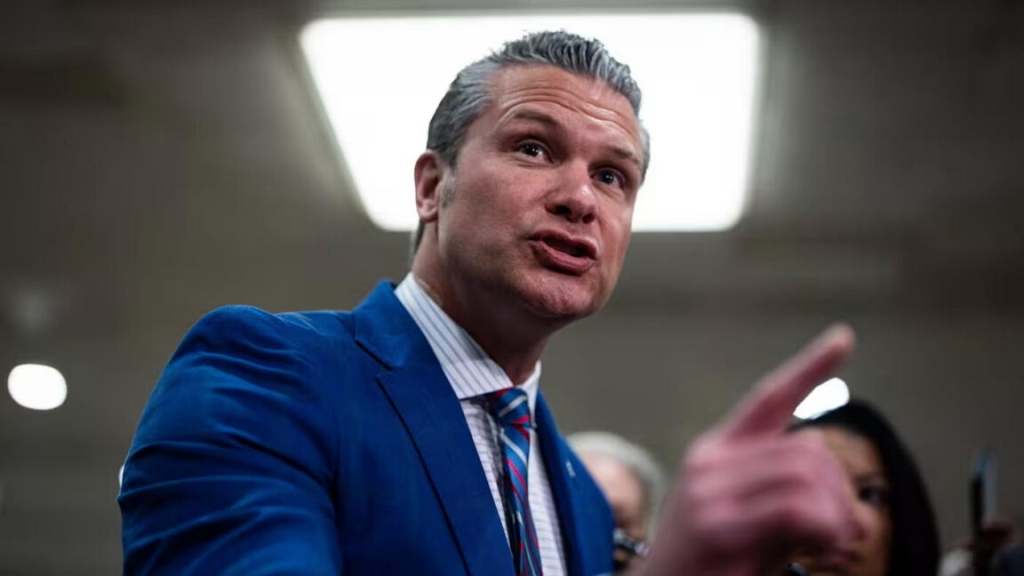
In a high-stakes confrontation at the Pentagon this week, Defense Secretary Pete Hegseth reportedly pressed Anthropic CEO Dario Amodei to lift the AI safety firm’s voluntary restrictions on military and intelligence applications of its models. The meeting, described by insiders as tense, marks a pivotal moment in the accelerating integration of artificial intelligence into U.S. defense operations.
The Trump administration has invoked the Defense Production Act (DPA)—a Cold War-era law granting sweeping powers to mobilize resources for national defense—to fast-track AI adoption across the military. Originally used to combat medical supply shortages during the COVID-19 pandemic, the DPA is now being leveraged to expand domestic production of critical minerals and, more recently, to accelerate the Pentagon’s AI capabilities.
According to a memo released last month by Hegseth, the Defense Department views AI as a transformative force that will “redefine the character of military affairs over the next decade.” The strategy emphasizes outpacing adversaries like China and Russia by embedding AI into everything from battlefield logistics to autonomous weapons systems. “We must build on our lead,” Hegseth wrote, “to make soldiers more lethal and efficient.”
Anthropic, founded by former OpenAI researchers and backed by Alphabet and Amazon, has long positioned itself as a safety-conscious alternative in the AI race. Its flagship model, Claude, comes with built-in safeguards designed to prevent misuse in high-stakes scenarios—particularly those involving lethal force or mass surveillance. The company has argued that current AI systems are not reliable enough to operate without human oversight in life-or-death situations.
However, Pentagon officials see these safeguards as obstacles. Sources familiar with the negotiations say Anthropic has expressed “particular concern” about its models being used in lethal operations without a human in the loop. The company has also sought to establish new ethical guidelines for AI use in domestic surveillance, even in cases where such use might be legally permissible.
The stakes are enormous. Anthropic holds a $200 million contract with the Department of Defense, and its models are integrated into platforms used by defense contractors like Palantir. A decision to cut Anthropic from the Pentagon’s AI supply chain would not only disrupt national security operations but also deal a significant financial and reputational blow to the company.
One high-profile example of Anthropic’s involvement in defense operations came in January, when Claude was reportedly used in the U.S. capture of Venezuelan leader Nicolás Maduro. The mission reportedly raised internal questions at Anthropic about the exact nature of the model’s deployment, though the company has not publicly commented on the operation.
During Tuesday’s meeting, Amodei reportedly emphasized that Anthropic has never objected to “legitimate military operations.” Still, the company’s stance on limiting autonomous lethal use and unregulated surveillance appears to be a sticking point for the Pentagon, which is pushing for more flexible and expansive AI deployment.
The Defense Department declined to comment on the specifics of the meeting, but the broader context is clear: the U.S. military is in a race to dominate the next frontier of warfare, and AI is at the center of that strategy. With private-sector innovation accelerating and geopolitical tensions rising, the pressure to deploy cutting-edge technology—regardless of ethical caveats—is mounting.
As the debate over AI safety versus military necessity intensifies, Anthropic finds itself at a crossroads. Will it bend to Pentagon demands and relax its safeguards, or will it hold the line on ethical AI use, potentially at the cost of its government contracts and influence in the defense sector?
The outcome of this standoff could shape not only the future of U.S. military operations but also the global trajectory of artificial intelligence development. In an era where speed and scale often trump caution, the question remains: how much control are we willing to cede to machines—and who gets to decide?
Tags: Pentagon, Anthropic, AI safety, Defense Production Act, national security, military AI, Claude, Dario Amodei, Pete Hegseth, lethal autonomy, surveillance, Palantir, critical minerals, geopolitical competition, ethical AI, U.S. defense strategy
Viral Sentences:
- “AI-enabled warfare will redefine the character of military affairs over the next decade.”
- “The U.S. military must build on its lead to make soldiers more lethal and efficient.”
- “Anthropic’s safeguards are seen as obstacles by the Pentagon in the race for AI dominance.”
- “A $200 million contract hangs in the balance as the Defense Department pressures Anthropic to relax its AI restrictions.”
- “The outcome of this standoff could shape the future of U.S. military operations and global AI development.”
,

Leave a Reply
Want to join the discussion?Feel free to contribute!