
Physicists warn of ‘catastrophic’ impact from UK science cuts
UK Physics Research Faces “Catastrophic” Cuts: International Collaborations and Future Generations at Risk
In a move that has sent shockwaves through the global scientific community, the United Kingdom’s physics research sector is bracing for what experts are calling a “devastating blow” following unprecedented budget cuts announced by UK Research and Innovation (UKRI). The cuts, which could see some research groups lose up to 60% of their funding, threaten to derail decades of scientific progress and damage the UK’s reputation as a leader in fundamental physics research.
The scale of the cuts is staggering. While UKRI claims its overall budget of £38.6 billion over the next four years represents a slight increase, this figure doesn’t account for inflation. More concerning is the disproportionate impact on physics research, with the Science and Technology Facilities Council (STFC) facing cuts of approximately £162 million. This body, which funds particle physics, nuclear physics, and astronomy research, also manages the UK’s contributions to major international projects like CERN and the European Space Agency.
The Human Cost of Budget Cuts
Perhaps the most alarming aspect of these cuts is their potential to decimate an entire generation of young researchers. John Ellis, a theoretical physicist at King’s College London, warns that the loss of postdoctoral and junior researcher positions could have long-lasting consequences for UK science. “What you risk doing is cutting a whole generation of our young researchers off at the knees,” Ellis explains. “It’s not going to be a minor effect.”
This sentiment is echoed by Jim Al-Khalili, a prominent physicist at the University of Surrey, who describes the proposed cuts as “catastrophic” for the physics community. The impact extends beyond pure research, potentially affecting the UK’s ability to maintain expertise in critical areas such as nuclear industry operations.
International Collaboration Under Threat
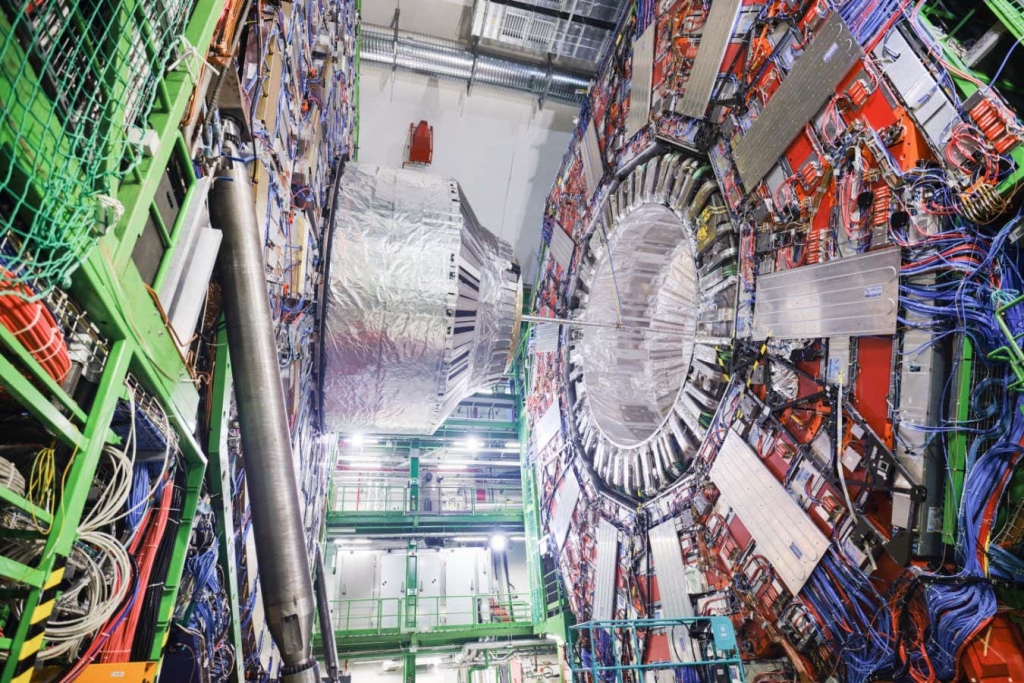
The cuts pose a significant threat to the UK’s participation in international scientific collaborations. The Large Hadron Collider (LHC) at CERN, where the Higgs boson was discovered, is particularly vulnerable. UK funding was set to contribute to a crucial upgrade of the ATLAS experiment during the LHC’s shutdown period, but the future of this contribution is now uncertain.
Even more concerning is the reported complete elimination of funding for the LHCb experiment, which investigates the fundamental differences between matter and antimatter. This decision not only jeopardizes planned detector upgrades but also undermines the UK’s standing in the international scientific community.
John Ellis expresses concern about the long-term implications for UK scientific collaboration: “That’s not the way forwards for international collaboration, and it risks labelling the UK as an unreliable partner. People are going to say, ‘Well, look, how do we know that Perfidious Albion is actually going to do what it says it’s going to do?'”
The Commercialization Dilemma
UKRI’s shift towards commercialization and economic impact as primary metrics for funding decisions has raised eyebrows among the scientific community. Ian Chapman, UKRI’s chief executive, defended the organization’s focus on economic returns, stating, “We’re a public body, in service of the UK public. The public should expect us to make those hard choices to make sure we make the biggest impact to the country, to grow our economy.”
However, critics argue that this short-term focus on commercialization fails to recognize the long-term economic and societal benefits of fundamental research. Paul Howarth, president-elect of the Institute of Physics, points out that particle physics research has led to numerous practical applications, including advances in cancer treatment and X-ray technology. “The Large Hadron Collider alone has informed our fundamental understanding of the universe and the matter it is made of,” Howarth notes. “This cut in UK funding will hold up advances in its experimental capability, which will mean less innovation and ultimately less economic growth.”
A Crisis of Communication
The announcement of these cuts has been marred by poor communication from UKRI, leading to widespread confusion and uncertainty within the scientific community. Alicia Greated of the Campaign for Science and Engineering criticizes the organization’s handling of the situation, noting that the lack of clarity has exacerbated the negative impact on researchers and institutions.
STFC’s executive chair, Michele Dougherty, acknowledged that the organization had been “too ambitious” in previous years, attempting to achieve too much with limited resources. “We’re spread much too thinly, we’re trying to do too many things,” Dougherty admitted. “We’ve got a difficult couple of years in front of us. We simply don’t have the money to do everything.”
Looking to the Future
As the UK physics community grapples with these unprecedented cuts, questions arise about the future of scientific research in the country. Will the UK maintain its position as a global leader in physics? Can the country continue to attract and retain top scientific talent in the face of reduced funding and international opportunities?
The answers to these questions will have far-reaching implications, not just for the scientific community, but for the UK’s technological innovation, economic growth, and global standing. As the dust settles on this controversial decision, one thing is clear: the choices made in the coming months and years will shape the future of UK physics for decades to come.
Tags: UK physics cuts, CERN funding, Large Hadron Collider, UKRI budget cuts, scientific research funding, particle physics, nuclear physics, astronomy cuts, international collaboration, fundamental research, economic impact of science, UK scientific reputation, postdoctoral positions, junior researchers, commercialization of research, STFC cuts, LHCb experiment, ATLAS experiment, Higgs boson, matter and antimatter research, UK nuclear industry, scientific communication, Campaign for Science and Engineering, Institute of Physics, King’s College London, University of Surrey, Brookhaven National Laboratory, Electron-Ion Collider, UK scientific talent, global scientific leadership
Viral Phrases: “Catastrophic blow to UK physics,” “Cutting a generation of researchers off at the knees,” “Perfidious Albion,” “Devastating impact on human understanding of the universe,” “The UK as an unreliable partner,” “Less money for critical research infrastructure,” “Hard choices for economic growth,” “Too ambitious, too thinly spread,” “Long-term implications for technological innovation,” “Shaping the future of UK physics,” “Global scientific community in shock,” “Short-term focus vs. long-term benefits,” “Confusion and uncertainty in scientific circles,” “Maintaining expertise in critical areas,” “Attracting and retaining top scientific talent”
,

Leave a Reply
Want to join the discussion?Feel free to contribute!