
Piercing crocodile close-up wins ecology photo competition
Crocodiles, Frogs, and Fearless Flies: A Visual Journey Through Nature’s Hidden Interactions
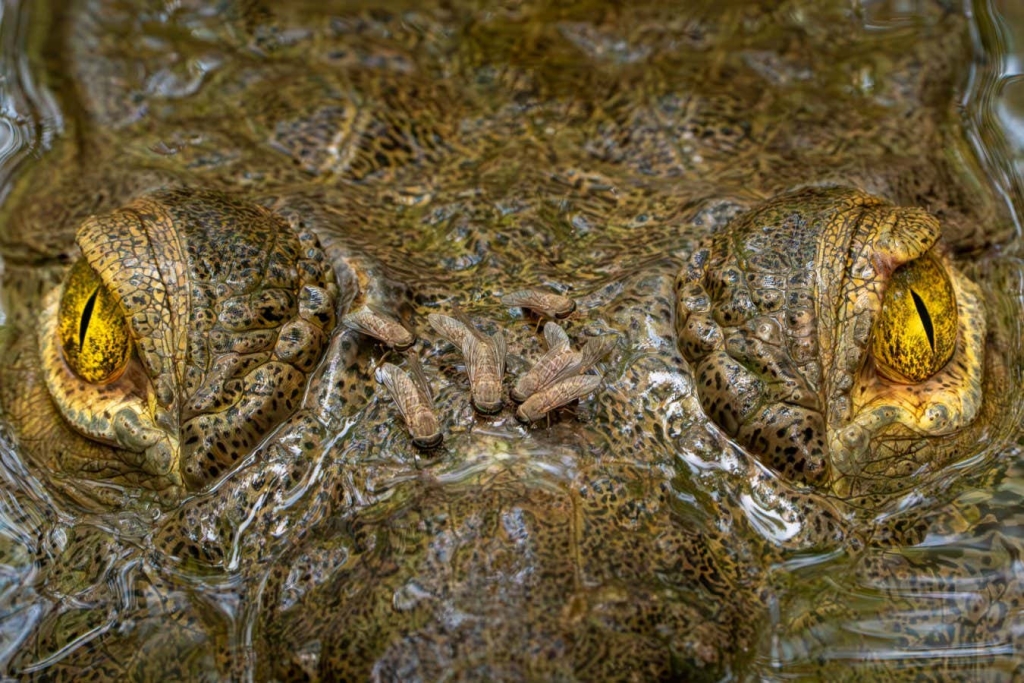
In the heart of Panama’s Coiba National Park, a scene unfolds that defies expectation: biting flies, undeterred by the fearsome presence of a crocodile, land boldly on its scaly head to feast on its blood. This extraordinary moment, captured by Zeke Rowe, a PhD candidate at Vrije Universiteit Amsterdam, has been crowned the overall winner of the British Ecological Society’s annual Capturing Ecology photography competition. The image, titled “Biting Flies on the Head of an American Crocodile,” is a testament to the intricate and often surprising relationships that define our natural world.
Rowe, who braved the tidal marshes of Coiba to get as close as he dared, described the experience: “This crocodile was lurking in a tidal marsh off the beach. I got as close and low as I dared, waiting for that direct eye contact.” The resulting photograph is not just a striking visual—it’s a window into the complex dynamics of predator-prey interactions, even among the smallest creatures.
But this image is just one of many that showcase the beauty and complexity of ecosystems around the globe. The competition’s 10 category winners and highly commended entries reveal a world teeming with life, from the savannas of Africa to the rainforests of Southeast Asia and the mountains of Canada.
The Lioness and the Sparrows: A Tale of Fear and Flight
In the dry season of Kgalagadi Transfrontier Park, on the border between South Africa and Botswana, a pride of lions approaches a waterhole, sending flocks of birds—including Cape sparrows—into a frenzy. This dramatic moment, captured by Willem Kruger, a South African-based photographer, won in the interactions category. The image, titled “Cape Sparrows and Other Birds Disturbed by a Lioness,” highlights the delicate balance of life in the wild, where even the smallest creatures must constantly adapt to the presence of apex predators.
Wallace’s Flying Frog: Nature’s Glider
Deep in the rainforests of Southeast Asia, a creature defies gravity with its webbed feet. Jamal Kabir, a researcher at the University of Nottingham, UK, captured this stunning image of a Wallace’s flying frog (Rhacophorus nigropalmatus), named after the biologist Alfred Russel Wallace. The photograph, which won in the animals category, showcases the frog’s remarkable ability to glide between trees, a testament to the incredible adaptations that have evolved in nature.
Bighorn Sheep and the Fight Against Pneumonia
In the Rocky Mountains of North America, a bighorn sheep (Ovis canadensis) undergoes a nasal swab, part of a critical effort to combat pneumonia outbreaks that have devastated herds. Peter Hudson, a photographer and biologist at Penn State University, captured this poignant image, which was highly commended in the ecologists in action category. The photograph underscores the importance of scientific intervention in preserving vulnerable species and the delicate ecosystems they inhabit.
A Fly on a Mushroom: The Beauty of the Small
In the mountainous Altos de Cantillana nature reserve in Chile, Francisco Gamboa, a wildlife photographer, captured a moment of quiet beauty: a fly resting on a mushroom. This image, which won in the plants and fungi category, reminds us that even the smallest organisms play a vital role in the web of life.
Intertidal Education: Learning by Doing
On the coast of New Brunswick, Canada, three undergraduate students use a beach seine—a type of fishing net—to count coastal fish species as part of a project monitoring seasonal population changes. Liam Brennan, a wildlife researcher and photographer, captured this image, which was highly commended in the ecologists in action category. The photograph highlights the importance of hands-on education in fostering a deeper understanding of marine ecosystems.
The Power of Visual Storytelling
These images, and the stories they tell, remind us of the interconnectedness of all living things. From the fearless flies that feed on crocodile blood to the students learning about marine life, each photograph offers a glimpse into the complexity and beauty of the natural world. The British Ecological Society’s Capturing Ecology competition not only celebrates the artistry of photography but also serves as a powerful tool for raising awareness about the importance of conservation and ecological research.
As we marvel at these images, we are reminded that the natural world is full of surprises, and that even the most fearsome predators can become hosts to the smallest of creatures. In a time when ecosystems are under threat, these photographs serve as a call to action—a reminder that we must protect and preserve the delicate balance of life on Earth.
Tags: #Ecology #WildlifePhotography #NatureConservation #BritishEcologicalSociety #CapturingEcology #Panama #SouthAfrica #Canada #Chile #SoutheastAsia #Biodiversity #EnvironmentalScience #WildlifeResearch #ConservationEfforts #NatureLovers #ViralPhotography #EcoAwareness #ScienceCommunication #NaturalWorld #EcosystemInteractions
Viral Sentences:
- “Biting flies fearlessly feast on crocodile blood—nature’s ultimate predator-prey paradox!”
- “Wallace’s flying frog glides through the rainforest like a living paper airplane.”
- “Bighorn sheep get nose swabs to fight pneumonia—science saves the day!”
- “A fly on a mushroom: the unsung hero of the forest floor.”
- “Students use beach seines to unlock the secrets of coastal ecosystems.”
- “Lions scare sparrows—nature’s drama unfolds at the waterhole.”
- “Crocodiles and flies: an unlikely duo in the wild.”
- “From Panama to Canada, these photos capture the heartbeat of our planet.”
- “Ecology in action: where science meets the wild.”
- “These images prove that even the smallest creatures have the biggest stories.”
,


Leave a Reply
Want to join the discussion?Feel free to contribute!