
Poll Finds Surprise Answer to What Americans Hate More: AI or ICE
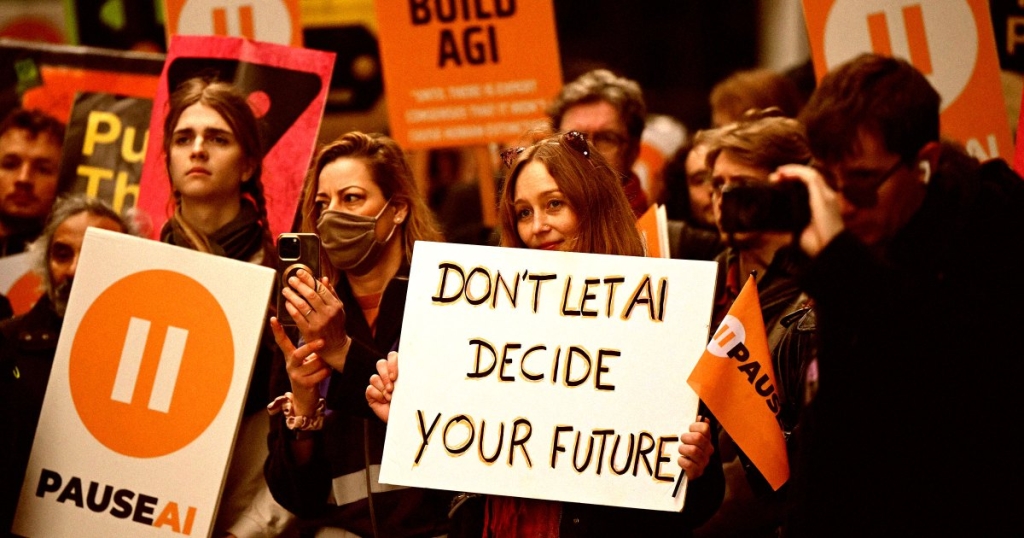
AI Sentiment Hits Rock Bottom as Public Trust Crumbles Amid Ethical Concerns
In a stunning revelation that underscores the growing rift between Silicon Valley ambitions and public sentiment, a new national survey conducted by NBC News has found that artificial intelligence is now viewed more negatively than the U.S. Immigration and Customs Enforcement (ICE), one of the most controversial federal agencies in recent memory.
According to the poll, which surveyed 1,000 registered voters between February 27 and March 3, only 26 percent of respondents held a positive view of AI, while a staggering 46 percent expressed negative opinions. This results in a net favorability rating of -20 points—a figure that places AI in the same unpopularity bracket as the Democratic Party and Iran, and only marginally better than ICE (-18) and former President Donald Trump (-12).
The findings arrive at a critical juncture in the AI narrative, as the technology that once promised to revolutionize everything from healthcare to transportation now finds itself at the center of a perfect storm of public distrust. The survey’s timing is particularly noteworthy, coinciding with the beginning of heightened U.S. military actions in the Middle East and escalating debates about AI’s role in warfare and surveillance.
The Perfect Storm of AI Backlash
The anti-AI sentiment didn’t emerge overnight. Over the past year, what began as cautious optimism has transformed into widespread skepticism and outright hostility. Industry’s relentless push for AI integration has manifested in ways that directly impact everyday Americans’ lives—from dramatically increased electricity bills as tech giants build massive data centers to justify mass layoffs under the guise of “AI efficiency.”
Perhaps most troublingly, revelations that AI systems were used by the U.S. military to help determine bombing targets in Iran have pushed the technology’s ethical boundaries into the spotlight. The Department of Defense’s partnership with AI companies, particularly the controversy surrounding Anthropic’s legal battle with the Pentagon over ethical AI use in warfare, has only intensified public concern.
From Innovation to Infiltration
What was once heralded as the next great technological revolution has become, for many, an inescapable and often infuriating presence in daily life. AI has infiltrated everything from customer service interactions to creative industries, often replacing human workers while simultaneously degrading the quality of services. The technology that promised to augment human capabilities now feels more like an imposition—a digital middleman inserted between people and the services they need.
This sentiment is particularly acute among workers who find themselves forced to adopt AI tools against their will. Reports from major tech companies indicate that employees are being pressured to integrate AI into their workflows, even when they recognize the technology as a potential threat to their job security. The irony is palpable: workers are being asked to train their own replacements.
The Noise Pollution Crisis
The physical manifestations of AI’s expansion have also contributed to public animosity. Residents living near AI data centers have reported unbearable noise pollution from the gas-powered turbines required to cool the powerful chips that drive these systems. In some areas, the constant drone has been compared to living next to a jet engine, transforming once-quiet neighborhoods into industrial zones.
Energy consumption has emerged as another flashpoint. As tech companies race to build ever-larger data centers, local power grids are straining under the increased demand, leading to higher electricity costs for everyone—even those who have no interest in AI technology. The juxtaposition of Silicon Valley’s billions in AI investments against communities struggling with basic infrastructure has created a narrative of corporate excess at public expense.
The Ethical Quagmire
The ethical implications of AI deployment have become increasingly difficult to ignore. From facial recognition systems used in controversial ICE operations to AI-powered decision-making in healthcare and criminal justice, the technology’s potential for harm has become as visible as its potential for good. The lack of transparency in AI systems, combined with their growing influence over critical decisions, has created a perfect storm of public distrust.
Silicon Valley’s response to these concerns has often been tone-deaf, with executives dismissing ethical worries as temporary resistance to change. This attitude has only deepened the divide between tech leaders and the general public, creating an atmosphere where every new AI announcement is met with skepticism rather than excitement.
The Future of AI: Innovation or Infiltration?
Despite the mounting backlash, the Trump administration and Silicon Valley leaders remain committed to AI as the cornerstone of future economic growth. Tech giants continue to announce multi-billion-dollar investments in AI infrastructure, seemingly undeterred by public opinion. This disconnect between corporate strategy and public sentiment suggests that the AI backlash may intensify before it improves.
The challenge moving forward will be whether the AI industry can address legitimate concerns about privacy, job displacement, energy consumption, and ethical use before public opposition becomes insurmountable. The current trajectory suggests that without significant changes in how AI is developed, deployed, and regulated, the technology that promised to transform our world may instead be remembered as the moment when public trust in technological progress began to unravel.
As the debate over AI’s role in society continues to evolve, one thing is clear: the honeymoon period for artificial intelligence is over. What comes next will depend on whether the industry can rebuild public trust or whether AI will become synonymous with corporate overreach and ethical compromise.
Tags: #AIBacklash #TechEthics #PublicOpinion #SiliconValley #ArtificialIntelligence #NBCNewsPoll #ICEControversy #EnergyCrisis #JobDisplacement #AIWarfare #DataCenters #TechTrust #FutureOfAI #DigitalPrivacy #CorporateOverreach
Viral Phrases: “AI is more hated than ICE,” “The honeymoon is over for artificial intelligence,” “Training your own replacement,” “Mordor-like data centers,” “Silicon Valley’s tone-deaf response,” “The perfect storm of AI distrust,” “Innovation or infiltration?” “Public trust in technological progress unravels,” “Ethical AI use in warfare,” “The AI noise pollution crisis,” “Corporate excess at public expense,” “The moment when AI lost the public,” “Rebuilding trust in technology.”
,

Leave a Reply
Want to join the discussion?Feel free to contribute!