
Pope Implores Priests to Stop Writing Sermons Using ChatGPT
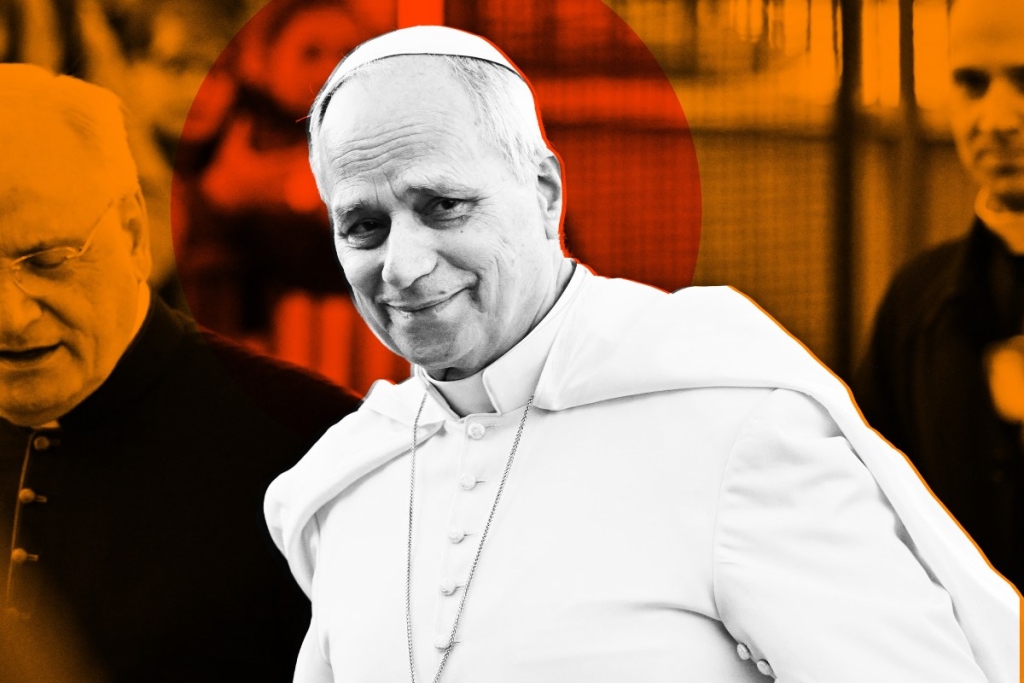
Pope Leo XIV Warns Clergy: AI Homilies Are a “Temptation” That Threatens Spiritual Authenticity
In a dramatic closed-door address to clergy from the Diocese of Rome last week, Pope Leo XIV delivered a striking message about the role of technology in spiritual life, warning priests against the “temptation to prepare homilies with artificial intelligence” in what observers are calling one of the Vatican’s most direct interventions into the AI ethics debate.
Speaking before gathered clergy, the Pope drew an evocative parallel between spiritual and physical fitness. “Like all the muscles in the body, if we do not use them, if we do not move them, they die,” he declared, according to Vatican News. “The brain needs to be used, so our intelligence must also be exercised a little so as not to lose this capacity.”
The pontiff’s remarks represent more than a casual observation about technological trends—they constitute a theological red line. “To give a homily is to share faith,” Pope Leo XIV stated emphatically, “and AI will never be able to share faith.” This pronouncement places the Vatican in direct opposition to the growing trend of AI-assisted sermon preparation that has quietly gained traction among some religious institutions worldwide.
The Pope’s warning arrives at a moment of profound tension for the Catholic Church, which finds itself simultaneously embracing and resisting technological advancement. Just hours before the Pope’s address to clergy, the Vatican announced its own ambitious AI initiative: a real-time translation system capable of rendering liturgical texts into up to 60 languages simultaneously. This apparent contradiction—condemning AI for spiritual communication while deploying it for linguistic purposes—highlights the complex navigation the Church must perform in the digital age.
Beyond the immediate AI controversy, Pope Leo XIV addressed what he termed the “illusion on the internet, on TikTok,” cautioning priests that social media metrics—followers, likes, and shares—cannot substitute for authentic spiritual connection. “If one lives a life authentically rooted in the Lord,” the Pope explained, “they’re offering something special to the world.” This observation cuts to the heart of a broader cultural challenge: the difficulty of maintaining genuine human connection in an increasingly digital landscape.
The timing of these remarks is particularly significant given the rapid advancement of AI language models. Large language models like ChatGPT and Claude can now generate coherent, contextually appropriate text on virtually any topic, including theological matters. Some priests have already begun experimenting with AI tools for sermon preparation, Bible study assistance, and administrative tasks. The Pope’s intervention suggests the Vatican views this trend as potentially corrosive to the fundamental nature of religious ministry.
From a historical perspective, the Church’s position on AI represents another chapter in its long engagement with technological change. Throughout history, the Vatican has both resisted and embraced new technologies—from the printing press to radio, television, and now digital platforms. The current stance on AI appears to draw a distinction between technologies that facilitate communication (like translation tools) and those that might replace human spiritual authority and insight.
The theological implications run deep. Catholic doctrine emphasizes the importance of personal spiritual authority, the unique role of ordained ministers, and the irreplaceable nature of human conscience and moral reasoning. By warning against AI-prepared homilies, the Pope is essentially defending the concept that spiritual leadership requires something beyond mere information processing—it demands lived experience, moral formation, and what the Church would call divine inspiration.
Critics might argue that the Pope’s position is unnecessarily conservative, pointing out that AI tools could potentially help priests research scripture more thoroughly or present complex theological concepts more clearly. However, the Pope’s framing suggests he views the issue not as one of efficiency or effectiveness, but of authenticity and human dignity.
The broader cultural context cannot be ignored. As AI systems become increasingly sophisticated at mimicking human communication, questions about authenticity, authorship, and the nature of human creativity become more pressing. The Pope’s intervention positions the Catholic Church as a defender of human spiritual authority in an age of algorithmic reproduction.
What makes this moment particularly noteworthy is the specificity of the Pope’s warning. Rather than issuing a blanket condemnation of AI, he has drawn a careful distinction between acceptable uses (translation, administrative tasks) and those he views as spiritually problematic (homily preparation). This nuanced approach suggests the Vatican is attempting to chart a middle course through the technological landscape—neither completely rejecting nor uncritically embracing AI.
The implications extend beyond the Catholic Church. As religious institutions worldwide grapple with similar questions about technology and authenticity, the Vatican’s position may influence broader conversations about the role of AI in human communication, creativity, and spiritual life. The Pope’s warning serves as a reminder that in an age of technological abundance, questions of authenticity, human connection, and spiritual meaning remain central to the human experience.
Whether one views the Pope’s intervention as a necessary defense of human spiritual authority or an unnecessary barrier to technological progress, it represents a significant moment in the ongoing negotiation between religious tradition and technological innovation. As AI continues to advance and permeate more aspects of human life, the Vatican’s careful delineation of boundaries suggests that even in the digital age, some aspects of human experience may remain fundamentally resistant to algorithmic reproduction.
The Church’s position also raises profound questions about the future of religious leadership in an AI-enabled world. If AI can generate coherent theological arguments, translate scripture with unprecedented accuracy, and even simulate pastoral care, what remains uniquely human about spiritual leadership? The Pope’s answer is clear: the ability to authentically share faith—to bear witness to lived spiritual experience in a way that no algorithm can replicate.
As religious institutions, technology companies, and ethicists continue to wrestle with these questions, the Vatican’s stance provides a fascinating case study in how ancient traditions navigate unprecedented technological change. The coming years will likely see continued tension between the efficiency and capability of AI systems and the Church’s insistence on human spiritual authority—a tension that reflects broader societal questions about the proper role of technology in human life.
In an era where AI-generated content becomes increasingly indistinguishable from human-created material, the Pope’s warning serves as a powerful reminder that some aspects of human experience—particularly those involving faith, authenticity, and spiritual connection—may resist algorithmic reproduction. Whether this represents a principled stand or a reactionary position remains to be seen, but it undoubtedly marks a significant moment in the Church’s ongoing dialogue with technology.
The Vatican’s navigation of these waters will be watched closely by religious institutions worldwide, as they too grapple with questions of authenticity, authority, and the proper role of technology in spiritual life. As AI continues to advance, the tension between technological capability and human authenticity that the Pope has highlighted will likely only intensify, making his intervention a crucial early marker in what promises to be a defining conversation of our time.
AI homilies temptation
Pope Leo XIV artificial intelligence warning
Catholic Church AI ethics
Spiritual authenticity technology
ChatGPT sermon preparation
Vatican AI translation system
Priests AI resistance
Digital age spirituality
TikTok religious illusion
Human spiritual authority algorithms
Faith cannot be programmed
AI versus human ministry
21st century Vatican technology
Religious leadership in digital age
Homily preparation AI controversy
Catholic Church technological boundaries
Pope warns against AI temptation
Spiritual connection social media metrics
AI liturgical translation Vatican
Human conscience algorithmic reproduction
,


Leave a Reply
Want to join the discussion?Feel free to contribute!