
Professor Says Her Garbled AI Textbook Was a Huge Success
UCLA Professor Defends AI-Generated Textbook Despite Widespread Criticism
In a bold move that has sparked intense debate across academic circles, UCLA Professor Zrinka Stahuljak is standing by her decision to use an AI-generated textbook for her comparative literature course, even as critics lambast the experimental resource for its glaring errors and questionable methodology.
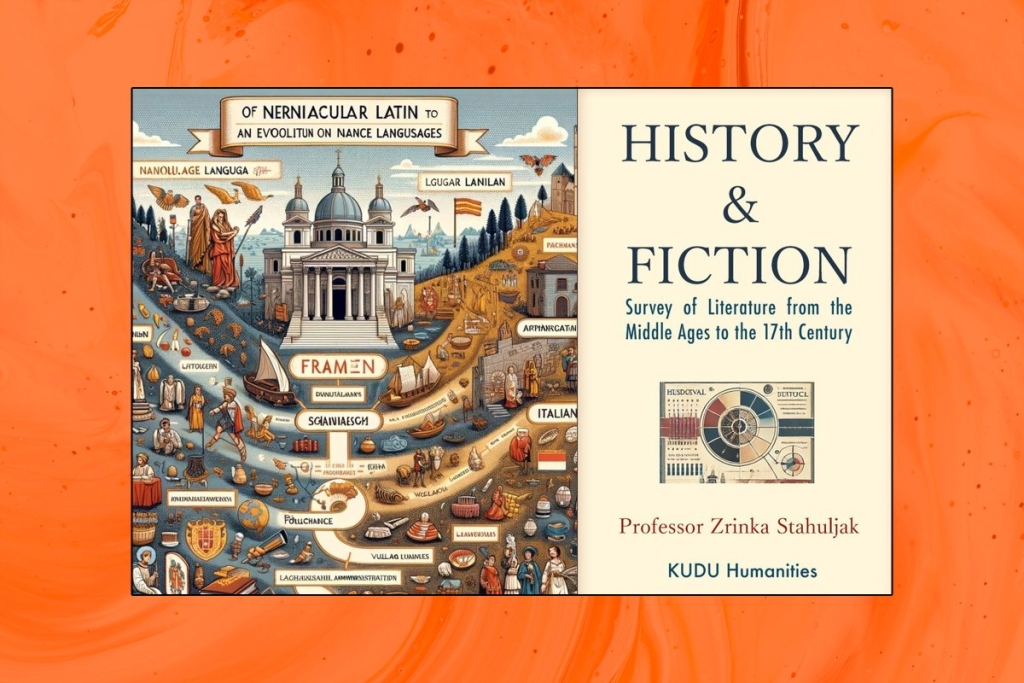
The digital textbook, created for a course on medieval and Renaissance-era literature, was unveiled by UCLA in late 2024 and quickly became the subject of widespread mockery. The AI-generated cover featured baffling text such as “Of Nerniacular Latin To An Evoolitun On Nance Langusages,” alongside a confusing visual representation of Romance language evolution that included non-existent languages like “Framen.”
Despite the immediate backlash, Stahuljak maintains that her decision to employ an “AI-assisted” textbook was a “no-brainer,” citing the significant time savings it provided and its role in making her a more “approachable and accessible teacher.” In a recent interview with Inside Higher Ed, she expressed surprise at her colleagues’ skepticism, stating, “I was really shocked that they couldn’t see that this textbook was my creation; it was carefully edited, just as if it had been printed.”
The professor argues that her AI-generated textbook offers several advantages over traditional textbooks. Priced at a mere $25 compared to the standard $250 for conventional texts, Stahuljak claims her custom resource is not only more affordable but also more relevant, as it’s based on her own material and can be easily updated. She emphasizes that the AI tool was instructed not to pull from outside sources, ensuring the content remained aligned with her course objectives.
To enhance accessibility, Stahuljak incorporated interactive features, including a built-in chatbot designed to assist students in learning the material. She notes that some students found value in listening to the textbook content while walking or at the gym, suggesting a new dimension of learning flexibility.
Perhaps most controversially, Stahuljak views the AI textbook as a preferable alternative to students turning to general-purpose AI tools like ChatGPT for assistance. She argues, “It’s better than some commercial version that has nothing to do with what you’re teaching or is pulling the information from the internet. We’re losing that control when we are indiscriminately given ChatGPT or other commercial generative AI-powered tools.”
The professor also claims that engagement in her course increased after implementing the AI textbook, compared to classes that didn’t use it. This assertion, however, has done little to quell the growing chorus of critics who see the experiment as a dangerous step towards the erosion of academic integrity and critical thinking skills.
The controversy surrounding Stahuljak’s AI textbook touches on broader concerns about the role of artificial intelligence in education. Critics argue that AI chatbots are notorious for generating made-up facts and incorrectly reporting information, regardless of the data they’re asked to pull from. There’s a growing body of evidence suggesting that AI tools may diminish critical thinking skills and attention spans among students.
Moreover, the experiment raises questions about the future of learning institutions in an era where tech companies are spending millions to capture schools and universities as platforms for offloading their products. The fear is that such initiatives could lead to the creation of “our own replacements,” as one English professor put it, at the expense of traditional teaching and learning methods.
The academic community’s response to Stahuljak’s AI textbook has been overwhelmingly negative. One professor went so far as to suggest that educators who adopt such methods should have their doctorates revoked and be “thrown into the stocks at the center of the main university quad.” Another critic described the experiment as an “abandonment of professional responsibility to a degree that would be comical if it weren’t so self-serious.”
As the debate rages on, it’s clear that the use of AI in education represents a complex and contentious issue. While proponents like Stahuljak see it as a tool for innovation and accessibility, critics view it as a potential threat to the very foundations of academic rigor and intellectual development.
The controversy surrounding UCLA’s AI-generated textbook serves as a microcosm of the larger conversation about the role of artificial intelligence in shaping the future of education. As institutions grapple with these challenges, the balance between technological advancement and educational integrity remains a critical point of discussion.
In the end, the success or failure of such experiments may well determine the trajectory of AI integration in academia for years to come. As educators, students, and policymakers continue to navigate this uncharted territory, the stakes have never been higher for the future of learning and knowledge dissemination.
Tags and Viral Sentences:
- AI-generated textbook controversy
- UCLA Professor Zrinka Stahuljak defends AI textbook
- Medieval literature meets artificial intelligence
- The future of education: AI or extinction?
- Textbooks of the future: Error-riddled or revolutionary?
- Academic integrity vs. technological innovation
- The $25 AI textbook that shook academia
- Critical thinking in the age of ChatGPT
- Universities: Breeding ground for AI or bastion of tradition?
- The great AI education experiment: Success or surrender?
- From “Nerniacular Latin” to academic discourse
- Accessibility or absurdity: The AI textbook debate
- Engagement up, standards down?
- The chatbot that could replace your professor
- AI in education: A no-brainer or a brain drain?
- The $250 textbook killer
- Medieval literature, modern controversy
- Academia’s AI awakening: Shock, awe, and skepticism
- The textbook that wrote itself (badly)
- Education’s existential crisis: AI edition
,
Leave a Reply
Want to join the discussion?Feel free to contribute!