
Qualcomm Posts Patches For New DSP Accelerator Linux Driver
Qualcomm’s QDA Driver Set to Revolutionize Linux Kernel’s Accelerator Subsystem with Cutting-Edge DSP Support
In a groundbreaking development that’s sending shockwaves through the Linux kernel development community, Qualcomm has unveiled its latest innovation: the QDA (Qualcomm DSP Accelerator) driver, poised to transform how Linux handles computational offloading to Digital Signal Processors (DSPs). This revolutionary driver represents a significant leap forward in kernel architecture, promising enhanced performance, better resource management, and unprecedented flexibility for developers working with Qualcomm’s Snapdragon platforms.
The Genesis of QDA: A New Era for Linux Accelerator Management
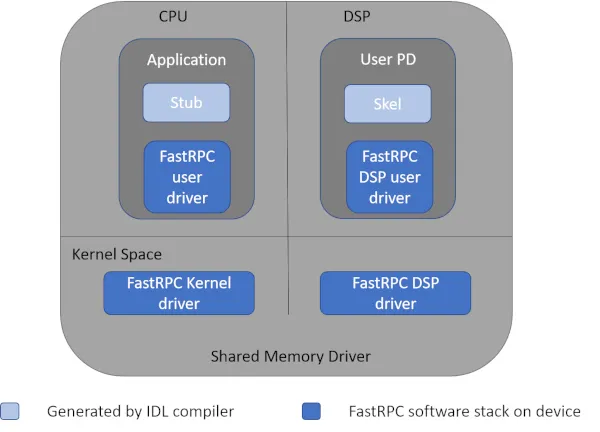
The QDA driver emerges as a sophisticated alternative to Qualcomm’s existing FastRPC driver, which has been residing in the kernel’s drivers/misc/ directory. While FastRPC has served its purpose admirably, the QDA driver represents a quantum leap in design philosophy and implementation. By fully integrating with the kernel’s accelerator subsystem, QDA brings a level of standardization and efficiency that was previously unattainable.
The driver’s development journey began with a Request for Comments (RFC) patch series posted recently to the Linux kernel mailing lists, marking the official entry of QDA into the broader open-source ecosystem. This RFC approach demonstrates Qualcomm’s commitment to collaborative development and community feedback, ensuring that the final implementation meets the rigorous standards expected of mainline kernel components.
Architectural Excellence: Deep Dive into QDA’s Core Features
Standard DRM Accelerator Interface
At the heart of QDA’s design philosophy lies its adherence to the standard DRM (Direct Rendering Manager) accelerator interface. By exposing devices through /dev/accel/accelN, QDA ensures seamless integration with existing Linux tooling and frameworks. This standardization means developers can leverage familiar patterns and APIs, significantly reducing the learning curve and enabling rapid adoption across diverse applications.
Advanced Memory Management with GEM and DMA-BUF
QDA implements a sophisticated GEM (Graphics Execution Manager)-based buffer management system with full DMA-BUF import/export support. This architecture provides several critical advantages:
- Zero-copy operations: Data can be efficiently shared between different kernel subsystems and user-space applications without unnecessary memory duplication
- Cross-device compatibility: DMA-BUF support enables seamless buffer sharing between QDA and other kernel components, including graphics drivers and multimedia frameworks
- Memory efficiency: The GEM framework ensures optimal memory allocation and deallocation, preventing fragmentation and reducing overall system memory pressure
Robust Security Through IOMMU-Based Isolation
Security remains paramount in modern kernel development, and QDA addresses this through comprehensive IOMMU (Input-Output Memory Management Unit) integration. The driver implements per-process context banks, providing:
- Hardware-enforced isolation: Each process operates within its own memory context, preventing unauthorized access to sensitive data
- Fine-grained access control: The IOMMU allows precise control over which memory regions each DSP domain can access
- Protection against DMA attacks: Hardware-level memory protection mechanisms safeguard against malicious or accidental memory corruption
FastRPC Protocol Implementation
While QDA represents a new architectural approach, it maintains compatibility with Qualcomm’s proven FastRPC protocol for DSP communication. This implementation ensures:
- Backward compatibility: Existing applications using FastRPC can transition to QDA without complete rewrites
- Protocol optimization: The QDA implementation benefits from the accelerator subsystem’s infrastructure, potentially offering improved performance over the legacy driver
- Standardized communication: FastRPC’s message-passing semantics are preserved while benefiting from the accelerator framework’s enhancements
Reliable RPMsg Transport Layer
Communication reliability is critical for accelerator drivers, and QDA implements a robust RPMsg (Remote Processor Messaging) transport layer. This layer provides:
- Guaranteed message delivery: RPMsg ensures that critical commands and data reach their destination reliably
- Flow control mechanisms: The transport layer prevents buffer overflows and manages communication bandwidth effectively
- Error recovery: Built-in error detection and recovery mechanisms maintain system stability even under adverse conditions
Comprehensive DSP Domain Support
One of QDA’s most impressive features is its support for all Qualcomm DSP domains:
- ADSP (Application DSP): Handles general-purpose signal processing tasks
- CDSP (Compute DSP): Optimized for computational workloads and machine learning inference
- SDSP (Sensor DSP): Manages sensor data processing and fusion
- GDSP (Graphics DSP): Accelerates graphics-related computations and rendering tasks
This comprehensive coverage ensures that QDA can serve as a unified interface for all DSP-based acceleration needs across the entire Snapdragon ecosystem.
Extensive IOCTL Interface
QDA provides a comprehensive IOCTL (Input/Output Control) interface that exposes all necessary functionality for DSP operations. This interface includes commands for:
- Device initialization and configuration: Setting up DSP contexts and allocating resources
- Buffer management: Allocating, importing, and exporting memory buffers
- Command submission: Sending computational tasks to the appropriate DSP domains
- Status monitoring: Querying execution progress and retrieving results
- Resource management: Controlling power states and managing hardware resources
Code Quality and Maintainability
The QDA driver demonstrates Qualcomm’s commitment to code quality, with the current implementation comprising 4,665 lines of well-structured C code. This codebase adheres to Linux kernel coding standards and includes:
- Comprehensive documentation: Clear comments and documentation strings explain the driver’s functionality and design decisions
- Modular architecture: The code is organized into logical components, making maintenance and future enhancements more manageable
- Rigorous error handling: Extensive error checking and recovery mechanisms ensure system stability
- Performance optimizations: Careful attention to algorithmic efficiency and resource utilization
User-Space Integration and Development Tools
Qualcomm recognizes that a kernel driver is only as useful as its user-space ecosystem. To address this, they’ve developed an open-source user-space driver that interfaces with QDA through their FastRPC accel/staging GitHub branch. This user-space component provides:
- Application programming interface (API): High-level functions for common DSP operations
- Development tools: Utilities for debugging, profiling, and optimizing DSP applications
- Example applications: Reference implementations demonstrating best practices for QDA usage
- Documentation: Comprehensive guides and API documentation for developers
The open-source nature of both the kernel driver and user-space components ensures that the broader Linux community can contribute to their development, identify potential issues, and create innovative applications leveraging QDA’s capabilities.
Performance Implications and Future Prospects
While comprehensive benchmarking data is still emerging, the architectural improvements in QDA suggest several potential performance benefits:
- Reduced latency: The accelerator subsystem integration may provide faster context switching and reduced overhead compared to the legacy driver
- Improved throughput: Better resource management and memory handling could enable higher data processing rates
- Enhanced scalability: The standardized interface makes it easier to scale applications across multiple DSP domains or devices
- Lower power consumption: More efficient resource utilization and better power management capabilities could extend battery life in mobile devices
Looking ahead, QDA’s design positions it well for future enhancements. The accelerator subsystem framework is actively evolving, and QDA’s integration means it will automatically benefit from improvements in areas such as:
- Advanced scheduling algorithms: Future kernel versions may introduce smarter ways to allocate DSP resources across competing applications
- Enhanced security features: As kernel security continues to evolve, QDA will inherit improvements in areas like confidential computing and secure enclaves
- New hardware support: The standardized interface makes it easier to add support for future Qualcomm SoCs and DSP architectures
Community Response and Adoption Timeline
The Linux kernel community has responded positively to QDA’s RFC, with developers praising its clean architecture and comprehensive feature set. However, the path to mainline inclusion follows a careful process:
- Community review: The RFC will undergo extensive scrutiny from kernel maintainers and security experts
- Iterative refinement: Based on feedback, Qualcomm will refine the implementation, potentially requiring multiple RFC revisions
- Integration testing: The driver will be tested across diverse hardware configurations and use cases
- Merge window consideration: If the review process is successful, QDA could be considered for inclusion in a future kernel release
Given the complexity of accelerator drivers and the critical nature of kernel subsystems, this process typically takes several months to over a year. However, the strong initial reception suggests that QDA has a promising path forward.
Conclusion: A Milestone in Linux Accelerator Development
Qualcomm’s QDA driver represents a significant milestone in Linux kernel development, particularly for systems leveraging DSP acceleration. By embracing the accelerator subsystem framework and implementing modern kernel design principles, QDA sets a new standard for how specialized computational hardware should be exposed to the Linux ecosystem.
The driver’s comprehensive feature set, robust security model, and open-source nature position it as a catalyst for innovation in areas ranging from mobile computing and IoT devices to automotive systems and edge computing platforms. As the Linux community continues to refine and enhance QDA, we can expect to see a new wave of applications that fully leverage the computational power of Qualcomm’s DSPs while maintaining the stability, security, and flexibility that Linux users have come to expect.
The QDA driver isn’t just a technical achievement; it’s a testament to the power of open collaboration between industry leaders like Qualcomm and the global Linux community. As this driver matures and finds its way into production systems, it will undoubtedly play a crucial role in shaping the future of accelerated computing on Linux platforms.
tags
QualcommQDA #LinuxKernel #DSPAccelerator #OpenSourceHardware #Snapdragon #KernelDevelopment #AcceleratorSubsystem #FastRPC #HexagonDSP #TechInnovation
viralSentences
Revolutionizing Linux accelerator architecture with Qualcomm’s groundbreaking QDA driver
Game-changing DSP support arrives for Linux kernel’s accelerator subsystem
Qualcomm’s QDA driver promises to transform computational offloading forever
Open-source revolution: QDA brings cutting-edge DSP acceleration to Linux
From FastRPC to QDA: The next evolution in Qualcomm’s Linux strategy
Breaking: Linux kernel gets major boost with QDA’s comprehensive DSP support
Security-first design: QDA’s IOMMU integration sets new standards
GEM-based memory management takes center stage in QDA’s architecture
All DSP domains covered: ADSP, CDSP, SDSP, and GDSP unified under QDA
4,665 lines of excellence: QDA’s codebase impresses Linux community
RPMsg transport layer ensures rock-solid reliability for QDA communications
DRM accelerator interface standardization makes QDA instantly accessible
Zero-copy operations and DMA-BUF support optimize QDA’s performance
Community-driven development: QDA’s RFC process engages Linux experts
Future-proof architecture positions QDA for next-generation Snapdragon SoCs
User-space tools and documentation complete QDA’s comprehensive ecosystem
Performance implications suggest major gains in latency and throughput
Security enhancements through hardware-enforced isolation and context banks
Backward compatibility ensures smooth transition from FastRPC to QDA
Open collaboration between Qualcomm and Linux community drives innovation
,
Leave a Reply
Want to join the discussion?Feel free to contribute!