
Qualcomm’s partnership with Neura Robotics is just the beginning
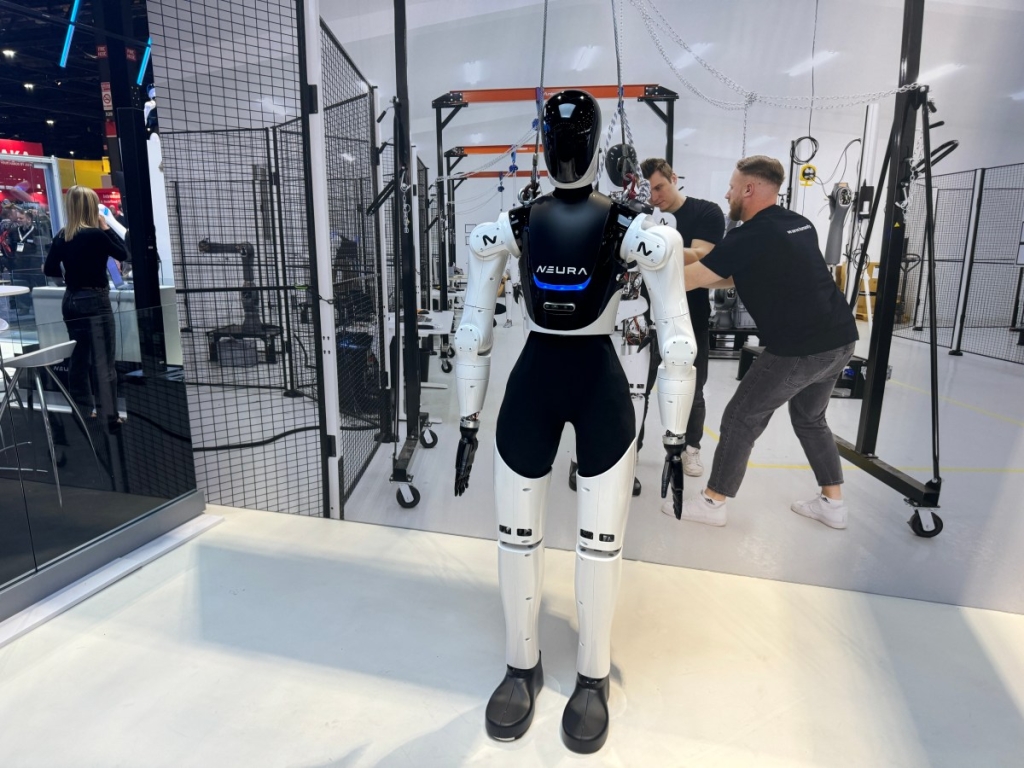
Neura Robotics and Qualcomm Join Forces to Build the “Brain and Nervous System” of Next-Gen Robots
In a landmark move that could reshape the future of robotics, German startup Neura Robotics has announced a strategic partnership with semiconductor powerhouse Qualcomm, aiming to accelerate the development of intelligent, autonomous robots for both industrial and everyday applications. The collaboration, revealed on Monday, marks one of the most significant alliances in the emerging physical AI sector, blending Neura’s cutting-edge cognitive robotics expertise with Qualcomm’s leadership in edge AI and connectivity.
While the companies did not unveil specific product launches, they made it clear that their joint mission is to engineer the “brain and nervous system” of future robots. This ambitious goal is set to propel the real-world deployment of humanoid and general-purpose robots into both domestic and industrial environments, potentially transforming how humans interact with machines on a daily basis.
At the heart of this partnership is Qualcomm’s newly announced Dragonwing Robotics IQ10 processor series, which debuted at CES earlier this year. These processors are purpose-built for autonomous mobile robots (AMRs) and humanoid machines, offering the computational power and efficiency required for real-world autonomy. Neura Robotics plans to integrate the IQ10 chips as reference designs into its own robotic platforms, ensuring seamless compatibility and optimized performance.
But hardware is only part of the equation. Neura will also leverage its proprietary Neuraverse robotic simulation and training platform—launched in June 2025—to rigorously test and fine-tune robots powered by Qualcomm’s IQ10 processors. This virtual environment allows for rapid iteration and refinement, reducing development time and cost while enhancing safety and reliability before robots ever set foot in the real world.
David Reger, CEO and founder of Neura Robotics, framed the partnership as a pivotal leap toward making physical AI a tangible reality. “This collaboration marks a major step toward making physical AI real: open, scalable, and trusted,” Reger said in a press release. “By bringing together our cognitive robotics platforms and the Neuraverse ecosystem with Qualcomm Technologies’ leadership in edge AI and connectivity, we’re aiming to accelerate a future where cognitive robots operate safely alongside humans across industries and throughout everyday life.”
The strategic logic behind this deal is compelling for both parties. For Neura, access to Qualcomm’s advanced processors and technical expertise offers a faster, more cost-effective route to market. Rather than reinventing the wheel on complex hardware challenges—such as building dexterous robotic hands or optimizing power efficiency—Neura can focus on its core strengths: software, cognition, and user experience.
For Qualcomm, the partnership provides invaluable insight into how robotics companies are actually using its technology in the field. As the physical AI market heats up, with giants like Nvidia eyeing robotics as the next major frontier, hardware vendors are increasingly eager to embed themselves deeply within the robotics ecosystem. Partnerships like this ensure that Qualcomm’s chips are not just components, but integral, optimized parts of the next generation of intelligent machines.
This trend is not isolated. In January, Boston Dynamics announced a strategic alliance with Google DeepMind to accelerate the development of its Atlas humanoid robot using Google’s foundational AI models. While the technologies differ—AI models versus chips—the underlying strategy is the same: robotics companies are increasingly choosing deep collaboration over simple vendor relationships, embedding cutting-edge technologies directly into their platforms for maximum impact.
As more AI and semiconductor companies pivot toward physical AI, expect this pattern of strategic partnerships to become the norm rather than the exception. The race to dominate the robotics market is not just about who builds the best robot, but who can best integrate hardware, software, and AI into a seamless, scalable, and trustworthy system.
With Neura and Qualcomm now teaming up, the stage is set for a new era of intelligent machines—ones that can think, learn, and operate safely alongside humans in factories, homes, and beyond. The “brain and nervous system” of the robots of tomorrow is being built today, and this partnership is a major step toward bringing that future into reality.
Tags: Neura Robotics, Qualcomm, robotics partnership, physical AI, Dragonwing IQ10, autonomous robots, humanoid robots, edge AI, Neuraverse, cognitive robotics, semiconductor, industrial automation, domestic robots, AI hardware, robotics innovation
Viral Phrases: “brain and nervous system” of robots, physical AI revolution, next-gen humanoids, edge AI dominance, robotics brain trust, AI meets robotics, building the future of intelligent machines, Neuraverse simulation breakthrough, Qualcomm’s IQ10 power play, robots that think and learn, safe human-robot collaboration, the robots are coming—and they’re smart, from lab to living room, the rise of cognitive robots, transforming industries with AI-powered machines
,

Leave a Reply
Want to join the discussion?Feel free to contribute!