
Question time: What role—tank, healer, or DPS—do you actually play in MMORPGS, and why?
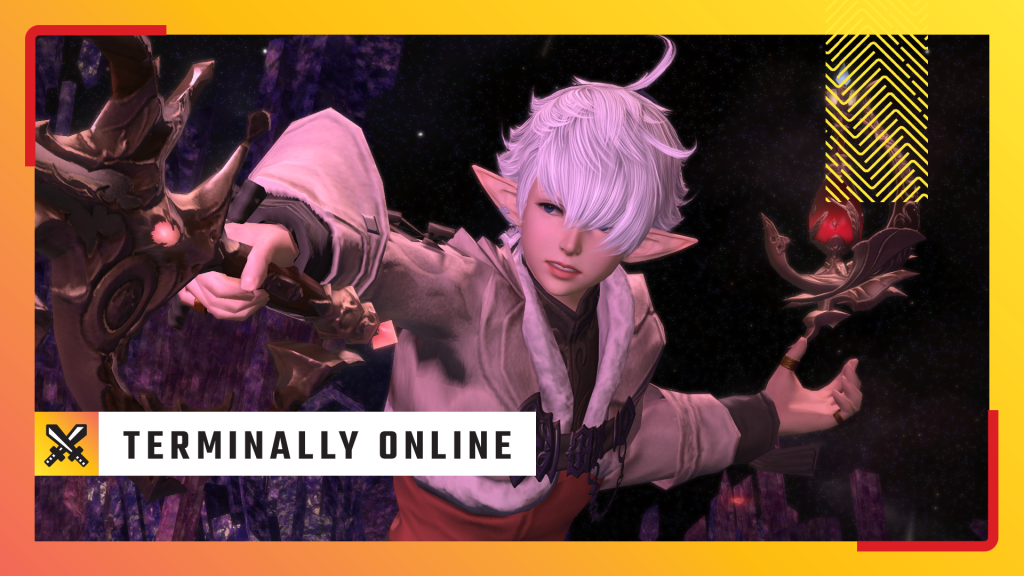
The Holy Trinity’s Grip on MMOs: A Love-Hate Relationship That Refuses to Die
In the vast digital landscapes of MMORPGs, few concepts have endured as stubbornly as the Holy Trinity. For nearly three decades, this foundational gameplay structure—healer, tank, and DPS—has dictated how millions of players approach cooperative content, build their characters, and form social bonds (and sometimes, bitter rivalries).
The numbers tell a fascinating story. In World of Warcraft’s Dragonflight expansion, damage dealers comprise roughly 65% of all player characters, while tanks hover around 15% and healers at 20%. This imbalance isn’t accidental—it’s mathematical necessity. Most dungeons require exactly one tank and one healer, but can accommodate multiple DPS players. The result? A perpetual shortage of tanks and healers that has become the genre’s running joke.
But the Trinity’s persistence goes deeper than simple encounter design. It provides a framework for social interaction that many players find comforting. When you queue as a healer, you know your role: keep the green bars full, manage your cooldowns, and maybe throw out some damage when things are stable. As a tank, you’re the party’s shield, the first to engage and the last to fall. DPS players get to chase those glorious damage numbers while someone else worries about survival.
The psychological appeal is undeniable. The Trinity creates clear responsibility boundaries. When a boss one-shots the healer, everyone knows who to blame. When the tank misses a critical mitigation cooldown, the consequences are obvious. This clarity cuts through the chaos of group content, providing a shared language for success and failure.
Yet the system frustrates as much as it facilitates. Healers often report feeling like overworked paramedics in a perpetual emergency room. Tanks describe the pressure of being responsible for the entire party’s safety. DPS players, despite their numerical advantage, frequently complain about being treated as interchangeable cogs in the damage wheel.
The genre has seen attempts to break free. Guild Wars 2 famously abandoned dedicated healing in favor of self-sustain and support hybrids. Final Fantasy XIV experimented with classes like Dancer that blur the lines between damage and support. Even World of Warcraft has introduced more fluid role definitions with classes like the Augmentation Evoker.
But these experiments often circle back to Trinity-adjacent structures. GW2 still has “support” builds that function similarly to traditional healers. FFXIV’s Dancer, while damage-focused, derives much of its power from buffing others—essentially becoming a damage dealer who heals through empowerment. The core dynamic remains: someone takes hits, someone mitigates damage, and someone deals it.
The Trinity’s endurance speaks to something fundamental about how humans approach cooperative problem-solving. We naturally gravitate toward specialization, dividing complex tasks into manageable roles. In the high-pressure environment of MMO group content, this specialization provides clarity amid chaos.
Yet the system’s flaws are equally apparent. The role imbalance creates artificial scarcity, forcing players into positions they may not enjoy. The responsibility distribution can feel punishing—healers and tanks bear disproportionate blame for failures while DPS players often escape scrutiny. The rigid structure can stifle creativity, pushing players toward optimal builds rather than experimental ones.
As MMORPGs evolve, the Trinity faces new challenges. Games increasingly emphasize open-world content, solo play, and flexible group compositions. The rise of action combat systems in MMOs like New World and Lost Ark has introduced more dynamic encounter designs that don’t always fit neatly into Trinity boxes.
Still, when players gather for challenging group content—raids, dungeons, trials—the Trinity reasserts itself. It’s not just tradition; it’s proven functionality. The system works because it provides clear expectations, manageable complexity, and a framework for cooperation that most players understand instinctively.
The future of the Trinity remains uncertain. Will future MMOs continue to iterate on this decades-old formula, or will new approaches to group dynamics emerge? As games become more accessible and combat systems more sophisticated, the pressure to evolve grows stronger.
What’s clear is that the Holy Trinity, for all its frustrations and limitations, has shaped how we play together online for generations. Whether it’s a sacred institution worth preserving or a relic holding the genre back depends largely on which side of the green bar you’re standing on.
Tags: #MMORPG #HolyTrinity #WoW #FFXIV #GuildWars2 #GameDesign #RolePlaying #OnlineGaming #TankHealerDPS #GamingCulture #CooperativePlay #MMOCommunity
Viral Lines: “The Holy Trinity: Where everyone blames the healer!” “Tanking: Because taking all the blame sounds fun!” “DPS: The art of standing in fire while numbers go up!” “Healers: Professional green bar managers since 1997!” “Breaking the Trinity: Easier said than done!” “Why play tank? Because masochism is a lifestyle choice!” “The real endgame? Finding a tank who isn’t on fire!” “MMO roles: A study in distributed responsibility and concentrated blame!”
,
Leave a Reply
Want to join the discussion?Feel free to contribute!