
Rad Power Bikes’ new owner wants to rehire employees, open stores and return e-bike brand to glory days
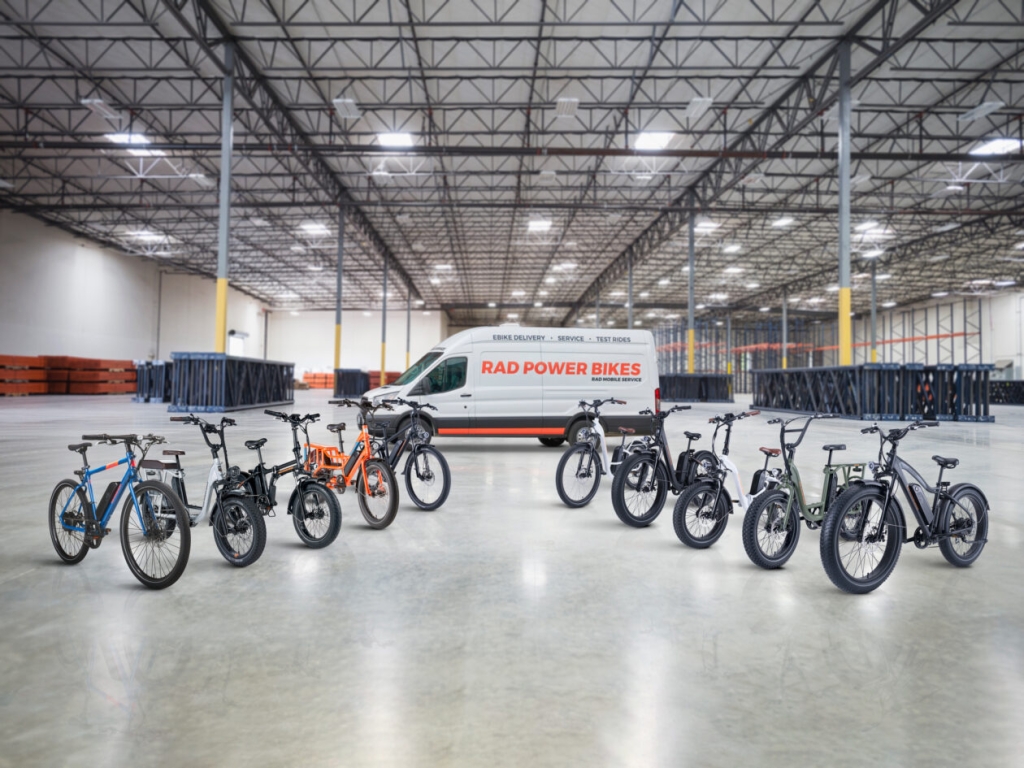
Rad Power Bikes Rises from the Ashes: New Owners Promise Phoenix-Like Rebirth with Bold U.S. Manufacturing and Retail Expansion
Seattle’s once-dominant e-bike pioneer Rad Power Bikes has been reborn under new ownership, emerging from bankruptcy with a dramatic transformation plan that promises to restore its industry leadership and expand far beyond its previous reach.
The Phoenix Rises: Life EV Holdings’ Audacious Acquisition
Life Electric Vehicles Holdings, Inc., a publicly traded micro-mobility platform company based in Deerfield Beach, Florida, has completed its acquisition of Rad Power Bikes’ assets for $13.2 million—a fraction of the company’s former $1.65 billion valuation. But CEO Robert Provost views this not as a distressed purchase, but as the foundation for something revolutionary.
“It’s not a continuation of Rad Power, more like a phoenix,” Provost declared in an exclusive interview with GeekWire. “The rebirth.”
The acquisition represents more than just buying assets; it’s about capturing the soul of a brand that once commanded North America’s e-bike market. Under the new corporate entity Rad Life Mobility, Life EV is betting big on Rad’s potential to reclaim its throne—and then conquer new territory.
Keeping the Heart of Rad Alive
In a move that signals respect for Rad’s heritage, Provost has extended offers to rehire 95% of employees laid off during bankruptcy proceedings. Approximately 70 former Rad workers have already accepted, with Provost actively seeking to reconnect with anyone who might have been overlooked—including the early employees who helped build Rad during its meteoric rise before and during the pandemic.
“We acquired all the digital assets, all the tangible assets. It was up to us on the workforce—we could actually hire them or not,” Provost explained. “So we made the decision to go ahead and hire them. They’ve done a really great job.”
The new leadership team includes Jim Brown, a Life EV investor with extensive automotive dealership retail experience from Larry H. Miller Automotive Group in Utah, who will serve as Rad Life Mobility’s president. While some front-office operations will remain in Utah, Seattle will continue as a key hub, preserving the company’s Pacific Northwest roots.
Manufacturing Revolution: From Overseas Assembly to U.S. Just-in-Time Production
Perhaps the most transformative aspect of Provost’s vision involves completely reimagining Rad’s manufacturing model. The company is shifting from traditional overseas manufacturing to a “just-in-time” U.S.-based assembly process that promises to slash costs and eliminate inventory nightmares.
“We build only a few weeks out. It’s more of a just-in-time type of production,” Provost revealed. Parts will still be sourced globally, but final assembly will move to a massive 100,000-square-foot facility in America’s heartland.
To address the tariff challenges that crippled previous management, Rad Life Mobility will utilize a Foreign Trade Zone (FTZ) structure, allowing the company to mitigate customs duties and streamline operations. This strategic move could provide a crucial competitive advantage in an industry where international trade policies have become increasingly volatile.
Logistics Liberation: Cutting the Cord on Third-Party Dependencies
Provost identified reliance on third-party logistics providers and their associated costs as a primary reason for Rad’s previous financial struggles. “We don’t need [3PL] because we’re managing that side of it,” he stated confidently. “We clean all that up, Rad becomes immediately profitable.”
This vertical integration strategy extends beyond manufacturing to encompass distribution, warehousing, and fulfillment—creating a streamlined operation that promises better margins and faster delivery times.
Retail Renaissance: Expanding from 7 to 31 Stores
While seven Rad stores will remain open across the United States—including the flagship location in Seattle’s Ballard neighborhood—Provost has ambitious expansion plans. The company aims to open new Rad stores in at least 24 additional key U.S. markets, creating a retail presence that could rival traditional bicycle shops.
The closure of Vancouver and St. Petersburg locations earlier this year was described by Provost as “sad,” and reopening in Florida remains a priority. The Canadian market, which proved crucial to Rad’s growth, could see a return as well.
Previous dealer margins “weren’t sufficient,” according to Provost, but a new program with “pricing that will be very attractive to them” is in development, potentially creating a more robust dealer network alongside company-owned stores.
Battery Safety Crisis: A $50 Million Promise
One of Rad’s most pressing challenges involves addressing battery safety concerns that led to a Consumer Product Safety Commission warning last fall about potential fire hazards. Provost has committed to a comprehensive battery replacement program that will replace affected batteries at a 50% discount.
“We’re going to put a program in to go ahead and replace those batteries for everyone, at like a 50% discount,” Provost assured. “We will make sure it’s a Safe Shield Battery—the newer product. It’s gonna take us a little time to get that done.”
This initiative demonstrates a commitment to customer safety and satisfaction that could help rebuild trust in the Rad brand after months of uncertainty.
Secret Acquisition: The Perfect Complement
In a tantalizing hint at future expansion, Provost revealed that Rad Life Mobility is on the verge of acquiring another company that would “perfectly complement” Rad Power Bikes. “There’s another company we’re looking at that is actually a perfect complement to Rad Power. We’re most likely going to acquire that company, in the next week or so,” he said, though he couldn’t disclose the name yet.
The implication is clear: this won’t be Rad’s last acquisition, and the company is positioning itself to become a broader micro-mobility platform rather than just an e-bike manufacturer.
The Fall and Rise of an E-Bike Empire
Rad Power Bikes launched in 2015 with a direct-to-consumer model and sub-$2,000 e-bikes aimed at casual riders. The company exploded during COVID-19, seeing demand surge nearly 300% as people sought outdoor recreation options during lockdowns. By 2021, Rad had raised over $300 million and branded itself as North America’s largest e-bike seller.
But the momentum faded in 2022 as demand cooled and a series of missteps—including supply chain disruptions, inventory mismanagement, and mounting tariffs—led to multiple rounds of layoffs. The company filed for Chapter 11 bankruptcy protection in December 2025 after revealing financial struggles that included $73 million in total liabilities against just $32 million in assets.
Deep Pockets and Big Dreams
Backed by over 200 private shareholders and “very significant entrepreneurs,” Provost describes the investor group as having “extremely deep pockets.” This financial backing provides the runway needed to execute the ambitious transformation plan without the pressure that doomed the previous management team.
The bankruptcy filing revealed a steady drop in gross revenue—from $129.8 million in 2023 to $103.8 million in 2024, and $63.3 million toward the end of 2025. Life EV paid $13.2 million for assets that once commanded a $1.65 billion valuation, but Provost and his team are prepared to spend far more to revitalize the brand.
Facing the New Reality: Stiffer Competition in a Saturated Market
The new Rad will confront challenges that contributed to the old Rad’s downfall, particularly that competition is now much stiffer than it was a decade ago. The e-bike market has become saturated with a wide variety of brands offering similar products at competitive prices.
However, Provost believes that Rad’s combination of brand recognition, manufacturing efficiency, retail expansion, and customer service initiatives will create a sustainable competitive advantage. The company intends to introduce new products, build up sufficient inventory, achieve profitability, and reignite excitement among investors, employees, and riders alike.
A Promise to the Rad Community
“The most important part out of this conversation, for me, is to let the Rad community know we are there for them,” Provost emphasized. “We are going to support them 100%.”
This commitment to the existing customer base—many of whom have invested in Rad bikes and accessories—could prove crucial to the company’s revival. By addressing battery safety concerns, maintaining service for existing products, and honoring warranties, Rad Life Mobility is betting that customer loyalty can be transformed into sustainable growth.
The phoenix is rising, and if Provost’s vision materializes, Rad Power Bikes could emerge from bankruptcy not just restored to its former glory, but transformed into something even greater—a comprehensive micro-mobility platform that redefines how Americans think about electric transportation.
Tags: Rad Power Bikes, e-bike, bankruptcy, Life EV Holdings, micro-mobility, electric bike, manufacturing, retail expansion, battery safety, just-in-time production, Foreign Trade Zone, Seattle startup, phoenix rebirth, electric transportation, consumer product safety, logistics revolution, U.S. manufacturing, retail renaissance
Viral Phrases: “It’s not a continuation of Rad Power, more like a phoenix,” “We clean all that up, Rad becomes immediately profitable,” “extremely deep pockets,” “The rebirth,” “just-in-time U.S.-based assembly,” “Safe Shield Battery,” “perfect complement to Rad Power,” “We are going to support them 100%,” “The most important part out of this conversation,” “radically transformed manufacturing model,” “vertical integration strategy,” “customer loyalty transformed into sustainable growth”
,


Leave a Reply
Want to join the discussion?Feel free to contribute!