
RAM shortage hits Valve’s four-year-old Steam Deck, now available “intermittently”
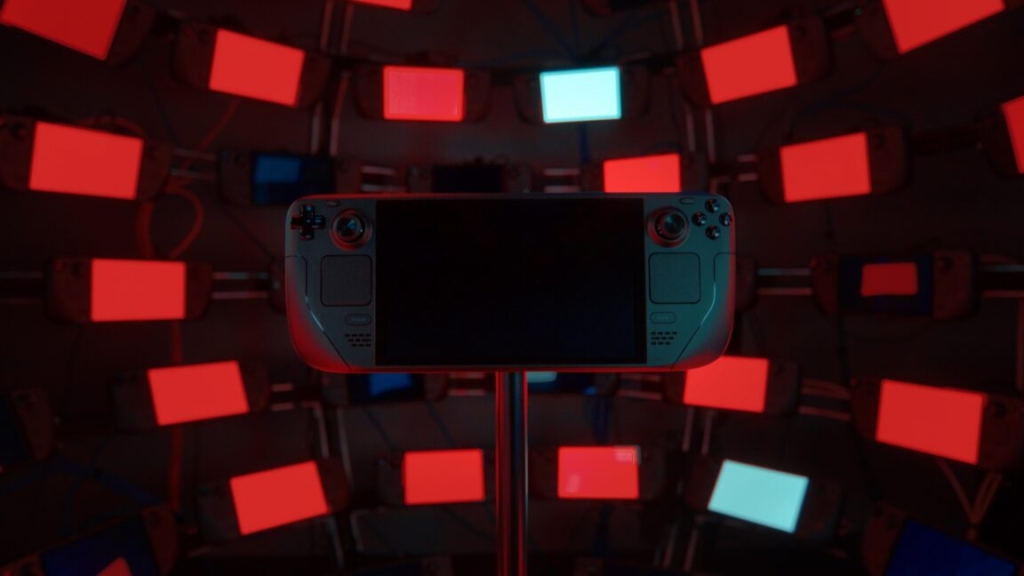
Valve’s Steam Deck Faces Supply Chain Crisis as Memory Shortages Halt Sales
Valve Corporation’s ambitious handheld gaming PC, the Steam Deck, has officially entered a state of indefinite unavailability across multiple global markets, as the company grapples with unprecedented memory and storage component shortages that have paralyzed the PC industry since late 2025.
The crisis deepened dramatically this week when Valve updated its Steam Deck product page with a stark warning: customers in certain regions may find the device “out-of-stock intermittently” due to critical component scarcity. This notification has transformed from a temporary inconvenience into what appears to be a permanent state of unavailability, with all three primary Steam Deck configurations—the 256GB LCD, 512GB OLED, and 1TB OLED models—completely removed from the company’s online storefront.
The situation represents a significant escalation from Valve’s earlier announcement regarding its Steam Machine desktop and Steam Frame VR headset delays. While those products were still in development phases, the Steam Deck has been a market success story since its 2022 launch, selling millions of units and establishing itself as the de facto standard for handheld PC gaming.
The Discontinuation That Changed Everything
Perhaps most tellingly, Valve has officially discontinued the base 256GB LCD model, which served as the Steam Deck’s entry point at $399. This model has completely sold out and will not be restocked, effectively raising the minimum price of entry to $549 for the 512GB OLED version. The company had telegraphed this move back in December 2025, announcing it would end production of the LCD variant once existing inventory depleted.
Industry analysts suggest this strategic decision reflects both the realities of component pricing and Valve’s desire to maintain healthy profit margins on what has become a mature product line. The 256GB model, while popular for its accessibility, utilized older display technology and smaller storage capacities that may have become increasingly difficult to source at competitive prices.
Four-Year-Old Hardware Still Competitive
Despite approaching its fourth anniversary in February 2026, the Steam Deck’s semi-custom AMD APU continues to deliver performance that rivals newer handheld devices entering the market. The device’s custom silicon, developed in partnership with AMD, was engineered specifically for handheld gaming scenarios, optimizing power efficiency and thermal management in ways that off-the-shelf solutions often struggle to match.
Newer competitors powered by AMD’s Ryzen Z1 and Z2 processors have indeed entered the market, offering incremental performance improvements and higher-resolution displays. However, these advantages come at substantial premiums—many competing devices retail for $200 to $400 more than the Steam Deck’s $549 OLED configuration. More importantly, the performance gap between the Steam Deck’s aging APU and these newer chips is often less dramatic than marketing materials might suggest, particularly in the context of handheld gaming where thermal constraints and battery life considerations frequently limit peak performance.
The Broader Industry Context
The Steam Deck’s availability crisis cannot be viewed in isolation. It represents a symptom of broader supply chain disruptions that have affected everything from consumer electronics to automotive manufacturing. The memory and storage shortages that Valve cites have been building since late 2025, driven by a complex interplay of factors including increased demand for AI hardware, geopolitical tensions affecting semiconductor manufacturing, and the cyclical nature of chip production planning.
These shortages have created a cascading effect throughout the PC industry. Companies that might normally pivot to alternative suppliers or component configurations find themselves competing for the same limited resources. For Valve, a company primarily known for software and digital distribution rather than hardware manufacturing, these challenges are particularly acute.
What This Means for Gamers
For consumers eager to purchase a Steam Deck, the current situation presents a frustrating dilemma. The device remains one of the most compelling options in the handheld gaming market, offering access to Valve’s extensive Steam library, robust emulation capabilities, and a thriving community of modders and enthusiasts. Yet its unavailability means potential buyers must either wait indefinitely for restocking or consider significantly more expensive alternatives.
The discontinuation of the LCD model also raises questions about Valve’s long-term strategy. By eliminating the $399 entry point, the company appears to be positioning the Steam Deck as a more premium product, potentially paving the way for a true successor device. However, no official announcements regarding next-generation hardware have been made, leaving the current OLED model as the definitive Steam Deck experience for the foreseeable future.
Market Position and Future Outlook
Despite these challenges, the Steam Deck maintains a dominant position in the handheld PC gaming segment. Its combination of price, performance, and software ecosystem remains unmatched, even as competitors attempt to carve out market share. The device’s Linux-based operating system, SteamOS, has matured significantly since launch, offering improved compatibility with Windows games and a more polished user experience.
Looking ahead, the resolution of component shortages remains uncertain. Industry experts suggest that normalization of supply chains could take anywhere from six months to two years, depending on factors ranging from foundry capacity expansion to shifts in global trade policies. For Valve, this means the Steam Deck’s availability issues could persist well into 2027, potentially impacting the company’s market share and revenue projections.
The current situation also highlights the risks inherent in hardware manufacturing for companies whose core competencies lie elsewhere. Valve’s experience with the Steam Deck demonstrates both the opportunities and challenges of vertical integration in the gaming industry, where control over hardware can provide strategic advantages but also exposes companies to supply chain vulnerabilities.
The Community Response
The Steam Deck community has responded to these developments with characteristic resilience. Online forums and social media platforms continue to buzz with activity, as owners share tips for optimizing performance, discuss game compatibility, and speculate about future hardware releases. This engaged user base has become one of the Steam Deck’s greatest assets, creating a virtuous cycle of content creation, troubleshooting assistance, and platform advocacy.
However, the unavailability of new units threatens to dampen this community growth. Without a steady influx of new users, the ecosystem risks stagnation, potentially making it less attractive to developers and content creators. This dynamic underscores the importance of resolving supply chain issues not just for Valve’s bottom line, but for the health of the broader Steam Deck ecosystem.
Conclusion
Valve’s Steam Deck finds itself at a crossroads, caught between its established success and the harsh realities of global component shortages. While the device continues to offer compelling value and performance, its unavailability raises fundamental questions about the sustainability of current hardware strategies and the resilience of supply chains in an increasingly complex technological landscape.
As gamers and industry observers alike watch closely for signs of resolution, one thing remains clear: the Steam Deck’s impact on handheld PC gaming is undeniable, even as its future availability hangs in the balance. Whether through eventual restocking, strategic pivots, or the introduction of next-generation hardware, Valve’s response to this crisis will likely shape the handheld gaming market for years to come.
Tags:
Steam Deck, Valve, handheld gaming, PC gaming, memory shortage, storage shortage, supply chain crisis, SteamOS, AMD APU, gaming hardware, component shortage, OLED display, gaming PC, portable gaming, Steam Machine, Steam Frame, Ryzen Z1, Ryzen Z2
Viral Phrases:
Steam Deck disappears from shelves, memory apocalypse hits gaming, Valve’s handheld nightmare, gaming’s supply chain crisis deepens, $399 Steam Deck extinct, OLED only future, four-year-old tech still wins, handheld gaming revolution on hold, component shortage chaos, Valve’s hardware gamble backfires, Steam Deck community holds strong, next-gen handhelds can’t compete on price, gaming industry’s silent crisis, when will Steam Deck return?, the end of affordable PC gaming?
,

Leave a Reply
Want to join the discussion?Feel free to contribute!