
Rare family has had many more sons than daughters for generations
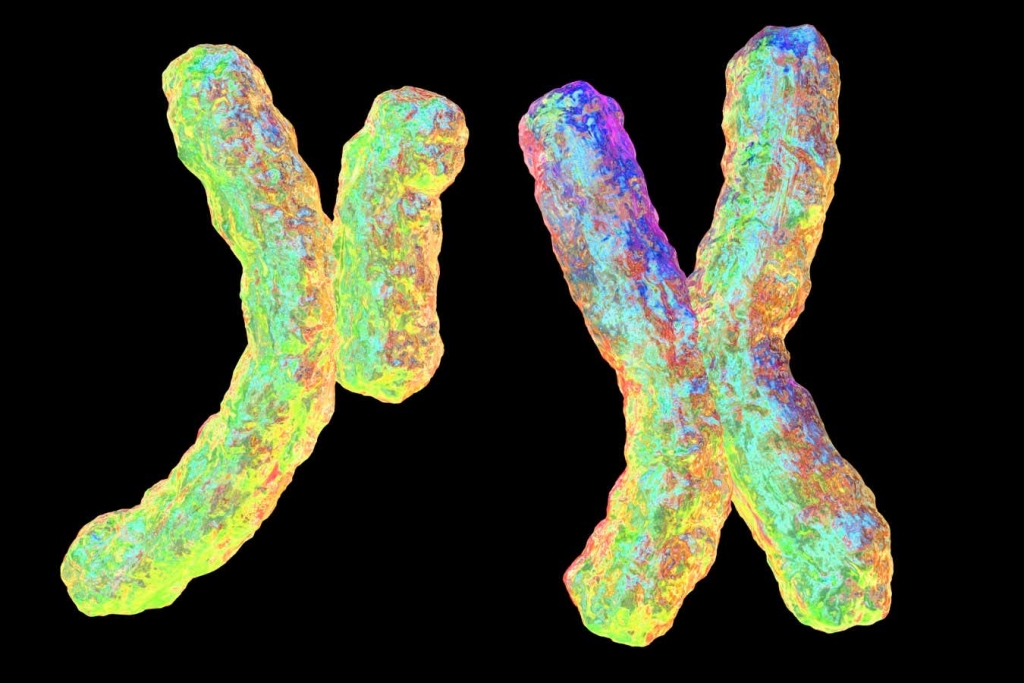
Exclusive: Utah Family’s 7-Generation Male Bias Sparks Scientific Frenzy Over “Selfish” Y Chromosomes
A groundbreaking genetic mystery is unfolding in Utah, where researchers have uncovered what may be one of the most extraordinary examples of evolutionary “selfishness” ever documented in humans. A family spanning seven generations and dating back to the 1700s has produced an astonishingly lopsided ratio of male to female offspring—so skewed that scientists now suspect a rogue Y chromosome is actively suppressing female births.
The story begins with an analysis of the Utah Population Database, a treasure trove of genealogical records encompassing millions of individuals. Among the vast dataset, one family stood out like a statistical lightning bolt. Over seven generations, 33 men inherited the same Y chromosome. Of their 89 children, 60 were boys and only 29 were girls—a ratio so improbable that it defies random chance.
“This is a very significant family,” said James Baldwin-Brown, a geneticist at the University of Utah. “Selfish genes of the kind that we’re talking about have been found in lots of organisms, but they’ve been very hard to study in humans.”
The phenomenon at play is known as “meiotic drive,” where certain genetic elements manipulate the reproductive process to favor their own transmission. In this case, the Y chromosome appears to be pulling the strings. Normally, male cells carry one X and one Y chromosome. During sperm production, stem cells divide so that half the sperm carry X and half carry Y—resulting in a theoretical 50:50 chance of male or female offspring. But some chromosomes have evolved cunning strategies to tilt the odds.
Selfish chromosomes can sabotage rival sperm by disrupting their ability to follow chemical signals toward the egg, or by outright killing sperm that don’t carry them. The exact mechanisms remain one of biology’s enduring puzzles. “That’s a 100-year-old question that we’re still working on today,” noted Nitin Phadnis, also at the University of Utah.
The implications go beyond mere curiosity. These genetic conflicts can spark evolutionary “arms races” between X and Y chromosomes, each trying to outmaneuver the other. While such phenomena have been documented in mice, fruit flies, and other animals, finding them in humans is exceptionally rare—and controversial.
The Utah team used two independent statistical methods to analyze the data, both converging on the same family as a dramatic outlier. But confirming the theory presents challenges. Because the database anonymizes individuals, the researchers can’t directly sequence the Y chromosomes or examine sperm samples from living descendants.
“It’d be great to be able to de-anonymize these samples and go to these people and say, ‘Hey, can we sequence your sperm, try to understand what’s going on here?'” Baldwin-Brown admitted. “That’s a pretty big hurdle, though, because to do that ethically requires a lot of paperwork and a lot of money.”
Skeptics urge caution. SaraH Zanders of the Stowers Institute for Medical Research points out that smaller sample sizes can produce misleading patterns. “I would like to think that the team has found a selfish Y chromosome, but the numbers are still too small to be sure,” she said. There’s also the ever-present possibility of paternity misattribution—a factor that could distort family trees.
Yet the researchers maintain their findings are robust. And the stakes extend beyond genealogy. Selfish chromosomes may contribute to male infertility, as mechanisms that destroy half of all sperm would naturally reduce fertility. Animal studies have shown similar genetic elements can cause sterility in some individuals.
The discovery also resonates with cutting-edge biotechnology. Scientists are exploring artificial gene drives—engineered versions of these natural systems—to combat malaria by creating mosquito populations that can’t transmit the disease, or to control invasive species. Understanding how selfish genes operate in nature could inform these efforts.
As the Utah team plans to analyze sperm samples for skewed X-Y ratios, the case remains open. If confirmed, it would mark one of the first documented instances of a selfish Y chromosome actively shaping human demographics across centuries—a quiet genetic rebellion written into family trees.
Tags & Viral Phrases:
- Selfish Y chromosome discovered in Utah family
- 7 generations of male bias—is genetics to blame?
- The chromosome that kills baby girls?
- Evolutionary warfare: X vs Y
- Gene drive technology and human reproduction
- Utah’s secret genetic weapon?
- Why are there so many boys in this family?
- The 200-year-old Y chromosome mystery
- Can a chromosome choose your baby’s sex?
- Male infertility linked to selfish genes
- CRISPR gene drives: the next frontier
- Nature’s genetic cheaters
- The chromosome that plays dirty
- Is your family tree hiding a selfish gene?
- The battle of the sexes—at the cellular level
,


Leave a Reply
Want to join the discussion?Feel free to contribute!