
Rare Genetic Disease Discovered in Ancient Skeletal Embrace From The Ice Age : ScienceAlert
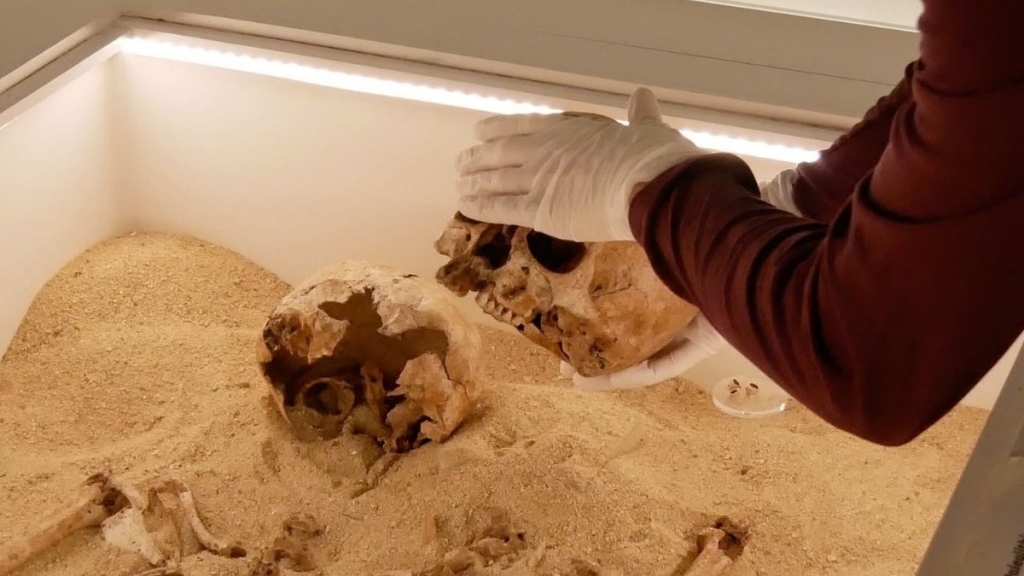
Ancient DNA Reveals 12,000-Year-Old Case of Rare Genetic Disorder in Mother-Daughter Pair
In a remarkable discovery that bridges millennia, scientists have uncovered the earliest known case of a rare genetic disorder using cutting-edge ancient DNA analysis. The finding not only sheds light on the genetic health of our Ice Age ancestors but also offers a poignant glimpse into prehistoric family bonds and care.
The Discovery: A Timeless Embrace
More than 12,000 years ago, two closely-related women—likely a mother and daughter—were buried together in an eternal embrace in southern Italy’s Grotta del Romito cave. First discovered during excavations in 1963, these Ice Age hunter-gatherers captured researchers’ attention again when modern genetic techniques revealed their extraordinary story.
Modern Science Meets Ancient Bones
A team of European researchers, led by anthropologist Daniel Fernandes from the University of Coimbra in Portugal, re-examined the skeletons using advanced genetic sequencing methods. By extracting and analyzing ancient DNA from the left inner ear of each individual, they unlocked secrets that had remained hidden for millennia.
A Rare Diagnosis Across Time
The analysis revealed that the younger individual carried mutations in the NPR2 gene, causing acromesomelic dysplasia, Maroteaux type (AMDM)—a rare genetic disorder affecting bone growth. This represents the earliest documented case of this condition in human history.
AMDM occurs when both copies of the NPR2 gene are non-functional, preventing the production of a crucial protein for skeletal development. The disorder results in distinctive physical characteristics including shortened limbs, limited joint mobility, and characteristic facial features.
A Family’s Genetic Legacy
The genetic detective work revealed that both individuals were female and first-degree relatives. The older woman carried only one mutated copy of the NPR2 gene (heterozygous mutation), resulting in milder short stature. This suggests she was likely the mother of the affected girl, with the father also carrying at least one copy of the variant.
This family genetic pattern demonstrates how the same mutation can affect family members differently—the mother experienced only mild effects, while the daughter developed the full syndrome.
Life with AMDM in the Ice Age
Living as a hunter-gatherer with AMDM would have presented significant challenges. The condition limited the girl’s range of motion, particularly at the elbows and hands, making daily activities and the long-distance travel typical of her people considerably more difficult.
Yet the archaeological evidence tells a story of resilience and care. Analysis of the girl’s bones revealed she survived until late adolescence, experiencing similar dietary and nutritional stress as other members of her community. This suggests her family provided the support and care necessary for her survival in a challenging environment.
Challenging Our Understanding of Prehistoric Care
This discovery adds to growing evidence that humans have been caring for vulnerable family members for far longer than previously thought. It challenges outdated notions of prehistoric life as solely focused on survival of the fittest, revealing instead a complex social structure capable of supporting individuals with special needs.
As Fernandes notes, “Identifying both individuals as female and closely related turns this burial into a familial genetic case.” The fact that the girl survived to adolescence despite her condition speaks volumes about the care and support she received from her community.
Scientific Significance
Beyond its human interest, this discovery represents a significant advancement in our understanding of genetic disorders throughout human history. Adrian Daly of Liège University Hospital Centre in Belgium emphasizes the importance: “Rare genetic diseases are not a modern phenomenon but have been present throughout human history. Understanding their history may help recognizing such conditions today.”
The research, published in The New England Journal of Medicine, demonstrates how ancient DNA analysis can provide insights into both genetic conditions and prehistoric social structures, opening new avenues for understanding human evolution and behavior.
A Timeless Testament to Family Love
While the circumstances of their deaths remain unknown, the burial position of these two women—locked in an eternal embrace—speaks to the deep bonds that connected them in life and death. Their story, preserved in bone and DNA for over 12,000 years, offers a touching reminder that the fundamental human experiences of family, care, and love transcend time and circumstance.
As we continue to uncover the secrets of our ancient past, discoveries like this remind us that our prehistoric ancestors were not so different from us after all—they loved, cared for one another, and faced life’s challenges together, just as we do today.
Tags: Ancient DNA, Genetic Disorder, Ice Age, Prehistoric Care, Family Bonds, NPR2 Gene, AMDM, Hunter-Gatherers, Archaeological Discovery, Human Evolution, Genetic Research, Mother-Daughter Relationship, Rare Disease, Paleolithic Era, Scientific Breakthrough, Genetic Mutation, Bone Growth Disorder, Prehistoric Medicine, Ancient Genetics, Human History
Viral Sentences:
- “12,000-year-old DNA reveals prehistoric mother-daughter bond”
- “Ancient skeleton shows earliest known case of rare genetic disorder”
- “Ice Age girl survived thanks to prehistoric family care”
- “Scientists diagnose genetic disease in bones 12 millennia old”
- “Prehistoric family embraced in death after caring for disabled daughter”
- “Ancient DNA technology unlocks secrets of Ice Age health”
- “Hunter-gatherer society cared for disabled family members”
- “Mother and daughter buried together reveal genetic mystery”
- “NPR2 gene mutation discovered in 12,000-year-old remains”
- “Prehistoric care challenges assumptions about ancient human behavior”
- “Genetic detective work solves 12,000-year-old medical mystery”
- “Ancient bones tell story of love and care across millennia”
- “Scientists diagnose Ice Age genetic disorder using ear bone DNA”
- “Family burial reveals prehistoric understanding of genetic inheritance”
- “12,000-year-old case of AMDM rewrites history of genetic diseases”
,

Leave a Reply
Want to join the discussion?Feel free to contribute!