
Record-breaking quantum simulator could unlock new materials
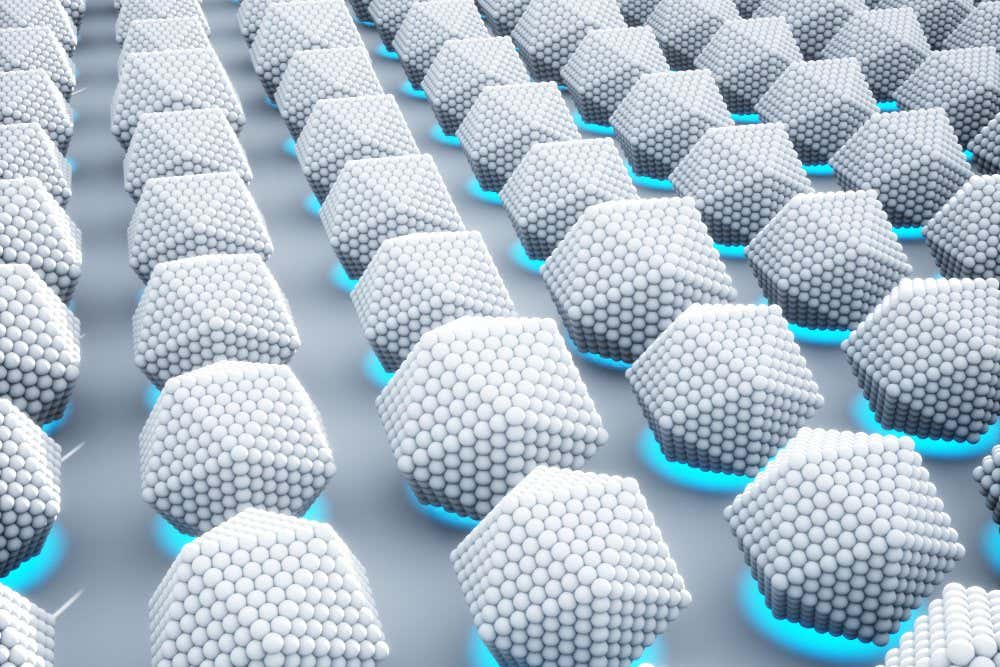
Quantum Twins: The 15,000-Qubit Simulator That Could Revolutionize Material Science
In a breakthrough that’s sending shockwaves through the quantum computing world, researchers at Silicon Quantum Computing in Australia have unveiled Quantum Twins—the largest quantum simulator ever created. This revolutionary device, containing a staggering 15,000 qubits arranged in precise silicon chips, promises to unlock the secrets of exotic quantum materials that have baffled scientists for decades.
The Quantum Leap Forward
While quantum computers aim to solve complex calculations beyond conventional machines’ reach, quantum simulators like Quantum Twins serve a different but equally crucial purpose: they model the behavior of quantum materials with unprecedented accuracy. This distinction is vital because certain materials, particularly superconductors that conduct electricity with near-perfect efficiency, derive their remarkable properties from quantum effects that are incredibly difficult to simulate using traditional computational methods.
“Quantum Twins represents a paradigm shift in how we approach material science,” explains Michelle Simmons, the project’s lead researcher. “We’re no longer limited to theoretical models or approximations. We can literally build material analogues atom by atom, giving us direct insight into quantum phenomena that were previously inaccessible.”
Engineering the Unthinkable
The technical achievement behind Quantum Twins is nothing short of extraordinary. The team embedded phosphorus atoms into silicon chips, with each atom functioning as a quantum bit or qubit. These qubits were arranged in precise square grids that perfectly emulate the atomic arrangements found in real materials.
What makes this achievement particularly remarkable is the level of control achieved. The researchers can manipulate individual electron properties within the grid, simulating how electrons behave in actual materials. This includes controlling how difficult it is to add electrons to specific points or how easily they can “hop” between positions—crucial factors in understanding electrical conductivity and other material properties.
Breaking Computational Barriers
Conventional computers struggle significantly when simulating large two-dimensional quantum systems or when dealing with complex combinations of electron properties. Quantum Twins overcomes these limitations by leveraging quantum mechanics itself to perform the simulation.
The team demonstrated the simulator’s capabilities by modeling a transition between metallic and insulating behavior—a fundamental phenomenon in material science. They also measured the Hall coefficient across different temperatures, providing insights into how the simulated material responds to magnetic fields.
The Superconductor Holy Grail
Perhaps the most exciting application for Quantum Twins lies in understanding unconventional superconductors. While conventional superconductors are relatively well-understood at the electron level, they require extreme conditions—either extremely low temperatures or tremendous pressure—to function. This makes them impractical for widespread applications.
Some superconductors can operate under milder conditions, but the key to engineering room-temperature, ambient-pressure superconductors lies in understanding their microscopic behavior. This is precisely where quantum simulators like Quantum Twins could prove revolutionary.
“If we can crack the code of unconventional superconductivity,” Simmons notes, “we could potentially transform everything from power transmission to medical imaging to quantum computing itself.”
Beyond Superconductors
The applications extend far beyond just superconductors. Quantum Twins could be used to study interfaces between different metals, potentially leading to breakthroughs in catalysis and energy storage. The simulator could also model molecules similar to polyacetylene, which has applications in drug development and artificial photosynthesis devices.
The precision of Quantum Twins opens up entirely new avenues for material discovery. Instead of relying on trial-and-error experimentation or complex theoretical models, researchers can now design and test materials virtually before attempting physical synthesis.
The Future of Material Science
The implications of this technology are profound. Material science has traditionally been a slow, iterative process involving countless experiments and often serendipitous discoveries. Quantum Twins accelerates this process dramatically by allowing researchers to explore vast regions of material space that were previously computationally intractable.
As quantum technology continues to advance, we can expect even larger and more sophisticated simulators. The current 15,000-qubit system may soon seem modest compared to what’s possible. Each advancement brings us closer to the holy grail of material science: the ability to design materials with specific, desirable properties from first principles.
The Quantum Twins project represents more than just a technological achievement—it’s a new paradigm for scientific discovery. By bridging the gap between theoretical models and physical reality, it promises to accelerate innovation across multiple fields, from energy and electronics to medicine and beyond.
As we stand on the brink of this quantum revolution in material science, one thing is clear: the future of technology may well be designed one qubit at a time.
Tags
quantum computing breakthrough, largest quantum simulator, 15000 qubit achievement, material science revolution, superconductors research, quantum materials, silicon quantum computing, Michelle Simmons, quantum simulation technology, room temperature superconductors, quantum bits innovation, material design future, quantum technology advancement, scientific discovery acceleration, quantum mechanics applications, next generation materials, quantum engineering breakthrough, technology innovation 2024, quantum research milestone, material science transformation, quantum computing applications, scientific breakthrough, quantum technology news, future of materials, quantum simulation achievement
Viral Sentences
Quantum Twins just changed everything we know about material science! The 15,000-qubit quantum simulator that’s about to revolutionize technology as we know it. Scientists can now design materials atom by atom – this is the future happening right now! The holy grail of superconductors might finally be within reach thanks to quantum simulation. Silicon Quantum Computing just pulled off what many thought impossible. Room temperature superconductors could be coming sooner than we ever imagined. This breakthrough could transform everything from energy to medicine in ways we can barely comprehend. The quantum revolution in material science has officially begun. Scientists are literally building material analogues one qubit at a time. This isn’t just an incremental improvement – it’s a quantum leap forward. The implications of Quantum Twins extend far beyond just superconductors. We’re entering an era where we can design materials with specific properties from first principles. This technology could accelerate scientific discovery by decades. The future of technology is being designed one quantum bit at a time. Quantum Twins represents a paradigm shift in how we approach scientific research. This breakthrough bridges the gap between theoretical models and physical reality. The quantum computing world is buzzing about this unprecedented achievement. Material science will never be the same after Quantum Twins. This is the kind of breakthrough that changes the trajectory of entire fields. Scientists can now explore material space that was previously computationally intractable. The applications of this technology are virtually limitless. We’re witnessing the birth of a new era in scientific discovery. Quantum Twins could be the key to solving some of humanity’s biggest challenges. This achievement proves that the quantum future is already here.
,

Leave a Reply
Want to join the discussion?Feel free to contribute!