
Reliance unveils $110B AI investment plan as India ramps up tech ambitions
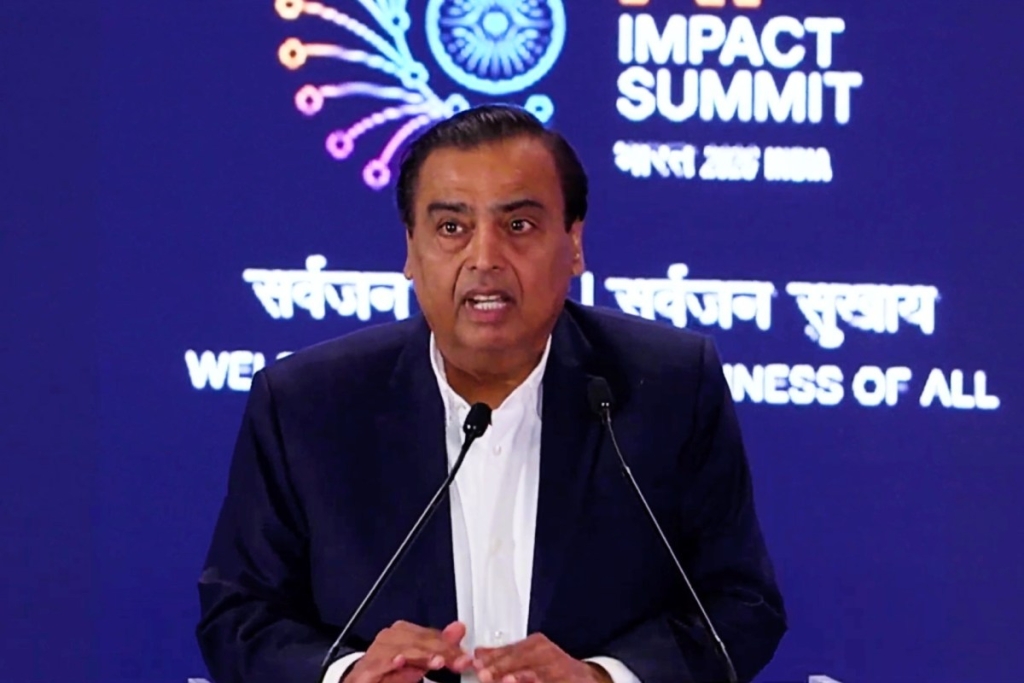
Mukesh Ambani’s $110 Billion AI Revolution: India’s Silicon Valley Moment
In a seismic announcement that could reshape the global AI landscape, Reliance Industries Chairman Mukesh Ambani has unveiled a staggering ₹10 trillion (approximately $110 billion) investment plan to establish India as a powerhouse in artificial intelligence computing infrastructure. The declaration, made at the prestigious India AI Impact Summit in New Delhi, signals not just another corporate expansion but potentially the most ambitious technological undertaking in Indian history.
The Scale That Defies Imagination
When Ambani speaks of “gigawatt-scale data centers,” he’s not using hyperbole—he’s describing infrastructure on a scale that rivals entire national grids. These aren’t your typical server farms tucked away in suburban business parks. We’re talking about massive computing complexes that will consume power comparable to small cities, housed in the industrial heartland of Jamnagar, Gujarat, where construction has already commenced.
The timeline is equally audacious: over 120 megawatts of capacity is slated to come online in the second half of 2026 alone. To put this in perspective, that’s enough computing power to simultaneously run hundreds of thousands of AI models, potentially serving millions of Indian businesses and consumers.
The Silicon Rush: India’s AI Gold Rush Has Begun
Ambani’s announcement didn’t occur in isolation—it’s the opening salvo in what industry analysts are calling India’s “AI Infrastructure Arms Race.” Just days prior, the Adani Group revealed plans to invest approximately $100 billion in AI data centers across India. The Indian government, sensing the tectonic shift, has projected over $200 billion in AI infrastructure spending within the next two years alone.
Global tech giants are scrambling to establish beachheads. OpenAI’s partnership with the Tata Group to develop 100 megawatts of AI capacity, with ambitions to scale to 1 gigawatt, demonstrates that Silicon Valley recognizes India’s potential to become the world’s next AI superpower. The question isn’t whether India will be a major player in AI—it’s whether it will become the dominant force.
The Philosophy Behind the Billions
What makes Ambani’s vision particularly compelling is the philosophical underpinning. “The biggest constraint in AI today is not talent or imagination,” he declared. “It is scarcity and high cost of compute.” This insight cuts to the heart of AI’s democratization challenge. Today’s AI revolution remains largely confined to wealthy corporations and nations with deep pockets. Ambani envisions a different future.
“We cannot afford to rent intelligence,” he asserted, invoking the spirit of India’s independence movement but in a thoroughly modern context. Just as India once fought for economic sovereignty, Ambani argues that technological sovereignty is the next frontier. The comparison to Jio’s disruption of India’s mobile data market is deliberate and instructive—Reliance transformed India from one of the most expensive mobile data markets to one of the cheapest, catalyzing a digital revolution that touched nearly every Indian.
Green Energy: The Secret Weapon
Here’s where Reliance’s strategy becomes particularly ingenious. The company’s massive surplus power capacity—10 gigawatts from solar projects in Gujarat and Andhra Pradesh—provides a sustainable foundation for these energy-hungry data centers. In an era where tech companies are racing to reduce their carbon footprint, Reliance’s green energy advantage could become a decisive competitive edge.
This integration of renewable energy with cutting-edge computing infrastructure positions India uniquely in the global AI race. While Western data centers struggle with energy constraints and environmental concerns, India’s AI infrastructure could be powered by the sun, making it both economically and environmentally sustainable.
The Ecosystem Approach: Beyond Silicon
Ambani’s vision extends far beyond building data centers. Reliance plans to partner with Indian enterprises, startups, and academic institutions to embed AI across the entire economy. From manufacturing and logistics to agriculture, healthcare, and financial services, the goal is comprehensive transformation.
The company’s existing partnership with Google to offer free Gemini AI Pro access to millions of Jio users demonstrates the practical implementation of this vision. By democratizing access to cutting-edge AI tools, Reliance aims to spark innovation at every level of Indian society.
The Language Revolution: AI for a Billion Voices
Perhaps most intriguingly, Reliance plans to develop AI capabilities in multiple Indian languages. In a country where hundreds of millions access the internet primarily through vernacular languages, this multilingual approach could be transformative. It’s not just about translating English AI models—it’s about building AI that understands the nuances, contexts, and cultural specificities of India’s diverse linguistic landscape.
The Stakes: Nothing Less Than India’s Technological Future
This aggressive push by Reliance Industries highlights a fundamental truth: India’s largest conglomerates recognize that AI represents perhaps the biggest technological opportunity in the country’s history. The race isn’t just about building infrastructure—it’s about securing India’s place in the global technological order for decades to come.
The implications are profound. If successful, India could leapfrog traditional technological hierarchies, becoming not just a consumer of AI but a creator and exporter of AI solutions tailored for the developing world. The vision is nothing short of establishing India as the “AI garage” for emerging markets globally.
The Challenges Ahead
Yet, the path forward is fraught with challenges. Building gigawatt-scale infrastructure requires not just capital but also skilled workforce, reliable supply chains, and robust regulatory frameworks. India must navigate complex questions around data sovereignty, privacy, and the ethical deployment of AI technologies.
Moreover, the competition is fierce. The United States and China have established significant leads in AI development. Can India’s late start be overcome by sheer scale and ambition? The answer may determine whether this $110 billion investment becomes a historic success or an expensive lesson in technological hubris.
The Verdict: India’s Sputnik Moment
Ambani’s announcement feels like India’s “Sputnik moment” for artificial intelligence—a declaration that the country is ready to compete at the highest levels of technological innovation. The scale of ambition, the integration of green energy, the focus on linguistic diversity, and the commitment to democratizing AI access all point to a comprehensive strategy that could indeed transform India’s technological landscape.
As construction begins on these massive data centers and partnerships take shape across the Indian economy, the world will be watching. Will India’s AI revolution succeed in making advanced intelligence accessible to its billion-plus population? Will it establish new paradigms for sustainable, inclusive AI development? The answers to these questions will shape not just India’s future, but potentially the future of AI itself.
Tags: #MukeshAmbani #RelianceIndustries #AIInfrastructure #IndiaAI #TechRevolution #DataCenters #ArtificialIntelligence #DigitalTransformation #GreenEnergy #TechInvestment #SiliconValley #EmergingMarkets #TechnologySovereignty #AIForAll #DigitalIndia #TechInnovation #FutureOfAI #IndianTech #AIInvestment #TechnologyLeadership
Viral Sentences:
- “We cannot afford to rent intelligence” – Mukesh Ambani’s revolutionary AI vision
- $110 billion bet: India’s bold leap into AI supremacy
- Gigawatt-scale data centers: The infrastructure that could power India’s AI dreams
- From mobile revolution to AI revolution: How Reliance plans to transform India again
- Green-powered AI: India’s sustainable approach to technological dominance
- The language barrier broken: AI in 100+ Indian languages
- Silicon Rush 2.0: Why global tech giants are rushing to India
- India’s Sputnik moment: The $110 billion declaration of AI independence
- Beyond Silicon Valley: How India could become the world’s AI garage
- The democratization of intelligence: Making AI accessible to a billion Indians
- Renewable revolution meets AI revolution: The sustainable future of computing
- From data consumers to data creators: India’s AI transformation strategy
- The $200 billion question: Can India’s AI infrastructure spending pay off?
- Green energy advantage: How solar power could fuel India’s AI dominance
- The ecosystem approach: Why partnerships are key to India’s AI success
- Multilingual AI: Breaking language barriers in the digital age
- Technological sovereignty: Why renting intelligence is no longer an option
- The Adani-Ambani AI arms race: India’s conglomerates battle for tech supremacy
- OpenAI in India: Why Silicon Valley is betting big on Indian AI
- The $110 billion gamble: Will India’s AI infrastructure investment transform the nation?
,


Leave a Reply
Want to join the discussion?Feel free to contribute!