
Remember those Honda 0 Series electric cars? They’re not happening.
Honda Abandons EV Dream: Stunning 0 Series Concepts Cancelled Amid $15.7 Billion Loss
In a shocking reversal that has sent ripples through the automotive industry, Honda has officially cancelled its ambitious Honda 0 Series electric vehicle program, writing off a staggering $15.7 billion in restructuring costs. The Japanese automaker’s decision marks one of the most dramatic EV failures in recent memory and signals a major shift in the global electric vehicle landscape.
The Dream That Never Was
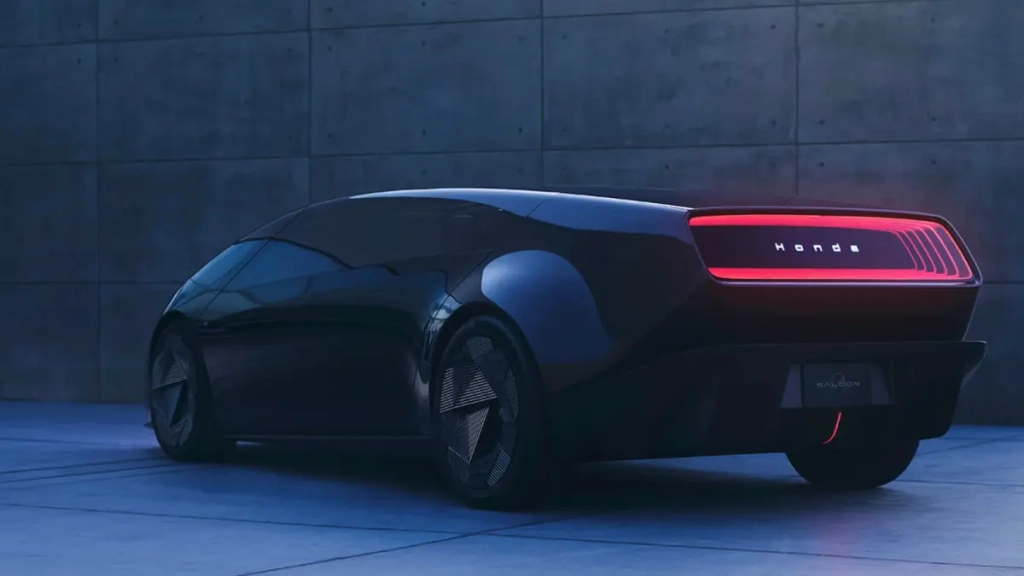
Just two years ago at CES 2024, Honda unveiled what many considered the most exciting electric vehicle concepts of the decade. The Honda 0 Series Saloon and 0 Series SUV, with their sleek retro-futuristic design, captured the imagination of automotive enthusiasts worldwide. These weren’t just concepts—Honda promised they would hit the market in 2026, positioning the company as a serious contender in the EV space at a time when many traditional manufacturers were scaling back their electric ambitions.
The vehicles represented Honda’s bold vision for the future: electric cars that combined cutting-edge technology with timeless design, offering a compelling alternative to both established automakers and the flood of new Chinese EV startups. Industry insiders praised Honda’s design language, noting how the 0 Series managed to look both futuristic and familiar—a delicate balance that many EV manufacturers struggle to achieve.
The Perfect Storm of Failure
Honda’s cancellation announcement on Thursday revealed the perfect storm of factors that doomed these vehicles before they ever reached production. The company cited “significantly declining” EV demand and pointed directly to President Trump’s tariffs as a major contributing factor. However, the most revealing aspect of Honda’s statement was its stark assessment of the competitive landscape, particularly in China.
“The EV market has evolved faster than we anticipated,” Honda admitted in its statement. “In China, what customers value more in automobiles is shifting from hardware features, such as fuel efficiency and cabin space, to software-based features that will continuously advance according to customer preferences.”
This admission cuts to the heart of why traditional automakers are struggling against new EV entrants. The company acknowledged that newer manufacturers have leveraged “short product development cycles and strengths in the area of software-defined vehicle (SDV) technologies,” including advanced driver-assistance systems (ADAS). The brutal conclusion? “Honda was unable to deliver products that offer value for money better than that of newer EV manufacturers.”
The China Factor: A Warning to All Western Automakers
Honda’s statement contains a paragraph that should send chills down the spines of every European and American automaker. The assessment of the Chinese market isn’t just a regional concern—it’s a global warning. Chinese EV manufacturers like BYD, NIO, and XPeng have achieved what many thought impossible: they’ve matched or exceeded Western quality standards while dramatically undercutting prices.
The software-defined vehicle revolution is perhaps the most critical battleground. Where traditional automakers view software as an add-on, Chinese startups treat it as the core of the vehicle experience. Over-the-air updates, AI-powered features, and seamless smartphone integration have become table stakes in China’s hyper-competitive market.
What’s happening in China isn’t staying in China. European manufacturers like Volkswagen, Stellantis, and BMW are facing the same pressures, often with even less preparation than their American counterparts. The Honda 0 Series cancellation could be the canary in the coal mine for the entire traditional automotive industry.
The Human Cost of Corporate Missteps
Beyond the billion-dollar write-offs lies a more personal tragedy. The Honda 0 Series represented the dreams and hard work of thousands of engineers, designers, and planners who spent years developing these vehicles. The cancellation means lost jobs, shattered careers, and broken promises to dealerships and suppliers who had already begun preparing for the 2026 launch.
The associated projects, like Honda’s innovative solar-powered camping trailer concept, are almost certainly dead as well. This modular ecosystem approach—where electric vehicles integrate with sustainable accessories and services—represented Honda’s vision for a holistic EV lifestyle. That vision has now been abandoned.
The Strategic Pivot: Back to Hybrids
In place of its cancelled EV dreams, Honda is doubling down on hybrids—a technology the company mastered decades ago with its pioneering Insight and later the wildly successful Prius competitor. This strategic pivot reveals a company choosing the safety of known technologies over the uncertainty of electric innovation.
“While we monitor the balance between profitability and market trends, we will focus on strengthening our hybrid lineup,” Honda stated. This approach allows the company to maintain relevance in the transition to electrification while avoiding the massive capital expenditures and market risks associated with pure EVs.
The Broader Implications for the EV Revolution
Honda’s retreat raises fundamental questions about the future of electric vehicles. Is the market cooling as dramatically as Honda suggests, or is this a case of a traditional automaker failing to adapt quickly enough? The answer likely lies somewhere in between.
EV sales growth has indeed slowed in some markets, particularly in the United States where charging infrastructure remains inadequate and political uncertainty looms large. However, global EV adoption continues to accelerate, driven primarily by China and increasingly by Europe.
The Honda 0 Series cancellation may represent not a failure of the EV concept, but rather a failure of timing and execution. The vehicles Honda planned for 2026 would have entered a market that looks dramatically different from the one they envisioned in 2024. Chinese manufacturers will have further solidified their dominance, charging networks will have expanded (or not), and consumer preferences will have evolved yet again.
What This Means for Consumers
For consumers, Honda’s decision means fewer choices in the mid-priced EV segment—precisely the segment where competition could most benefit buyers. The cancellation also suggests that the EV revolution may take longer and follow a more complex path than many predicted.
The $15.7 billion write-off will likely impact Honda’s ability to invest in other technologies, potentially slowing its overall innovation timeline. Meanwhile, the companies that succeed in the EV space—whether established players or new entrants—will have even less competition than they might have faced with Honda in the market.
The Road Ahead
Honda’s retreat from its EV ambitions represents one of the most significant moments in automotive history this decade. It’s a stark reminder that even the most innovative concepts can fail when faced with market realities, competitive pressures, and strategic miscalculations.
The question now is whether Honda’s decision represents a prudent business move in a challenging market, or the beginning of a broader retreat from electrification by traditional automakers. If it’s the latter, the automotive industry of 2030 may look very different from what anyone predicted in 2020.
As Honda monitors “the balance between profitability and market trends,” the rest of the industry watches closely. The Honda 0 Series may never see the light of day, but its cancellation could illuminate the path forward for electric vehicles—or cast a long shadow over their future.
Tags: #Honda #ElectricVehicles #EV #CES2024 #CES2025 #Automotive #ChinaEVs #Tariffs #SoftwareDefinedVehicles #HybridCars #AutoIndustry #EVMarket #BYD #NIO #XPeng #Volkswagen #Tesla #ChargingInfrastructure #AutonomousDriving #AutomotiveTechnology #FutureOfMobility
Viral Phrases: “The EV market has evolved faster than we anticipated”, “unable to deliver products that offer value for money”, “software-defined vehicle revolution”, “$15.7 billion write-off”, “the canary in the coal mine”, “strategic pivot to hybrids”, “mid-priced EV segment”, “charging infrastructure remains inadequate”, “the perfect storm of failure”, “the dream that never was”
,


Leave a Reply
Want to join the discussion?Feel free to contribute!