
Republicans attack ‘woke’ Netflix — and ignore YouTube
Netflix’s Senate Hearing: A Culture War Sideshow That Ignored YouTube’s Real Dominance
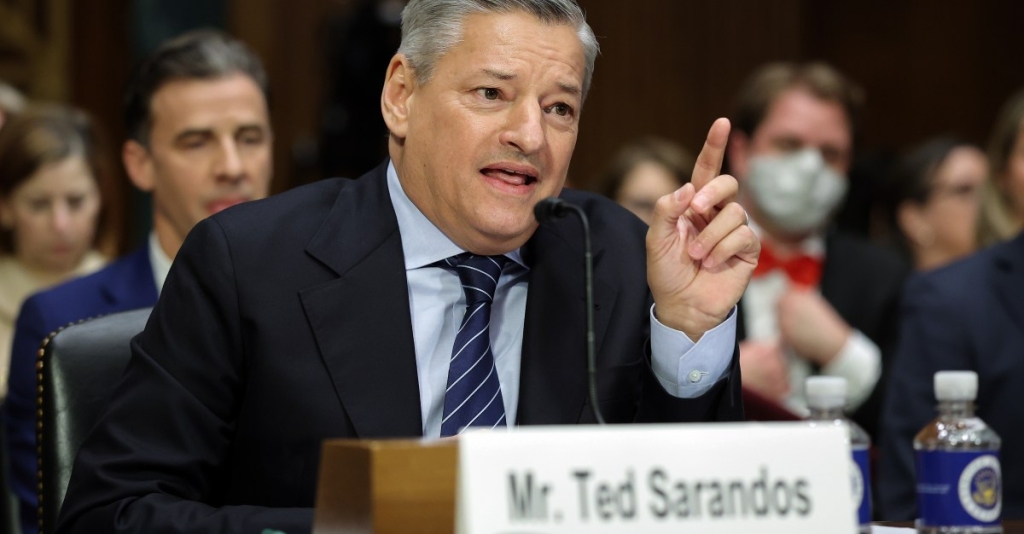
When Netflix co-CEO Ted Sarandos walked into that Senate office building last Tuesday, nobody expected the hearing to spiral into a political theater production about “woke” ideology. What was supposed to be a straightforward antitrust discussion about Warner Bros. Discovery’s merger quickly transformed into a Republican-led spectacle that would have been entertaining if it weren’t so transparently performative.
The irony? While senators grandstanded about Netflix’s supposed “transgender agenda,” they completely ignored the elephant in the room—or rather, the platform that actually dominates American screen time: YouTube.
The Grandstanding Begins
Senator Josh Hawley (R-MO) kicked things off with a question that would have been laughable if it weren’t coming from a sitting U.S. Senator: “Why is it that so much of Netflix content for children promotes a transgender ideology?” Hawley then made the extraordinary claim that “almost half” of Netflix’s children’s programming contains this so-called “transgender ideology”—a statement he offered without a shred of evidence.
This line of questioning echoed Elon Musk’s manufactured outrage campaign from months earlier, where he urged X users to cancel their Netflix subscriptions over the platform’s “transgender woke agenda.” The irony? The shows Musk cited as evidence had been canceled years ago.
Sarandos, maintaining his composure throughout the circus, responded with characteristic directness: “Our business intent is to entertain the world. It is not to have a political agenda.”
But Hawley wasn’t alone in his crusade. Senators Ashley Moody (R-FL) and Eric Schmitt (R-MO) joined the pile-on, dredging up a Netflix post from after George Floyd’s murder and the French film Cuties, which had sparked manufactured outrage years prior. Even Senator Ted Cruz (R-TX) weighed in, asking Sarandos for his thoughts on Billie Eilish’s “no one is illegal on stolen land” comment at the Grammys—a question so far removed from antitrust concerns it bordered on absurd.
“My concern is that you don’t share my values or those of many other American parents,” Hawley declared, “and you want the United States government to allow you to become one of the largest—if not the largest—streaming monopolist in the world.”
The performance was complete political theater, but it revealed something deeper about how culture war narratives are manufactured and amplified in American politics.
The YouTube Paradox
Here’s where the hearing became truly surreal: Netflix, for all its cultural influence and market power, doesn’t even come close to YouTube’s dominance in American viewing habits.
According to Nielsen data, Netflix accounted for 9 percent of total TV and streaming viewing in the United States in December 2025. Warner Bros. Discovery’s services combined for a mere 1.4 percent. Even if Netflix successfully acquires Warner Bros. Discovery—a merger that remains uncertain—the combined entity still wouldn’t match YouTube’s 12.7 percent share of viewership during that same period.
“YouTube is not just cat videos anymore,” Sarandos told the subcommittee. “YouTube is TV.”
And he’s absolutely right. YouTube has evolved from a platform for amateur videos into the most-watched streaming service in America. Unlike Netflix, which must spend billions on content production and licensing fees, YouTube operates on a fundamentally different model. Anyone with a smartphone can become a creator, and the platform’s algorithm works tirelessly to keep viewers engaged.
The Algorithm Problem Nobody Wants to Discuss
YouTube’s business model creates a perfect storm of content challenges that make Netflix’s curated approach look almost quaint by comparison. Because YouTube is free and accessible to anyone with internet access, it attracts a massive, diverse audience. Its recommendation algorithm, designed to maximize watch time, often promotes content that’s inflammatory, controversial, or simply bizarre.
As my colleague Mia Sato has documented, YouTube has become a haven for creators who understand how to game the algorithm. The platform rewards content that provokes strong reactions, leading to an ecosystem where outrage and sensationalism often trump quality or accuracy.
For parents concerned about what their children are watching, YouTube presents a far more complex challenge than Netflix. While Netflix offers parental controls and age-appropriate content categories, YouTube’s open platform means children can stumble upon virtually anything. The platform has made efforts to create YouTube Kids, but the main platform remains a vast, largely uncurated space.
The content issues extend beyond just inappropriate material. YouTube has become a breeding ground for conspiracy theories, misinformation, and extremist ideologies. The algorithm’s tendency to recommend increasingly extreme content to keep users engaged has been well-documented, creating rabbit holes that can lead viewers to increasingly fringe content.
Why the Double Standard?
The question that hangs over this entire spectacle is: why target Netflix while ignoring YouTube? The answer reveals uncomfortable truths about modern political discourse and media criticism.
First, Netflix is an easier target. As a subscription service, it’s simpler to boycott—just cancel your membership. YouTube, being free and ubiquitous, presents a more complex challenge for critics. You can’t really “cancel” YouTube in the same way.
Second, Netflix produces traditional content—TV shows and movies—that are easier to analyze and criticize. YouTube’s content is decentralized and constantly changing, making it harder to mount a coherent critique. A senator can watch a Netflix show and form an opinion; understanding YouTube requires grappling with an algorithmically-driven ecosystem of millions of creators.
Third, and perhaps most importantly, the culture war narrative works better against a corporate entity like Netflix. It’s easier to paint Netflix as pushing a “woke agenda” when you can point to specific shows and creators. YouTube’s decentralized nature makes it harder to sustain such a narrative, even though the platform arguably has a more significant cultural impact.
The Real Antitrust Issue
Beneath the culture war posturing lies a legitimate antitrust concern that got lost in the theatrics. The potential Netflix-Warner Bros. Discovery merger would create an entity controlling a substantial portion of the streaming market. This concentration of power deserves scrutiny, regardless of the political leanings of the content being produced.
But that scrutiny should be based on market dynamics, not cultural grievances. The real question isn’t whether Netflix promotes certain ideologies—it’s whether allowing one company to control such a significant portion of streaming content and distribution serves the public interest.
YouTube’s dominance adds another layer to this discussion. If YouTube already controls 12.7 percent of TV viewing and continues to grow, how does that factor into antitrust calculations? The streaming landscape is more complex than a simple Netflix-versus-traditional-TV equation.
A Path Forward
The hearing ultimately revealed more about American political theater than about the actual state of streaming media. While senators performed outrage for their base, they missed an opportunity to address real issues: content moderation, algorithmic accountability, and market concentration.
For parents genuinely concerned about what their children are watching, the solution isn’t political grandstanding about Netflix. It’s engaging with the actual media landscape—understanding how platforms like YouTube work, using available parental controls, and having conversations with children about media literacy.
As Sarandos suggested during the hearing, if you don’t like what’s on Netflix, you have a simple option: unsubscribe. But for YouTube, the solution isn’t so straightforward. That’s a conversation worth having—just not in the form of a political circus.
The real story here isn’t about Netflix’s supposed “woke agenda.” It’s about how American politics has become more interested in performative outrage than substantive policy discussions. And it’s about how the most influential media platform in America—YouTube—continues to operate with minimal scrutiny while smaller players face disproportionate attention.
Maybe next time, senators will focus on the platforms that actually shape American media consumption rather than the ones that make for better political theater.
Tags and Viral Phrases:
woke Netflix, Ted Sarandos Senate hearing, Josh Hawley Netflix, YouTube dominance streaming, culture war streaming, Netflix Warner Bros merger, YouTube algorithm problems, cancel Netflix campaign, streaming antitrust issues, YouTube vs Netflix viewership, conservative Netflix criticism, YouTube kids content concerns, Netflix transgender ideology debate, Senate antitrust hearing spectacle, YouTube free streaming dominance, Netflix culture war target, YouTube recommendation algorithm, streaming market concentration, Netflix parental controls, YouTube extremist content, culture war political theater, streaming subscription cancellations, YouTube misinformation spread, Netflix content moderation, YouTube decentralized content, streaming industry regulation, Netflix George Floyd post controversy, YouTube algorithmic accountability, streaming platform scrutiny, Netflix Cuties controversy, YouTube market power unchecked, streaming culture war narratives, Netflix Billie Eilish Grammys question, YouTube content recommendation problems, streaming antitrust political theater, Netflix HBO Max merger uncertainty, YouTube cat videos evolution, streaming platform double standards, Netflix culture war scapegoat, YouTube algorithmic radicalization, streaming industry oversight gaps, Netflix political agenda accusations, YouTube dominant streaming force, streaming content moderation challenges, Netflix culture war distraction, YouTube free access advantage, streaming market share reality, Netflix culture war sideshow, YouTube algorithmic engagement, streaming platform accountability, Netflix culture war performance, YouTube content creation explosion
,

Leave a Reply
Want to join the discussion?Feel free to contribute!