
Researchers Find a Way to 3D Print One of the Hardest Engineering Materials on Earth
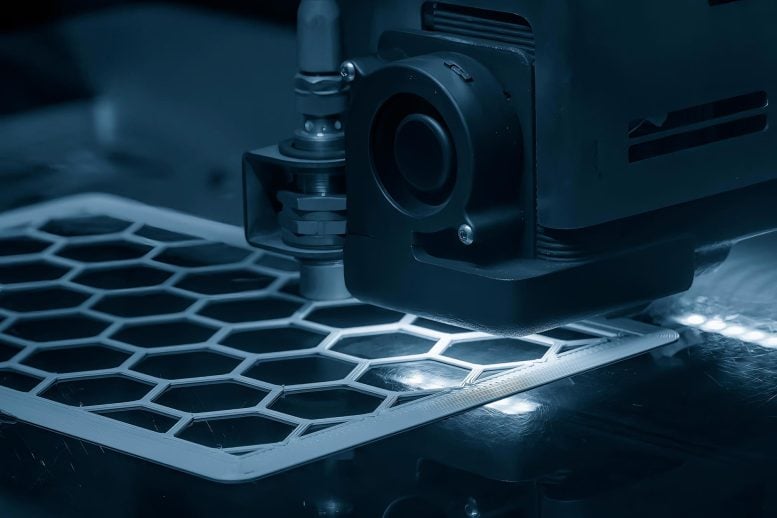
Scientists Unlock 3D Printing of One of Earth’s Toughest Materials
In a breakthrough that could reshape heavy industry, researchers have developed a revolutionary way to 3D print tungsten carbide-cobalt (WC-Co), a material so hard it’s been called one of engineering’s most stubborn challenges.
WC-Co forms the backbone of modern cutting tools, drill bits, and industrial machinery that slices through metal, concrete, and rock. Its exceptional hardness makes it indispensable—but also maddeningly difficult to manufacture. Traditional production methods require extreme heat and pressure, and once formed, the material becomes nearly impossible to reshape without specialized equipment.
The new approach, developed by a team of materials scientists, bypasses these limitations entirely. By adapting advanced additive manufacturing techniques, they’ve found a way to build complex WC-Co parts layer by layer, opening doors to designs that were previously impossible or prohibitively expensive to produce.
“This isn’t just about making existing tools slightly better,” explains one of the lead researchers. “We’re talking about completely reimagining what’s possible with this material. Intricate internal geometries, optimized cooling channels, custom tool shapes—features that could dramatically improve performance and lifespan.”
The implications ripple across multiple industries. Mining companies could see drill bits that last longer and cut more efficiently. Aerospace manufacturers might create turbine components with unprecedented durability. Even medical device makers could benefit, using the technique to produce specialized surgical instruments.
What makes this particularly exciting is how it democratizes access to advanced tooling. Smaller workshops and specialized manufacturers could now produce custom WC-Co parts without investing in massive sintering furnaces or diamond tooling. The technology essentially puts industrial-grade hardness within reach of anyone with the right 3D printer and materials.
The process still faces hurdles—achieving consistent density throughout printed parts remains a challenge, and scaling up production will require further refinement. But early tests show promise, with printed components matching or exceeding the performance of traditionally manufactured equivalents.
Industry experts are already buzzing about potential applications. Some envision a future where replacement parts can be printed on-demand at remote mining sites or construction projects, eliminating costly shipping delays. Others see opportunities for rapid prototyping of new tool designs, accelerating innovation cycles.
The timing couldn’t be better. As global demand for minerals, infrastructure, and manufactured goods continues to climb, the need for efficient, durable cutting tools grows alongside it. This breakthrough offers a path to meeting that demand while potentially reducing waste and energy consumption in manufacturing.
For now, the research team is focused on perfecting the technique and exploring partnerships with industry players. But the writing is on the wall: the era of 3D-printed industrial supermaterials has arrived, and it’s set to transform how we build the tools that build our world.
Tags / Viral Phrases:
3D printing revolution, impossible material conquered, manufacturing breakthrough, industrial game-changer, cutting-edge technology, materials science breakthrough, future of manufacturing, engineering marvel, superhard materials, additive manufacturing innovation, toolmaking reimagined, mining technology advances, aerospace manufacturing leap, sustainable production methods, custom industrial parts, on-demand manufacturing, prototyping revolution, durability redefined, next-gen tooling, materials engineering milestone
,


Leave a Reply
Want to join the discussion?Feel free to contribute!