
Resident Evil at 30: how Capcom’s horror opus has survived and thrived | Games
Resident Evil: The 30-Year Evolution of Survival Horror’s Undying Legacy
When Resident Evil first emerged in 1996, it appeared to materialize from the shadows of gaming history, a terrifying anomaly in an industry dominated by bright, arcade-style experiences. The PlayStation and Saturn consoles were celebrating the glossy thrills of Daytona USA and Tekken, while Capcom seemed trapped in an endless cycle of Street Fighter sequels and Mega Man iterations. Horror games were rare, confined mostly to PC titles like Alone in the Dark. Yet this mysterious Biohazard—as it was known in Japan—captured the imagination of gaming journalists precisely because it defied contemporary trends. While games celebrated power and mastery, Resident Evil embraced vulnerability, and that revolutionary approach has sustained it for three decades.
Today, thirty years after its debut, the franchise has sold over 180 million copies worldwide, spawning eleven core titles, countless spinoffs, remakes, and an entire multimedia empire including films, television series, and anime adaptations. Its characters have become cultural icons, its monstrous antagonists instantly recognizable, and its gameplay mechanics now foundational to the survival horror genre. But what explains this extraordinary longevity in an industry characterized by rapid technological evolution and shifting player preferences? Why do we continue to willingly submit ourselves to its terrifying embrace?
The Haunting Origins: Sweet Home’s Ghostly Legacy
To understand Resident Evil’s enduring power, we must first recognize that it didn’t emerge from nowhere. Its DNA traces back to 1989’s Sweet Home, a role-playing game released for the Famicom (Japan’s version of the Nintendo Entertainment System). Developed by Capcom, Sweet Home followed a group of filmmakers exploring a haunted mansion to recover valuable artifacts belonging to a mysterious artist. Though it achieved modest success in Japan, it never received an international release. Yet for one visionary producer at Capcom, the game’s potential haunted him.
“We have Tokuro Fujiwara to thank for the existence of Resident Evil,” explains Alex Aniel, author of the acclaimed Resident Evil history book Itchy, Tasty. “He directed Sweet Home believing that horror could become its own game genre, but wasn’t satisfied with its rudimentary portrayal. He wanted to give horror another try once the technology was there to allow it—that opportunity finally arrived with the release of the original PlayStation.”
In 1993, Capcom brought in a young producer named Shinji Mikami to oversee a horror game project inspired by Sweet Home’s haunted mansion concept. Mikami expanded the vision, drawing heavily from George A. Romero’s Dead trilogy and Infogrames’ 1992 horror adventure Alone in the Dark. Rather than traditional ghosts, he imagined a mansion infested with zombies, mutants, and biological horrors. The protagonists would be an experienced SWAT team investigating disappearances at a rural mansion owned by the sinister Umbrella Corporation.
Technical Innovation Through Creative Compromise
The original vision called for entirely real-time 3D visuals, but the PlayStation hardware couldn’t handle that level of visual processing. Mikami and programmer Yasuhiro Anpo made a crucial compromise that would define the series’ aesthetic: combining 3D characters with prerendered 2D backgrounds viewed from fixed camera angles. This technical limitation became an artistic strength, creating an expressionistic, cinematic style that emphasized the intense claustrophobia of the environment.
As lead characters Jill Valentine and Chris Redfield explore the mansion’s creaking hallways and decaying rooms, information is deliberately withheld from the player through blind corners, shadowy doorways, and strategically placed camera angles. This restricted perspective creates a sense of vulnerability and uncertainty that remains central to the series’ appeal.
The Psychology of Vulnerability: Why Resident Evil Endures
The fundamental reason for Resident Evil’s survival lies in its consistent embrace of player vulnerability. Even as the series evolved—moving to over-the-shoulder perspectives in Resident Evil 4 and first-person views in Resident Evil 7—characters remain perpetually at risk. Ammunition, save points, and health items are always scarce. Inventory space is painfully limited. The series operates more like classical horror literature than traditional power fantasy games.
Characters are victims navigating unimaginable peril with whatever tools they can scavenge. This dynamic makes victories profoundly meaningful. When players finally defeat Dr. Salvador, Mr. X, or Queen Leech, the triumph feels earned through genuine struggle rather than predetermined progression. The emotional payoff is authentic because the threat was real.
Cinematic Horror: Paying Homage While Forging Identity
Resident Evil expertly references horror conventions while paying tribute to its cinematic inspirations. George Romero’s influence is obvious, but the series draws from a broader horror pantheon. Hideki Kamiya, the acclaimed designer who directed Resident Evil 2 and Resident Evil Zero, found particular inspiration in Ridley Scott’s Alien and James Cameron’s Aliens.
“For example, in Resident Evil 2, humans infected with the G-virus grow a parasite that eventually ruptures their host and emerges from within, growing into deadly creatures,” notes Aniel. The series also heavily references The Texas Chainsaw Massacre, particularly in Resident Evil 4’s diseased Spanish village and Resident Evil 7’s Louisiana swamplands, both featuring incestuous families of psychotic, cannibalistic murderers.
Spotting these references has become an enduring pleasure for fans, creating a dialogue between the games and horror cinema history. Yet Resident Evil never feels derivative; it synthesizes these influences into something uniquely its own.
Genre Fluidity: Mirroring Cultural Fears
One of Resident Evil’s greatest strengths is its ability to fluidly move between horror subgenres, ensuring it never becomes stale. The series encompasses gothic horror through crumbling mansions and imperilled young women; sci-fi horror through nightmarish biological experiments; folk horror through sinister villages and religious cults. This genre versatility allows it to contain the full spectrum of human fears—from monsters lurking in darkness to hysteria, bodily degradation, death, and undeath.
The series has proven remarkably adept at reflecting contemporary anxieties. The COVID-19 pandemic in 2020 reminded us how real our fear of viruses should be. “The fear of a corrupt corporation like Umbrella, along with mad scientists who do not necessarily have humanity’s best interests at heart, continues to resonate,” explains Bernard Perron, professor of cinema and video games at the University of Montreal and author of The World of Scary Video Games. “These anxieties remain deeply embedded in our posthumanist societies.”
Character-Driven Continuity: The Faces of Fear
Like Scream and Halloween, Resident Evil maintains strong returning characters that keep players engaged across decades. Jill Valentine, Claire Redfield, Leon Kennedy—these protagonists are relatable yet cool, delivering wry jokes like Hollywood heroes. Players know they’ll enter a mansion, castle, or laboratory where monsters of exhilarating threat will attack them. They know charismatic antagonists like Albert Wesker, Lord Osmund Saddler, and Lady Dimitrescu await them.
Interestingly, many of the series’ primary antagonists have been aristocrats, suggesting Resident Evil is also about class-based horror—the corruption of power and privilege. Players know Umbrella Corporation will be involved somehow; the conspiracy always extends to the highest levels.
Accessibility and Pacing: The Art of Controlled Terror
“The series offers deep and entertaining gameplay experiences, but with a very low barrier to entry, even for newcomers,” Aniel emphasizes. “The Resident Evil games are more accessible than ever: since they are often on sale, they are affordable even for customers in emerging global markets, available on every major game platform.”
Pacing and structure contribute significantly to the series’ appeal. Resident Evil subtly delineates between exploration, puzzle-solving, and combat sections, giving players moments to breathe and relax. Locations are filled with beautiful details—lavish furniture, eerie oil paintings, ornate gardens—making exploration pleasurable. After intense battles, players can retreat to safe spaces like Save Rooms or visit merchants to purchase new weapons.
The Illusion of Control: Psychological Manipulation
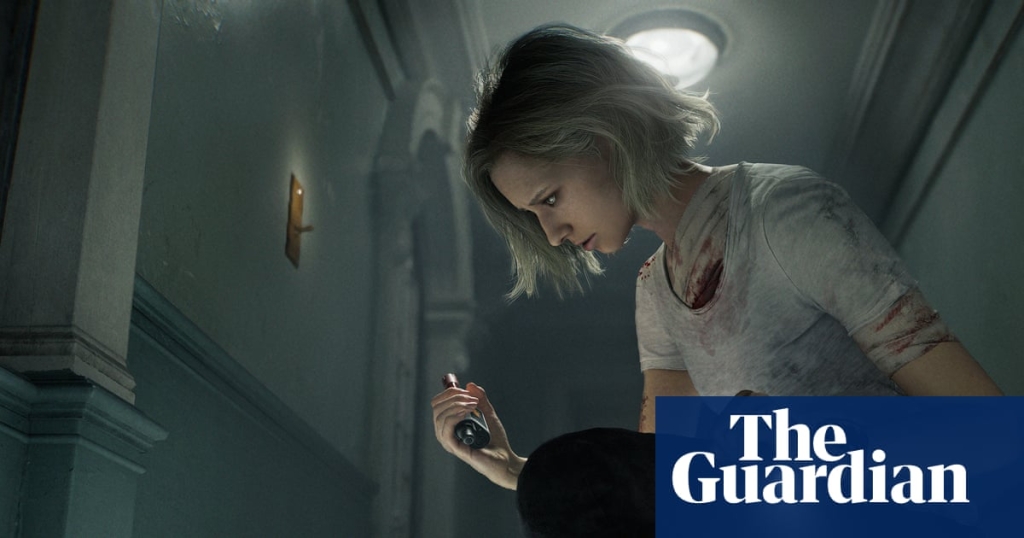
On the fragile facade of power, Resident Evil is a series built on illusions. It constantly plays tricks on players, undermining their sense of what’s real or imagined. The latest incarnation, Resident Evil Requiem, exemplifies this approach: rookie FBI officer Grace Ashcroft spends considerable time exploring before facing real peril, carefully drawing players into the experience.
“You know what you will get, but you also don’t know,” Aniel observes. “Around every corner there could be a shock or there could be nothing—it’s the uncertainty that gets you.” This uncertainty allows players to project their own fears and anxieties onto the experience, or to discover new ones they hadn’t considered or acknowledged.
The Undying Appeal: Looking Fear in the Eye
Like all great horror fiction, Resident Evil has survived because it confronts us directly, saying, “I know what scares you. Come and see.” It offers a controlled environment where we can face our deepest fears—not to conquer them permanently, but to understand them better. The series provides just enough power to feel agency while maintaining enough vulnerability to preserve tension.
This delicate balance between control and helplessness, between familiarity and surprise, between homage and innovation—this is why Resident Evil continues to thrive three decades after its debut. It doesn’t just scare us; it understands us. And in an industry constantly chasing the next technological marvel, that fundamental psychological insight may be the most powerful survival tool of all.
Viral Tags & Phrases:
-
ResidentEvil30YearsStrong
-
SurvivalHorrorEvolution
-
UmbrellaCorporationConspiracy
-
JillValentineLegend
-
LeonKennedyIcon
-
ChrisRedfieldHero
-
ZombieApocalypseGaming
-
BiohazardLegacy
-
HorrorGameRevolution
-
PlayStationClassic
-
CapcomMasterpiece
- “The mansion that redefined gaming”
- “From vulnerability to victory”
- “Horror that understands you”
- “The psychology of survival”
- “Three decades of terror”
- “Gaming’s greatest fear factory”
- “The art of controlled terror”
- “Horror’s most adaptable franchise”
- “The monsters we love to hate”
- “When vulnerability becomes strength”
- “The conspiracy that never dies”
- “Horror cinema’s gaming heir”
- “Technical limitations as artistic strengths”
- “The illusion of control”
- “Fear made interactive”
- “The psychology of vulnerability”
- “Horror that evolves with us”
- “The mansion that changed everything”
- “Three decades of controlled terror”
- “The art of making players afraid”
- “Horror’s most enduring franchise”
- “The vulnerability that defines survival”
- “When horror becomes personal”
- “The conspiracy that connects generations”
- “Horror that knows what scares you”
- “The monsters that became icons”
- “The evolution of fear”
- “Horror’s greatest survivors”
- “The psychology of survival horror”
- “The mansion that launched a legacy”
- “Horror’s most adaptable formula”
- “The vulnerability that created a genre”
- “Horror that grows with technology”
- “The conspiracy that never ends”
- “The monsters that defined a generation”
- “Horror’s most successful experiment”
- “The fear that keeps evolving”
- “Horror’s greatest understanding”
- “The vulnerability that conquered gaming”
- “Horror that reflects our fears”
- “The conspiracy that connects us all”
- “The monsters that became family”
- “Horror’s most enduring promise”
- “The fear that brings us back”
- “Horror’s greatest achievement”
- “The vulnerability that created legends”
- “Horror that knows us better than we know ourselves”
,


Leave a Reply
Want to join the discussion?Feel free to contribute!