
RFK Jr. calls Carbon Robotics’ laser weed zapper the ‘light at the end of the tunnel’ in herbicide fight
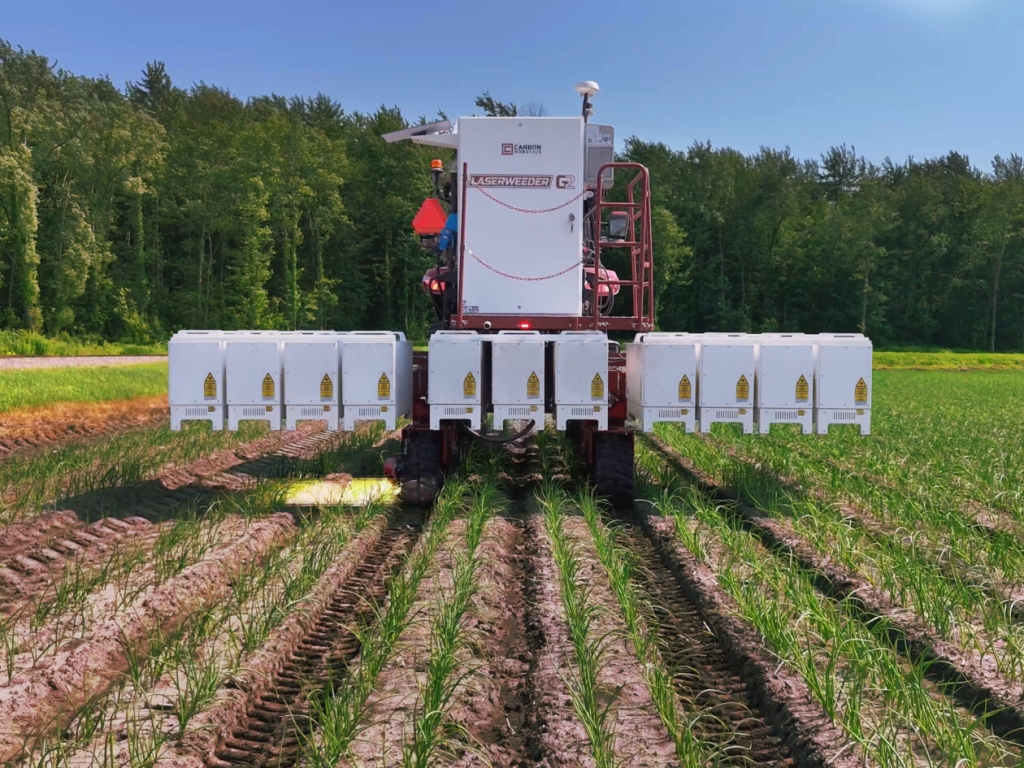
RFK Jr. Spotlights Carbon Robotics’ LaserWeeder as the Future of Chemical-Free Farming
In a surprising twist that has electrified both the agricultural technology and environmental health communities, Health and Human Services Secretary Robert F. Kennedy Jr. recently highlighted Seattle-based startup Carbon Robotics during a widely viewed podcast appearance—casting a spotlight on what could be a revolutionary alternative to chemical herbicides.
During an episode of This Past Weekend with Theo Von that aired on February 12, 2026, Kennedy—an outspoken critic of agricultural chemicals like glyphosate—spoke passionately about emerging technologies that could finally free farmers from their dependence on herbicides. The conversation turned to weed management when Kennedy referenced a piece of equipment he had recently seen: Carbon Robotics’ LaserWeeder.
“It’s a tractor attachment that uses lasers to kill weeds,” Kennedy explained to Von and their audience. “If they can make that affordable, particularly for smaller farmers, that will be the answer. You program this thing and it zaps the weed with a laser, it makes all the cells explode and it destroys them.”
The moment was visually reinforced when an image of the LaserWeeder appeared on screen during the podcast, showing the massive machine working in an onion field with its signature green laser beams targeting unwanted plants with surgical precision.
Kennedy’s enthusiasm was palpable as he declared, “There’s a future that we can now see the light at the end of tunnel,” before acknowledging that while this technology represents the future, “we’re not there yet.”
This public endorsement from one of America’s most prominent environmental advocates sent ripples through the ag-tech industry. Carbon Robotics’ founder and CEO Paul Mikesell responded with his own video posted on X (formerly Twitter), expressing gratitude for the attention while clarifying that the technology is indeed ready for prime time.
“We are there,” Mikesell stated emphatically. “The LaserWeeder is a production machine being used by farmers across the U.S. and around the world.” He added that the ability to run these machines at night, continuously eliminating weeds, is “sick”—using Von’s terminology from the podcast.
The timing of Kennedy’s endorsement is particularly significant given his history. In 2018, he helped secure a landmark $289 million settlement against Monsanto (now Bayer) in a lawsuit claiming Roundup caused cancer in a California school groundskeeper. His appointment by President Trump to lead the Department of Health and Human Services has positioned him to potentially influence agricultural policy at the federal level.
In a statement to GeekWire, Mikesell elaborated on the broader implications of Kennedy’s comments about herbicide alternatives:
“As the Health Secretary pointed out, the LaserWeeder can help farmers get the best crops out of their land without spraying chemicals that have harmful effects on their health and long-term degenerative effects on their land. Because they didn’t have other choices, farmers have historically faced pressure to use chemicals like glyphosate to help meet demand for crops. But they also have recognized that those very chemicals cause real long-term damage to the human biome. Now, they’re turning to other solutions like the LaserWeeder that provide the ability to grow food without spraying chemicals everywhere.”
Mikesell also highlighted a critical concern about herbicide resistance: “It’s also worth pointing out that weeds are getting resistant to these herbicides, so regardless of people reaching the conclusion that glyphosate is dangerous, it won’t matter because these plants will become resistant in the end. We need other solutions that bolster food safety, and that’s where LaserWeeder can help.”
Carbon Robotics, founded in 2018, has been pioneering this laser-based approach to weed control. The company’s flagship product, the LaserWeeder, can be pulled behind a tractor and uses computer vision and artificial intelligence to detect plants in fields, distinguishing between crops and weeds before precisely eliminating the latter with concentrated laser beams.
The latest iteration, the LaserWeeder G2, was released in February 2025 and represents a significant advancement in the technology’s capabilities and accessibility. Earlier this month, Carbon announced what it calls the world’s first “Large Plant Model”—an AI model for plant detection and identification trained on an unprecedented dataset of 150 million labeled plants. This breakthrough enables farmers to deploy the LaserWeeder in any field or crop within minutes.
The company’s momentum continues to build. In October 2025, Carbon secured $20 million in new funding to develop additional AI-powered agricultural machinery, though details about this new equipment remain under wraps. The company previously unveiled the Carbon ATK, an autonomous platform designed to control existing farm equipment, expanding their technological footprint in precision agriculture.
With $177 million raised to date and a workforce of approximately 260 employees, Carbon Robotics has established itself as a leader in agricultural automation. The company operates a manufacturing facility in Richland, Washington, and reports that LaserWeeders are active on hundreds of farms across 15 countries worldwide.
Carbon Robotics’ impact on the agricultural technology sector has earned it recognition on the GeekWire 200, a ranked list of top privately held startups in the Pacific Northwest, where it currently sits at number nine. The company’s growth has been supported by notable investors including NVIDIA and Seattle-based venture capital firms Fuse and Voyager Capital.
The intersection of Kennedy’s environmental advocacy, Carbon Robotics’ technological innovation, and growing concerns about herbicide resistance and health impacts creates a perfect storm for potential transformation in agricultural practices. As herbicide-resistant weeds become increasingly problematic and public awareness of chemical exposure risks grows, solutions like the LaserWeeder offer a compelling alternative that addresses both environmental and practical farming concerns.
The conversation between Kennedy and Von, viewed by millions, has brought this technology into mainstream consciousness at a pivotal moment. Whether this attention translates into policy changes, increased adoption by farmers, or further investment in chemical-free alternatives remains to be seen. What is clear is that the LaserWeeder has moved from the margins of agricultural innovation to the center of a national conversation about the future of food production and environmental health.
As farming faces unprecedented challenges from climate change, population growth, and evolving pest resistance, technologies that can increase efficiency while reducing chemical inputs may prove essential. Carbon Robotics’ laser-based approach, validated by influential voices like Kennedy, represents not just a technological advancement but potentially a paradigm shift in how we think about managing agricultural systems.
The question now is whether this “light at the end of the tunnel” that Kennedy referenced will illuminate a path forward for widespread adoption of laser weeding technology, fundamentally changing the landscape of modern agriculture and potentially eliminating millions of pounds of herbicides from our food system and environment each year.
Tags & Viral Phrases:
- RFK Jr. endorses laser weeding technology
- Chemical-free farming revolution
- LaserWeeder kills weeds with exploding cells
- Carbon Robotics AI plant detection breakthrough
- Monsanto lawsuit lawyer backs ag-tech startup
- Glyphosate alternative gains HHS Secretary support
- Seattle startup’s laser tractor attachment goes viral
- Agriculture’s future: zapping weeds with precision lasers
- Herbicide resistance meets its match
- Farm tech that makes weed cells explode
- Health Secretary spotlights weed-zapping lasers
- 150 million plants: world’s largest agricultural AI dataset
- LaserWeeder G2: the affordable chemical-free solution
- Kennedy calls it “the answer” for smaller farmers
- Night-time weed destruction is “sick” says CEO
- Agriculture’s light at the end of the tunnel
- From Roundup lawsuits to laser solutions
- Farming without spraying chemicals everywhere
- The technology that could eliminate glyphosate
- Autonomous weed-killing machines are here
,


Leave a Reply
Want to join the discussion?Feel free to contribute!