
Ring Boasts About Power to Surveil Entire Neighborhoods
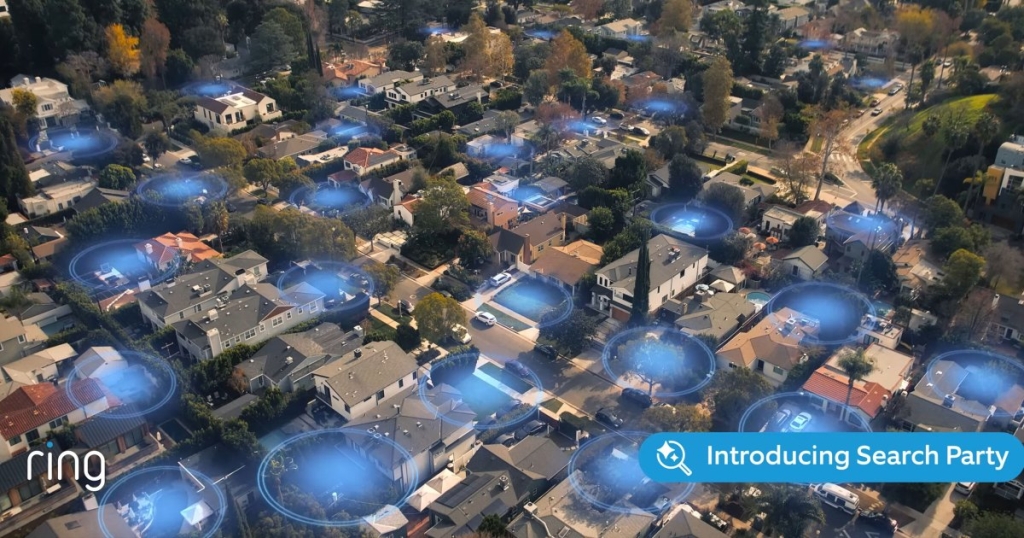
Ring’s Super Bowl “Search Party” Ad Sparks Privacy Debate as Doorbell Cameras Now Track Living Beings
When Ring’s latest commercial aired during the Super Bowl, it showcased a feature that seemed like a heartwarming no-brainer: “Search Party,” a function allowing Ring devices to help canvas neighborhoods through their vast network of cameras to find lost pets. The commercial showed how “one post of a dog’s photo in the Ring app starts outdoor cameras looking for a match to help families find lost dogs,” presenting it as a community-minded solution to a common problem.
But beneath this feel-good marketing lies a startling revelation: Ring doorbells can now surveil living beings throughout every neighborhood where these devices are installed, marking a significant escalation in the company’s surveillance capabilities.
For those unfamiliar, Ring is Amazon’s doorbell camera company—those ubiquitous gadgets mounted on front porches that record everyone who walks by. The devices have been the target of widespread privacy criticisms for years. However, their latest data sharing agreement with surveillance company Flock has many activists up in arms, as that startup has no qualms about working closely with federal agencies like Immigration and Customs Enforcement.
With these optics swirling around, the decision to highlight new dog-finding capabilities appears to be a clever PR move for Ring. Who would say no to reuniting lost puppies with their families? It’s the kind of feature that makes surveillance technology seem benevolent and community-oriented rather than invasive.
Yet privacy advocates and tech ethicists are sounding alarms about what this seemingly innocuous feature represents. The new Search Party function marks a troubling development in the evolution of home surveillance technology. While Ring’s Fire Watch system indexes neighborhood devices to watch for signs of fire emergencies, the Search Party function means the company is now capable of tracking living things—not just vehicles or packages, but actual beings moving through neighborhoods.
As Hayes Brown, a columnist for MS Now, observed: “There’s no world in which finding lost dogs is the final end-use for this technology.” The feature essentially creates a system that can identify, track, and locate living creatures across an entire neighborhood grid, raising questions about where this capability might lead.
Ring spokesperson told us in a statement: “Ring’s Search Party feature does what neighbors have done for generations—help reunite lost dogs with their families—just with better technology. We built the feature with strong privacy protections from the start and camera owners choose on a case-by-case basis whether they want to share videos with a pet owner to support a reunion. Since launch, Search Party has helped bring home more than a dog a day.”
The company emphasizes that participation is voluntary and that privacy protections are built in, but critics argue that the infrastructure itself represents a Pandora’s box that, once opened, cannot be closed. The technology exists, the capability is proven, and the public has been conditioned to accept it through a heartwarming Super Bowl commercial about lost dogs.
What happens when this same technology is used to track other “missing” entities? What about children who wander away from home? What about elderly individuals with dementia? What about protesters or activists that authorities might want to locate? The technical capability is now established, and the ethical framework for its use remains murky at best.
The broader context is crucial here. Ring has faced numerous controversies over its partnerships with police departments, its data sharing practices, and its role in creating what some call the largest civilian surveillance network in the United States. The company’s collaboration with Flock Safety, which openly works with ICE and other federal agencies, has intensified concerns about how this data might be used beyond finding lost pets.
Privacy experts point out that the normalization of constant surveillance through emotionally appealing use cases—like finding lost dogs—represents a sophisticated form of social engineering. By associating the technology with positive outcomes and community service, companies like Ring make it easier for people to accept increasingly invasive capabilities.
The implications extend beyond individual privacy. The creation of searchable databases of people’s movements throughout neighborhoods raises questions about data retention, access controls, and the potential for abuse. Who has access to this information? How long is it stored? Can it be subpoenaed? Can it be hacked or leaked?
Moreover, there’s the question of consent for those being surveilled. While Ring camera owners choose to install these devices, the people walking by on public sidewalks haven’t agreed to be part of this tracking network. The Search Party feature essentially turns every neighborhood into a potential tracking zone for anyone or anything that moves through it.
The technology also raises questions about accuracy and false positives. How reliable is the system at correctly identifying specific animals or individuals? What happens when the system makes mistakes? Could someone be wrongly accused or suspected based on faulty identification?
As AI and computer vision technologies continue to advance, the capabilities demonstrated by features like Search Party will only become more sophisticated and potentially more invasive. The line between helpful community service and pervasive surveillance grows increasingly thin.
The Super Bowl ad may have presented Search Party as a simple solution to a common problem, but privacy advocates see it as a significant milestone in the normalization of mass surveillance. It’s a reminder that in the age of smart technology, convenience often comes with hidden costs to privacy and civil liberties.
The debate over Ring’s Search Party feature reflects broader tensions in our society about the trade-offs between security, convenience, and privacy. As technology companies continue to push the boundaries of what’s possible with surveillance, the question becomes not just what we can do, but what we should do—and who gets to decide.
The lost dog commercial might have tugged at heartstrings during the big game, but it also opened a conversation about the future of privacy in an increasingly connected world. Whether that conversation leads to meaningful safeguards or simply accelerates the acceptance of pervasive surveillance remains to be seen.
Tags & Viral Phrases:
- Ring doorbell surveillance network
- Super Bowl ad controversy
- Amazon Ring privacy concerns
- Doorbell cameras track living beings
- Search Party feature explained
- Neighborhood surveillance technology
- Lost pets AI tracking
- Ring and Flock Safety partnership
- ICE surveillance capabilities
- Civilian surveillance network
- Privacy vs convenience debate
- Smart home security risks
- Doorbell camera controversy
- Ring’s Pandora’s box moment
- Mass surveillance normalization
- Community tracking technology
- Pet finding surveillance
- Ring doorbell data sharing
- Doorbell camera tracking living beings
- Ring’s privacy backlash
- Super Bowl surveillance ad
- Ring doorbell police partnerships
- AI pet tracking technology
- Ring doorbell data collection
- Neighborhood camera network
- Ring doorbell controversy explained
- Doorbell camera privacy issues
- Ring surveillance capabilities
- Amazon Ring tracking technology
- Ring doorbell ethical concerns
- Doorbell camera mass surveillance
- Ring’s privacy nightmare
- Ring doorbell tracking system
- Ring doorbell spying capabilities
- Ring doorbell data harvesting
- Ring doorbell privacy invasion
- Ring doorbell surveillance state
- Ring doorbell monitoring network
- Ring doorbell tracking controversy
- Ring doorbell privacy scandal
- Ring doorbell surveillance debate
- Ring doorbell tracking technology
- Ring doorbell privacy concerns 2024
- Ring doorbell surveillance expansion
- Ring doorbell privacy violations
- Ring doorbell tracking capabilities
- Ring doorbell surveillance features
- Ring doorbell privacy issues explained
,


Leave a Reply
Want to join the discussion?Feel free to contribute!