
Rising CO2 Could Be Altering Our Blood Chemistry, Study Suggests : ScienceAlert
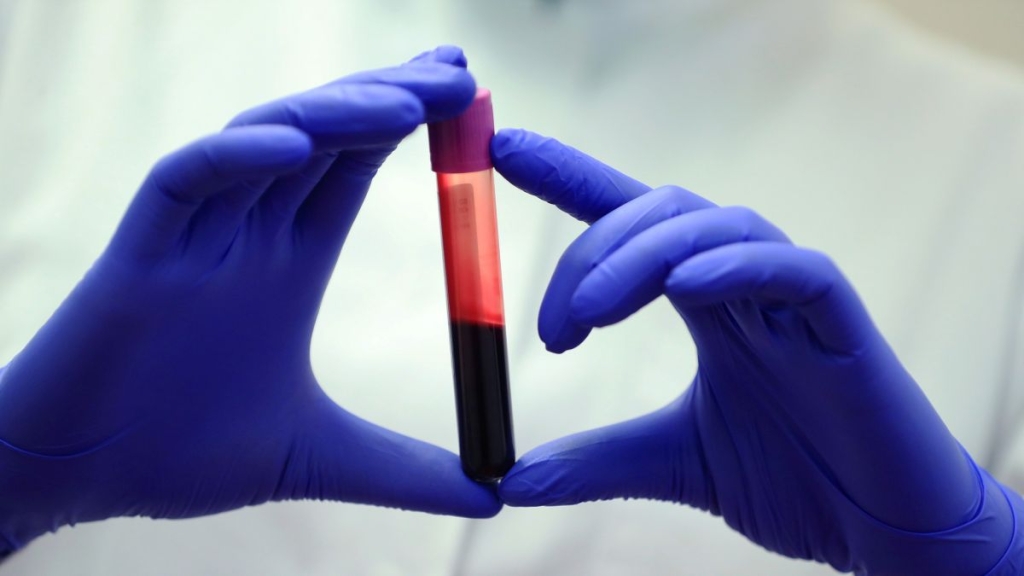
Carbon Dioxide in the Air Is Now Showing Up in Human Blood — And Scientists Are Alarmed
For the first time in history, the carbon dioxide that’s building up in Earth’s atmosphere is being detected inside the blood of the people living on it.
A groundbreaking new study has uncovered a direct link between rising CO₂ levels and subtle but measurable changes in human blood chemistry, offering a startling new perspective on how climate change is affecting the human body from the inside out.
Using 20 years of health data from the U.S. National Health and Nutrition Examination Survey (NHANES), researchers found that average blood bicarbonate levels — a compound formed when CO₂ dissolves in the bloodstream — have risen by about 7 percent since 1999. That’s an increase of roughly 0.34 percent per year, mirroring the steady climb of atmospheric carbon dioxide from around 369 parts per million in 2000 to over 420 ppm today.
“We’re seeing a gradual shift in blood chemistry that mirrors the rise in atmospheric carbon dioxide, which is driving climate change,” said respiratory physiologist Alexander Larcombe of Curtin University in Australia.
The study also found that calcium and phosphorus levels in the blood dropped by 2 and 7 percent, respectively. These changes may be tied to how the body buffers excess CO₂. When CO₂ dissolves in the blood, it forms carbonic acid, which the body neutralizes by producing bicarbonate. To maintain pH balance, the kidneys conserve bicarbonate, and bones can release minerals like calcium and phosphorus — a process that could eventually deplete them if CO₂ exposure continues to rise.
While these shifts are still within the normal range for now, researchers warn that if current trends persist, average bicarbonate levels could approach the upper limit of today’s accepted healthy range by 2076. Calcium and phosphorus levels may hit the lower end of healthy ranges later this century.
“I actually think that what we are seeing is because our bodies are not adapting,” said co-author Phil Bierwirth, a retired geoscientist from the Australian National University. “It appears we are adapted to a range of CO₂ in the air that may now have been surpassed.”
For most of human history — spanning over 150,000 years — atmospheric CO₂ levels hovered around 280 to 300 ppm. But in just a few decades, human activity has pushed that number far beyond anything our species has ever experienced.
“This delicate balance between how much CO₂ is in the air, our blood pH, our breathing rate, and bicarbonate levels in the blood is being disrupted,” Bierwirth added. “It’s vitally important to limit atmospheric levels of CO₂.”
The findings, published in the journal Air Quality, Atmosphere & Health, suggest that climate change isn’t just an environmental crisis — it’s a physiological one too. As CO₂ continues to accumulate in the air we breathe, it’s also accumulating in our bodies.
The big question now is: how much more can our biology adapt before it starts to break?
Tags: CO2 in blood, human blood chemistry, climate change health effects, rising CO2 levels, bicarbonate blood levels, atmospheric CO2, human physiology, carbon dioxide exposure, blood pH balance, climate crisis, environmental health, CO2 adaptation, human biology, carbon dioxide health impact, blood minerals, NHANES study, Curtin University research, Australian National University, CO2 health study, air quality and health
Viral sentences: Carbon dioxide is literally showing up in your blood. Climate change is now inside your body. Scientists detect CO2 in human bloodstream. Human blood chemistry shifting with rising CO2. CO2 levels unseen in human history are now in your veins. Your bones may be leaking minerals to fight CO2. The air you breathe is changing you from the inside. This is climate change at the cellular level. We’re not adapting — we’re accumulating. The planet’s CO2 problem is now your body’s problem.,


Leave a Reply
Want to join the discussion?Feel free to contribute!