
Rivian CEO touts ‘great working relationship with Apple’ despite lack of CarPlay support
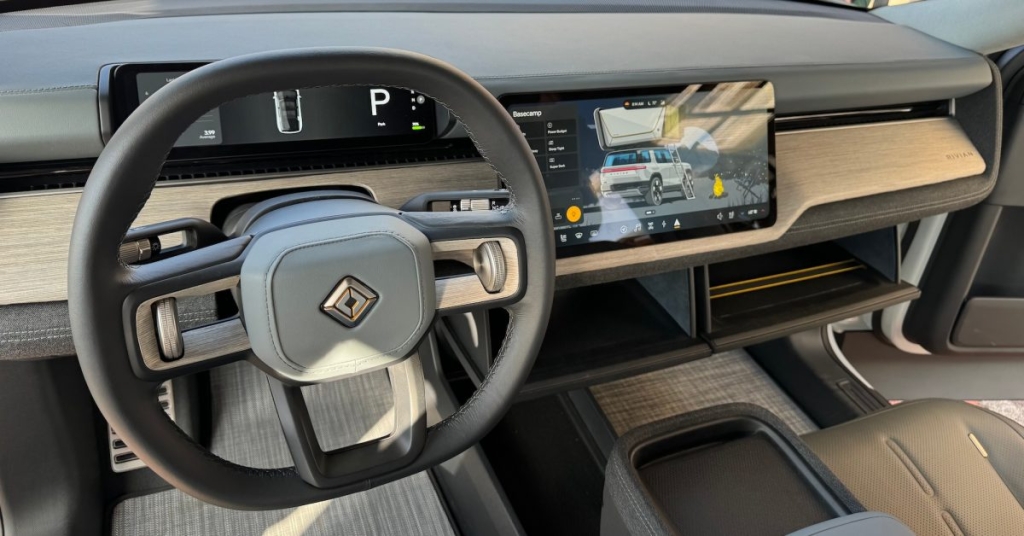
Rivian CEO Defends Anti-CarPlay Stance While Praising “Great Working Relationship” With Apple
In a revealing interview with tech journalist Kara Swisher, Rivian CEO RJ Scaringe has once again defended his company’s controversial decision to exclude Apple CarPlay from Rivian vehicles, while simultaneously touting what he describes as a “great working relationship” with Apple.
The electric vehicle startup has long positioned itself as a disruptor in the automotive industry, and its approach to in-car technology is no exception. While traditional automakers have largely embraced CarPlay integration, Rivian has doubled down on its commitment to a fully native infotainment experience.
The Integration Argument: Control vs. Convenience
During the wide-ranging conversation on Swisher’s podcast, Scaringe was pressed on why Rivian believes its anti-CarPlay stance ultimately benefits customers. His response centered on the company’s philosophy of complete integration between vehicle operations and user interface.
“What we’re trying to do is create a seamless experience where everything that has to do with how the vehicle is operating is integrated with the media or user interface experience,” Scaringe explained. “We want to control that whole platter, and we think that becomes more important as AI enters more and more into the existence of how you run the vehicle.”
The Rivian CEO acknowledged the inherent tension in this approach, noting that CarPlay essentially runs as a separate application that takes users out of the vehicle experience into a “media-centric” environment. This separation, he argues, creates consistency challenges across different platforms and fragments the user interface.
The Evolution of Rivian’s Apple Partnership
What’s particularly interesting about Scaringe’s comments is how he frames Rivian’s relationship with Apple. Despite the philosophical differences over CarPlay, he describes the working relationship as “great” on both the Apple and Google fronts.
“Two years ago, three years ago, this was a bigger issue because we didn’t have all those integrations,” Scaringe admitted. “Some of those discussions we had with our partnership with Apple and with Google took some time, but we’re now in a place where we have a great working relationship with Apple, a great working relationship with Google, where we can serve up all those items.”
This evolution has manifested in several key integrations. Rivian has successfully incorporated Apple Music into its native infotainment system, allowing users to access their Apple Music libraries without CarPlay. The company has also implemented Apple Wallet support for digital car keys, enabling iPhone users to lock, unlock, and start their Rivian vehicles with their smartphones.
The User Experience Paradox
Scaringe’s argument presents an interesting paradox for consumers. On one hand, he acknowledges that users want the “exact same ease of using my text, or ease of using functions around my phone.” On the other hand, Rivian maintains that a fully integrated, proprietary system ultimately delivers a superior experience.
The CEO suggests that Rivian is essentially “setting the table” for these integrations while maintaining control over the overall user experience. This approach allows the company to cherry-pick which Apple features to incorporate while maintaining its vision for a cohesive interface.
Industry Context and Competitive Pressure
Rivian’s stance becomes even more intriguing when considering broader industry trends. Traditional automakers have increasingly embraced CarPlay, recognizing that many consumers expect their vehicle’s infotainment system to mirror the familiarity of their smartphone experience.
The potential addition of CarPlay support to Tesla vehicles, as recent reports have suggested, could create additional pressure on Rivian to reconsider its position. Tesla, like Rivian, has historically favored a native approach to in-car technology, though CEO Elon Musk has recently indicated openness to CarPlay integration.
The AI Factor
A significant portion of Scaringe’s argument hinges on the increasing role of artificial intelligence in vehicle operations. As vehicles become more sophisticated and AI-driven features become more prevalent, the CEO believes that maintaining control over the entire user interface becomes increasingly critical.
This forward-looking perspective suggests that Rivian views its current approach not just as a philosophical choice, but as a strategic investment in the future of automotive technology. The company appears to be betting that as AI capabilities expand, the benefits of a fully integrated system will become even more apparent to consumers.
Consumer Choice and Market Reception
Despite Scaringe’s confident defense of Rivian’s approach, some industry observers question whether the company is leaving potential sales on the table by not offering CarPlay as an option. The argument goes that if Rivian’s native system is truly superior, consumers will naturally gravitate toward it anyway.
The counterpoint is that by not offering CarPlay at all, Rivian may be alienating potential customers who view smartphone integration as a must-have feature. This is particularly relevant given that many luxury vehicle buyers expect seamless integration with their existing Apple or Google ecosystems.
Looking Ahead: The R2 Factor
As Rivian prepares to launch its more affordable R2 model, the company’s technology strategy will face perhaps its greatest test. The R2 is positioned to compete in a more mainstream market segment where consumer expectations around smartphone integration may be even more pronounced.
Whether Rivian maintains its current stance or eventually offers CarPlay as an option could significantly impact the R2’s market reception. The company’s ability to deliver on its promise of a superior native experience while meeting consumer expectations for smartphone integration will be crucial to its continued growth and success.
The ongoing debate between native integration and smartphone mirroring in vehicles represents a fundamental question about the future of automotive technology. Rivian’s approach, while controversial, offers a compelling alternative vision that prioritizes control and integration over familiarity and convenience.
As the electric vehicle market continues to evolve and consumer preferences shift, it will be fascinating to watch whether Rivian’s bet on native integration pays off or whether the company eventually capitulates to the widespread demand for CarPlay support.
Tags & Viral Phrases:
- Rivian CEO RJ Scaringe
- Apple CarPlay controversy
- Native infotainment experience
- Electric vehicle technology
- Tesla CarPlay rumors
- Automotive AI integration
- Smartphone mirroring debate
- R2 electric SUV launch
- Apple Music in Rivian
- Digital car keys
- Kara Swisher interview
- In-car user experience
- Electric vehicle disruption
- Tech industry innovation
- Future of automotive interfaces
- Consumer technology expectations
- Vehicle operating system wars
- Electric vehicle market competition
- Smart car technology trends
- Automotive software integration
,

Leave a Reply
Want to join the discussion?Feel free to contribute!