
Rivian was saved by software in 2025
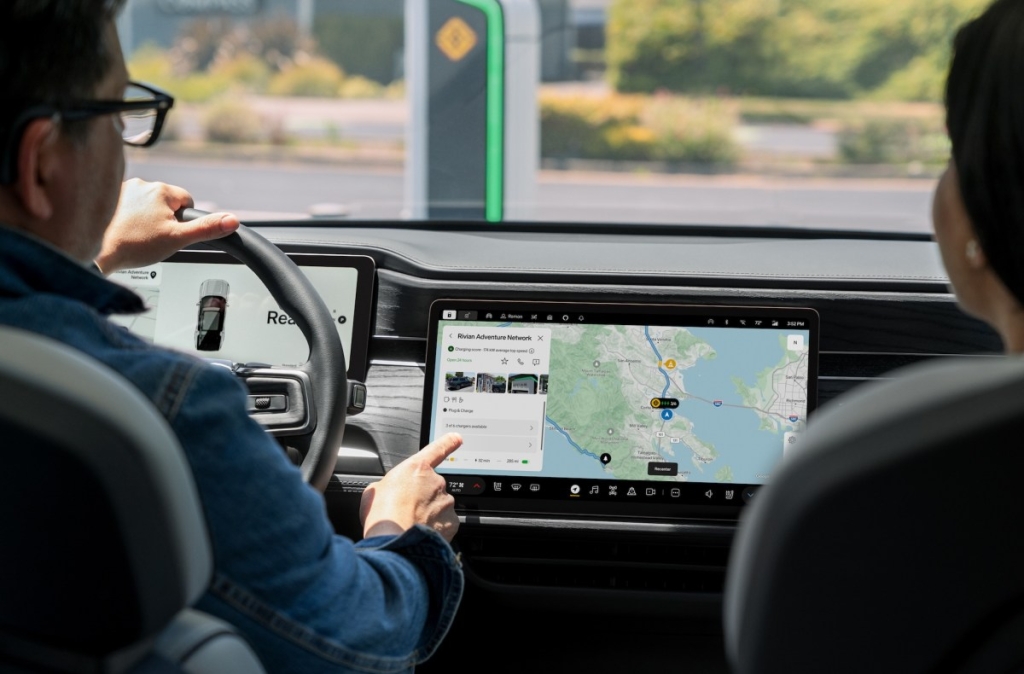
Rivian’s 2025 Revenue Surge: Software and Services Steal the Spotlight
In a year where electric vehicle (EV) sales faced headwinds, Rivian Automotive (NASDAQ: RIVN) found an unexpected lifeline—software and services. The EV startup, once solely defined by its rugged electric trucks and SUVs, reported a surprising 8% jump in total revenue for 2025, reaching $5.38 billion, up from $4.97 billion in 2024. But behind the headline numbers lies a fascinating shift in the company’s business model, with software and services revenue tripling to $1.55 billion, offsetting a 15% decline in automotive revenue.
The Numbers Tell a Story of Transformation
While Rivian’s core automotive business struggled—delivering fewer vehicles and seeing a $134 million drop in regulatory credit sales—the company’s pivot toward software and services proved to be a game-changer. This segment, which includes everything from vehicle repair and maintenance to software licensing, was turbocharged by Rivian’s landmark joint venture with Volkswagen Group.
In 2024, Rivian and VW formed a $5.8 billion technology joint venture, with Rivian supplying its cutting-edge electrical architecture and software stack to the German automaker. The partnership hit a major milestone in 2025, triggering a $1 billion payout to Rivian in the form of a share sale. This was on top of an initial $1 billion convertible note received in 2024 and another $1 billion payment in July 2025.
Rivian’s CFO, Claire McDonough, confirmed on the company’s earnings call that the joint venture will continue to be a cash cow through 2027. In 2026 alone, Rivian expects to receive an additional $2 billion, with $1 billion contingent on successful winter testing and another $1 billion in nonrecourse debt slated for October.
The R2: Rivian’s Make-or-Break Bet
Despite the software windfall, Rivian’s long-term success still hinges on its ability to produce and sell electric vehicles profitably. The company has historically lost money on every vehicle it builds, but the upcoming R2 SUV—designed to be cheaper to manufacture and more affordable for consumers—could be the turning point.
Rivian confirmed that the R2 will hit the market by June 2026, with more details expected on March 12. The R2 is expected to launch as a dual-motor all-wheel-drive model, and its lower production costs could finally help Rivian achieve profitability. In the fourth quarter of 2025, Rivian managed to reduce its cost of goods sold (COGS) per unit to $92,000, a $4,000 improvement from the previous quarter and a significant drop from $99,000 in the same period in 2024.
Ambitious Growth Targets for 2026
Rivian is betting big on the R2 and its electric delivery van (EDV) lineup. The company projects it will deliver between 62,000 and 67,000 vehicles in 2026, a potential 59% increase from the 42,247 vehicles delivered in 2025. This growth is expected to be driven by both the R2 and new EDV variants, including an all-wheel-drive model and a larger battery pack version tailored for Amazon’s delivery network.
CEO RJ Scaringe emphasized the importance of these new EDV models, noting that they are designed to unlock specific use cases within Amazon’s logistics operations. “We’re working really closely with Amazon in defining the requirements of those and excited to get those launched,” Scaringe said.
The Road Ahead: Profitability Still Elusive
While Rivian’s software and services revenue provided a much-needed boost, the company is not yet profitable. Rivian reported a $3.6 billion net loss in 2025 and expects an adjusted net loss of between $1.8 billion and $2.1 billion in 2026. However, the company is projecting a significant improvement in its financial health, with capital expenditures expected to be between $1.95 billion and $2.05 billion this year.
Rivian’s transformation from a pure-play EV manufacturer to a tech-driven mobility company is a story worth watching. With the R2 on the horizon and a lucrative partnership with Volkswagen, the company is positioning itself for a future where software and services play an increasingly central role. But as Rivian’s journey shows, the road to profitability in the EV industry is anything but smooth.
Tags: Rivian, EV startup, software revenue, Volkswagen joint venture, R2 SUV, electric vehicle, automotive industry, tech innovation, profitability, 2026 growth
Viral Sentences:
- “Rivian’s software and services revenue tripled in 2025, proving that EVs are as much about code as they are about cars.”
- “The R2 SUV could be Rivian’s golden ticket to profitability—if it can deliver on its promises.”
- “Rivian’s partnership with Volkswagen is worth up to $5.8 billion, making it one of the biggest tech deals in the auto industry.”
- “From losing money on every vehicle to banking on software, Rivian’s pivot is a masterclass in adaptation.”
- “Rivian’s 2026 targets are bold, but can the R2 and EDV lineup deliver the growth investors are craving?”
,


Leave a Reply
Want to join the discussion?Feel free to contribute!