
RNA strand that can almost self-replicate may be key to life’s origins
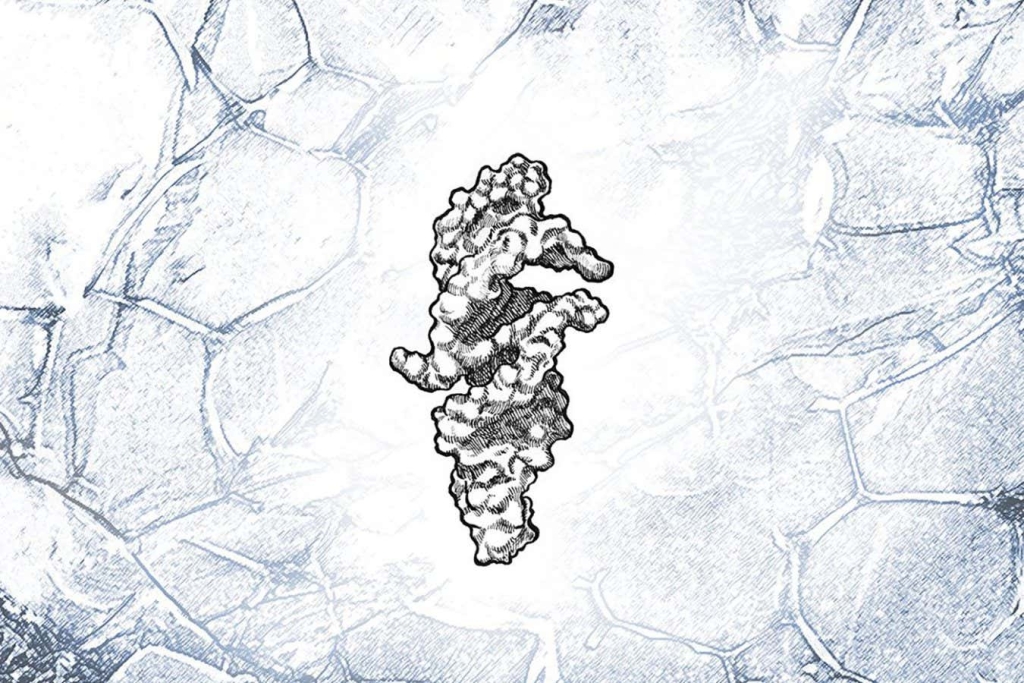
In a groundbreaking discovery that edges science closer to unraveling the origins of life, researchers at the MRC Laboratory of Molecular Biology in Cambridge have unveiled a synthetic RNA molecule that performs the critical steps of self-replication—a process long thought to be the defining moment when chemistry gave rise to biology. Dubbed QT45, this 45-nucleotide-long RNA is not only the smallest and simplest molecule to date capable of replicating itself, but it also demonstrates that life’s earliest molecular machinery might have been far less complex than previously imagined.
The RNA World Hypothesis: A Brief Recap
For decades, the RNA world hypothesis has been one of the leading theories explaining how life emerged on Earth. According to this idea, before DNA and proteins took center stage, RNA molecules—capable of both storing genetic information and catalyzing chemical reactions—were the original architects of life. But despite decades of research, scientists struggled to find an RNA molecule that could truly replicate itself from scratch, especially under conditions plausible for early Earth.
The Quest for Simplicity
Philipp Holliger, who led the research, explains that the scientific community had long assumed self-replicating RNA would need to be large and complex. However, large RNA molecules are notoriously difficult to replicate because they are hard to unfold and copy. Moreover, the odds of such large molecules forming spontaneously on early Earth were vanishingly small.
This realization led Holliger’s team to take a counterintuitive approach: instead of looking for a large, intricate molecule, they searched for a small, simple one. Starting with a library of a trillion random RNA sequences, each 20 to 40 nucleotides long, they identified three that could perform basic catalytic reactions, such as joining nucleotides together. These were then linked and subjected to several rounds of “evolution”—random mutations followed by selection for improved performance.
The Birth of QT45
The result was QT45, a molecule just 45 nucleotides in length. In alkaline water slightly above freezing, QT45 can use single-stranded RNA as a template to build complementary strands, even creating a copy of its own sequence. Remarkably, it can also use these complementary strands to make more copies of itself—effectively performing both halves of the self-replication cycle.
Yet, there’s a catch: so far, the team has only managed to get each half of the process to occur separately, not simultaneously in the same environment. The next step is to evolve QT45 further and experiment with conditions—such as freeze-thaw cycles—that might allow both reactions to happen together.
A Leap Toward Understanding Life’s Origins
The significance of this discovery cannot be overstated. As Sabine Müller of the University of Greifswald in Germany puts it, “The new results from the Holliger lab are exceptional and a significant advance, pushing things even closer to a fully self-replicating RNA.” Zachary Adam of the University of Wisconsin-Madison highlights the enormity of the achievement, noting that the number of possible 45-nucleotide sequences is “unimaginably large,” making the discovery of QT45 from just a trillion random sequences a remarkable feat.
Imagining Early Earth
Holliger speculates that environments similar to modern-day Iceland—where ice, hydrothermal activity, and freeze-thaw cycles coexist—could have provided the perfect conditions for molecules like QT45 to self-replicate. Some form of compartmentalization, such as pockets of meltwater in ice or cell-like vesicles formed from fatty acids, would have been necessary to isolate and protect these key components.
The Road Ahead
The most tantalizing aspect of this discovery is what comes next. Once a system like QT45 begins to self-replicate, it should become self-optimizing. The error-prone replication process will generate a wealth of variations, some of which may perform better and thus produce more copies of themselves—a primitive form of evolution in action.
This breakthrough not only brings us closer to understanding how life might have begun, but it also opens new avenues for synthetic biology and the search for life beyond Earth. If simple RNA molecules could spark the dawn of life on our planet, perhaps similar processes are unfolding elsewhere in the cosmos.
Tags & Viral Phrases:
- RNA world hypothesis
- Self-replicating RNA
- Origins of life
- Synthetic biology breakthrough
- RNA molecule QT45
- Life’s molecular beginnings
- Early Earth conditions
- Freeze-thaw cycles
- RNA evolution
- Chemical origins of biology
- RNA catalysis
- Life from non-life
- Molecular evolution
- Groundbreaking science
- RNA world discovery
- Life’s first steps
- RNA replication
- Synthetic RNA
- RNA world theory
- RNA self-replication
- Origins of biology
- RNA world breakthrough
- Life’s molecular origins
- RNA world hypothesis confirmed
- RNA world discovery
- RNA world experiment
- RNA world research
- RNA world theory proven
- RNA world hypothesis breakthrough
- RNA world hypothesis discovery
- RNA world hypothesis experiment
- RNA world hypothesis research
- RNA world hypothesis proven
- RNA world hypothesis breakthrough
- RNA world hypothesis discovery
- RNA world hypothesis experiment
- RNA world hypothesis research
- RNA world hypothesis proven
,


Leave a Reply
Want to join the discussion?Feel free to contribute!