
Royal Navy returns to wind power with trial of robotic sailboats
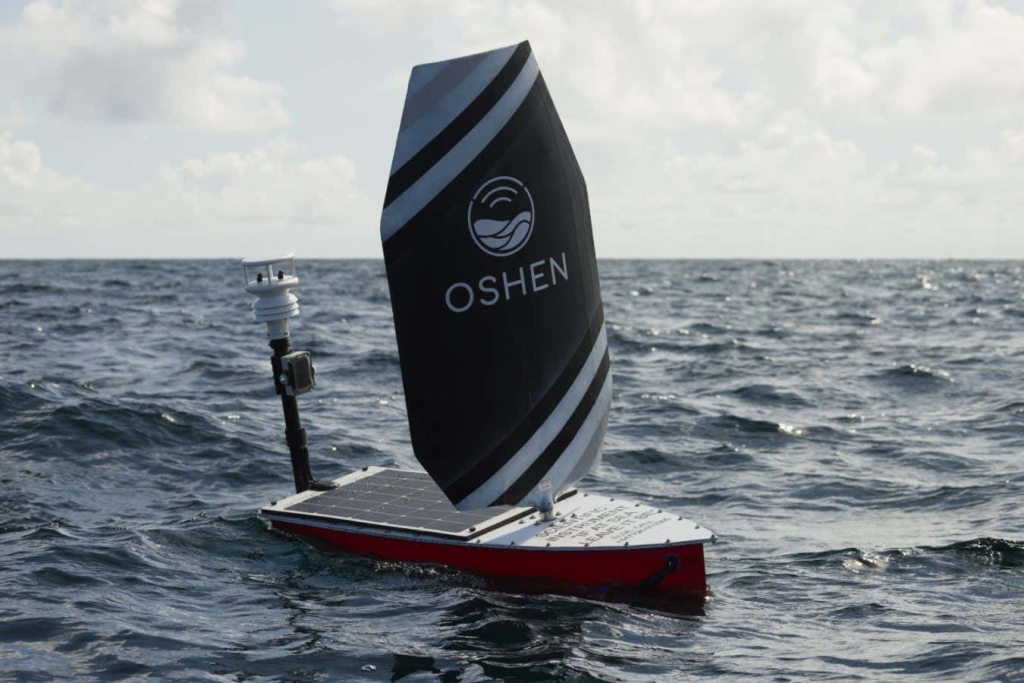
Royal Navy Tests Wind-Powered Robot Sailboats for Next-Gen Naval Warfare
In a striking blend of 19th-century maritime tradition and cutting-edge autonomous technology, the UK’s Royal Navy is exploring a futuristic return to the age of sail—this time with a high-tech twist. The service is currently testing a fleet of small, wind-propelled robotic sailboats designed to serve as a persistent, wide-area sensor network capable of transforming naval operations.
Developed by Plymouth-based startup Oshen, these innovative vessels—known as C-Stars—are compact marvels of engineering. Measuring just 1.2 meters in length and weighing approximately 40 kilograms, each C-Star is equipped with solar panels that power its navigation, communications, and sensor systems, while a traditional sail harnesses wind energy for propulsion. The result is a fully autonomous, environmentally sustainable platform capable of extended maritime missions without the need for human intervention.
Oshen CEO Anahita Laverack describes the C-Stars simply yet powerfully: “The simplest way of describing C-Stars is as self-deploying, station-keeping ocean buoys.” Despite their modest size, these robotic sailboats are engineered for endurance and resilience. They can sail at speeds of around 2 knots, covering approximately 50 nautical miles per day, or hold position against currents using wind power—essentially transforming into mobile, intelligent sensor nodes scattered across vast ocean expanses.
The ongoing Royal Navy demonstration involves a larger robotic vessel transporting three C-Stars to a designated operational area before deploying them. Once in position, the C-Stars will relay acoustic signals to and from an uncrewed submarine, showcasing their potential as a communications relay network. In a real-world scenario, hundreds of these vessels could be deployed simultaneously, creating a distributed, low-probability-of-intercept communication grid that would make locating friendly submarines exponentially more difficult for adversaries.
“If you only have one, then the adversary can tell the general area of the submarine it is communicating with,” explains Laverack. “If you have a hundred, the submarine could be anywhere, under any of them.” This distributed approach could fundamentally alter the calculus of anti-submarine warfare by masking submarine positions within a cloud of autonomous sensor platforms.
Beyond communications, the C-Stars offer a versatile toolkit for naval operations. They could form picket lines to detect enemy ships, incoming missiles, or low-flying drones attempting to evade radar coverage. Their ability to host hydrophones also makes them ideal for submarine detection—either by passively listening for acoustic signatures or by acting as receivers for active sonar pings emitted by warships. In this “lit area” concept, a warship’s sonar illuminates a broad zone, and the C-Stars identify any objects within their vicinity, effectively multiplying the detection range and resolution of traditional sonar systems.
The vessels have already proven their durability in extreme conditions. Last year, C-Stars became the first uncrewed vessels to provide live data from inside a Category 5 hurricane as part of a joint project with the US National Oceanic and Atmospheric Administration. This feat demonstrated their ability to survive and operate in the most punishing maritime environments, including towering waves, violent winds, and corrosive saltwater exposure. With an operational endurance exceeding six months, they can maintain station for entire deployment cycles without maintenance or resupply.
Blair Thornton, a professor at the University of Southampton, notes that solar- and wind-powered uncrewed vessels have gradually gained acceptance over the past decade, with around 100 such platforms now in service worldwide. He emphasizes that autonomy will be the key enabler for scaling these systems into large operational fleets. “It isn’t only the platform costs, but it is how much oversight they need for their operations,” Thornton says. “The combination of long endurance, robust operations with minimal need for human interaction can be a major advantage and allow large fleets of autonomous systems to operate.”
The current demonstration is also focused on proving that C-Stars can seamlessly integrate with existing Royal Navy command-and-control infrastructure. If successful, Oshen claims it could deliver up to 1,000 units within a nine-month lead time—an astonishingly rapid scale-up that could revolutionize how the Navy conducts persistent maritime surveillance and communications.
Looking ahead, Laverack hints at further software-driven enhancements. “The next level will involve software refinements so we can see more detail and achieve better coverage of a wider area with fewer C-Stars,” she says. This suggests a future where intelligent algorithms optimize sensor placement, data fusion, and mission planning in real time, maximizing the effectiveness of each robotic sailboat while minimizing the total fleet size required.
While the Royal Navy’s flirtation with wind power may seem like a nostalgic nod to the past, it is, in fact, a forward-looking embrace of sustainable, low-cost, and highly adaptable maritime technology. By marrying the simplicity and reliability of sail propulsion with the sophistication of modern autonomous systems, the C-Star represents a new paradigm in naval warfare—one where fleets of silent, self-sufficient robotic sailboats patrol the oceans, gathering intelligence, enabling secure communications, and reshaping the strategic balance of power on the high seas.
Tags: Royal Navy, autonomous sailboats, C-Star, Oshen, wind-powered robots, naval warfare, submarine detection, maritime sensors, uncrewed vessels, hurricane data collection, renewable energy at sea, AI-driven naval operations, distributed sensor networks, low-cost surveillance, sustainable maritime tech, Category 5 storm research, acoustic communications, anti-submarine warfare, robotic picket lines, long-endurance drones, ocean buoys, solar-powered navigation, naval innovation, stealth communications, maritime autonomy, next-gen navy, wind propulsion, underwater acoustics, fleet scalability, AI optimization, strategic maritime dominance, robotic sailboats, sustainable naval tech, autonomous maritime systems, wind and solar hybrids, ocean data platforms, AI-enabled surveillance, naval robotics, maritime AI, wind-driven autonomy, renewable naval platforms, sensor network warfare, robotic maritime sentinels, future of naval combat, AI-powered ocean monitoring, distributed maritime intelligence, autonomous ocean guardians, robotic naval revolution.
,


Leave a Reply
Want to join the discussion?Feel free to contribute!