
Satellites could use magnetic fields to avoid collisions
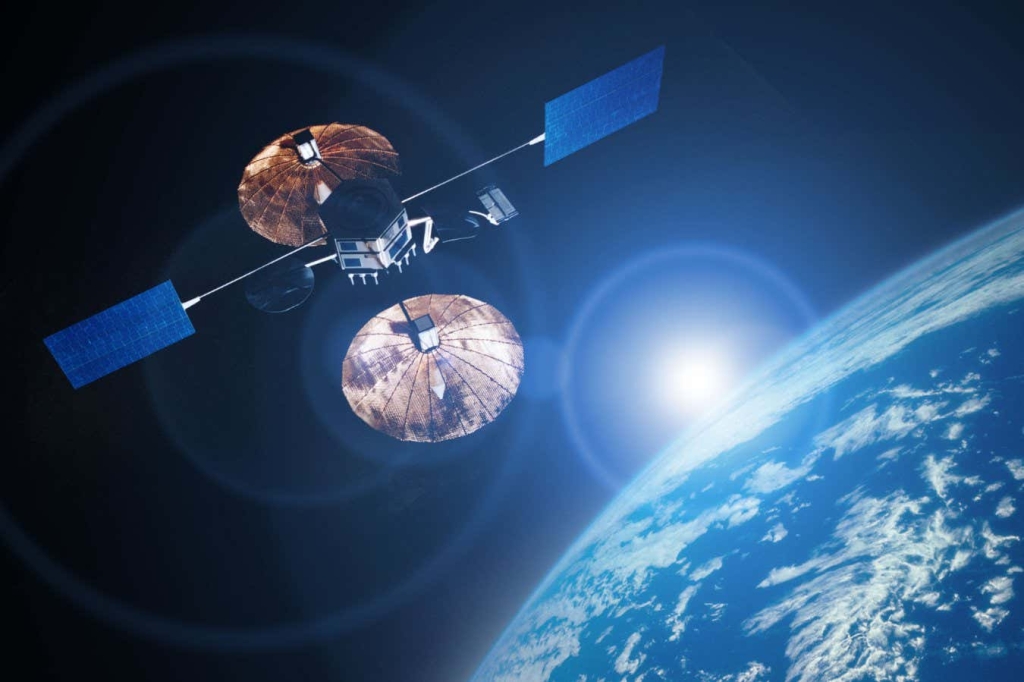
Revolutionizing Space Exploration: Magnetic Fields Could Keep Satellites Flying Longer and Prevent Collisions
In a groundbreaking development that could reshape the future of space exploration, researchers have unveiled a revolutionary technique that harnesses magnetic fields to control satellites, potentially extending mission lifespans and preventing catastrophic collisions in Earth’s increasingly crowded orbit.
Currently, most satellites and space missions operate on a finite timeline, their lifespans dictated by the amount of propellant fuel they carry. Once that fuel runs out, these multi-million-dollar spacecraft become nothing more than expensive space debris, drifting aimlessly or burning up in Earth’s atmosphere. This limitation has long been a thorn in the side of space agencies and private companies alike, constraining mission planning and raising concerns about the sustainability of space operations.
Enter Electromagnetic Formation Flying (EMFF), a concept that has been around for years but has faced significant technical hurdles. The idea is elegantly simple: use renewable power sources like solar panels to energize electromagnetic coils aboard satellites, creating magnetic fields that can interact with those of nearby spacecraft to maneuver them without expending precious fuel.
However, the practical implementation of EMFF has been hampered by a phenomenon known as magnetic coupling. In essence, the magnetic field generated by one satellite doesn’t just interact with a single nearby satellite—it affects all satellites in the vicinity. This makes it incredibly challenging to control the movement of more than two satellites in a coordinated manner, severely limiting the technique’s potential applications.
But now, a team of brilliant minds at the University of Kentucky has cracked the code with an innovative approach called Alternating Magnetic Field Forces (AMFF). This game-changing technique allows two satellites to communicate and control their relative movement without interfering with other nearby spacecraft. The secret lies in the use of unique interaction frequencies, enabling satellites to coordinate their movements on specific frequencies while simultaneously communicating with other nearby satellites on different channels.
To test their groundbreaking concept, the researchers created a simulated space environment on Earth. They placed three satellites on special linear rails that use high-pressure air to create a low-friction environment, mimicking the conditions of space. The results were nothing short of spectacular. The satellites successfully interacted with each other, moving to precise distances defined by the researchers using in-built laser ranging modules.
While the team behind this revolutionary technology has not responded to interview requests, experts in the field are buzzing with excitement. Alvar Saenz Otero, a prominent researcher at the University of Washington, describes the paper as “a step forward in a long-running area of research.” He notes that the complexity of formation flying systems takes a significant leap from two units to three, highlighting the importance of this achievement.
However, Saenz Otero remains cautious about the immediate applications of this technology in low Earth orbit, particularly for mega-constellations like those powering Starlink. “Everything we ever did for EMFF was always about deep space operations,” he explains. The Earth’s atmosphere, along with the gravitational influences of the moon and sun, can create interference at the frequencies used for either EMFF or AMFF, potentially limiting their effectiveness in near-Earth environments.
Ray Sedwick, a researcher at the University of Maryland, echoes these sentiments but emphasizes the challenges of scaling up the technology. “It’s not something that applies at a constellation level,” he states, pointing out that controlling the movement of thousands of satellites using magnetic fields is a vastly different challenge from managing three units.
Sedwick also highlights the potential for extending the range of EMFF by employing superconducting magnetic coils, but notes that this approach comes with its own set of technical challenges. “The range that EMFF can work over increases significantly if you employ superconducting magnetic coils, but there are technical challenges here,” he explains, suggesting that large-scale magnetic movement in space may still be a ways off.
Despite these challenges, the implications of this research are profound. If successfully implemented, this technology could dramatically extend the lifespans of satellites, reduce the risk of collisions in increasingly crowded orbits, and potentially open up new possibilities for space exploration and satellite operations.
As we stand on the brink of a new era in space technology, one thing is clear: the future of satellite control is looking increasingly magnetic. With further research and development, we may soon see a sky filled with satellites dancing to the tune of invisible magnetic fields, revolutionizing our approach to space exploration and satellite management.
Tags: Space exploration, Satellite technology, Magnetic fields, Electromagnetic Formation Flying, Alternating Magnetic Field Forces, University of Kentucky, Satellite collision prevention, Space debris, Renewable energy in space, Low Earth orbit, Starlink, Deep space operations, Superconducting magnetic coils, Formation flying, Laser ranging modules, Space sustainability, Satellite lifespan extension, Electromagnetic coils, Space mission planning, Satellite mega-constellations.
Viral Sentences:
- “Magnetic fields could be the key to keeping satellites flying longer and preventing space collisions.”
- “Scientists crack the code on using invisible forces to control spacecraft in orbit.”
- “The future of satellite control is looking increasingly magnetic.”
- “Game-changing technology could revolutionize how we manage space debris.”
- “From Earth to the stars: How magnetic fields might reshape space exploration.”
- “Three satellites dancing on invisible strings: The future of space formation flying.”
- “Say goodbye to fuel limitations: Magnetic fields could extend satellite lifespans indefinitely.”
- “The sky’s the limit: How magnetic technology could transform mega-constellations like Starlink.”
- “Deep space operations get a magnetic makeover with groundbreaking new research.”
- “Superconducting coils and invisible forces: The next frontier in satellite control.”
,


Leave a Reply
Want to join the discussion?Feel free to contribute!