
Sberbank moves toward crypto-backed lending as Russia readies regulation
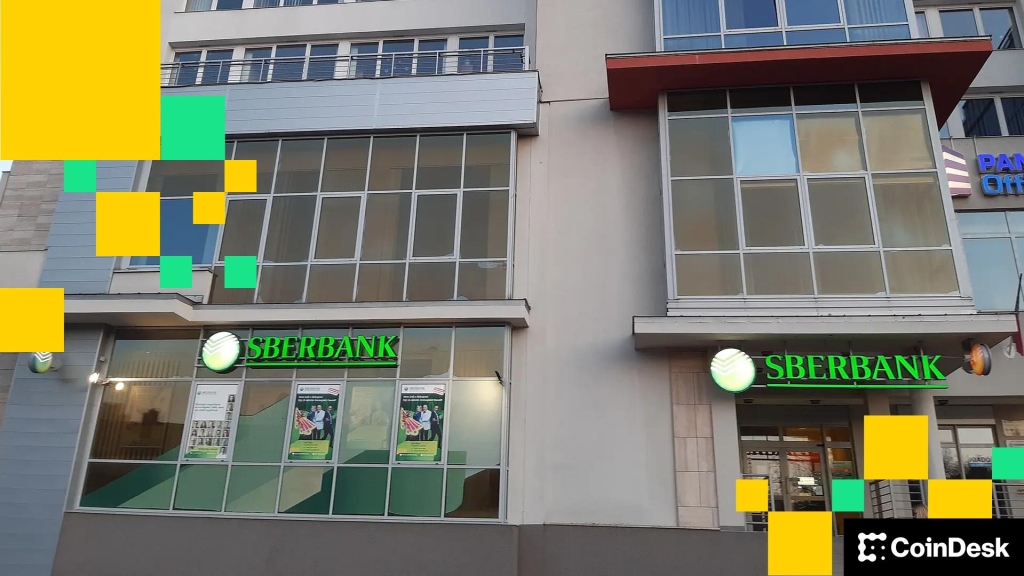
Sberbank Launches Crypto-Backed Lending, Signaling Russia’s Bold Push into Digital Finance
In a landmark move that could reshape Russia’s financial landscape, Sberbank—the country’s largest bank—has unveiled plans to offer loans secured by cryptocurrency, marking a significant pivot toward digital asset integration. The announcement, made Friday, signals the lender’s readiness to collaborate with Russia’s central bank in crafting the necessary regulatory framework to support this emerging financial frontier.
The initiative follows a successful pilot program conducted in January, during which Sberbank issued what it called Russia’s first-ever bitcoin-backed loan to Intelion Data, one of the nation’s largest bitcoin mining firms. The trial, described as a proof-of-concept, has reportedly generated enough confidence within the bank to justify a broader rollout targeting not just miners but also businesses maintaining cryptocurrency on their balance sheets.
This strategic shift comes amid explosive growth in Sberbank’s digital financial asset (DFA) business. In 2025 alone, the volume of DFA issuances on the bank’s platform skyrocketed to 408 billion rubles (approximately $5.3 billion)—a staggering 5.6-fold increase from the previous year’s 73 billion rubles ($948 million) and a mind-blowing 204 times higher than the 2 billion rubles ($26 million) recorded in 2023. The bank’s own DFA holdings have also surged, growing sevenfold in just six months to reach 185 billion rubles ($2.2 billion).
Despite this rapid digital expansion, Sberbank’s traditional financial operations remain colossal. As of December, the bank’s corporate loan portfolio stood at 30.4 trillion rubles ($365 billion), its retail loan book at 18.8 trillion rubles ($226 billion), and client deposits at 33.1 trillion rubles ($398 billion). These figures underscore how tokenized assets, while growing exponentially, still represent a relatively small slice of the lender’s overall business—though their trajectory suggests that could change dramatically in the coming years.
Anatoly Popov, Sberbank’s deputy chairman, has been vocal about the institution’s digital ambitions. Beyond the bitcoin-backed lending initiative, he revealed that the bank already offers clients structured bonds and digital financial assets tied to major cryptocurrencies like bitcoin and ether. Popov also disclosed that Sberbank is actively testing decentralized finance (DeFi) instruments, positioning the bank at the intersection of traditional finance and blockchain innovation. He emphasized the institution’s support for the gradual legalization of cryptocurrencies within Russia’s legal framework, a stance that aligns with recent policy shifts at the national level.
Sberbank isn’t alone in this crypto-lending race. Sovcombank, another major Russian lender, beat Sberbank to the punch by becoming the first bank to roll out bitcoin-backed loans to both individuals and businesses legally holding the cryptocurrency on February 5. This competitive dynamic suggests a broader trend among Russian financial institutions toward embracing digital assets as legitimate collateral.
The regulatory environment appears to be catching up with these market developments. In December 2025, Russia’s central bank reopened the cryptocurrency market to the public with a new set of rules designed to bring digital assets into the formal financial system. Officials have set a July 1, 2026, deadline to complete comprehensive legislation governing crypto assets, providing a clearer path for banks like Sberbank to scale their digital offerings.
Industry observers note that Sberbank’s move could have ripple effects far beyond Russia’s borders. As one of the world’s largest banks by assets, its embrace of crypto-backed lending could encourage other major financial institutions—particularly in emerging markets—to explore similar products. The bank’s ability to bridge traditional banking with blockchain technology may also serve as a model for how legacy financial institutions can adapt to the digital age without abandoning their core strengths.
For now, the success of Sberbank’s crypto-lending program will likely depend on several factors: the stability of cryptocurrency markets, the effectiveness of the regulatory framework being developed, and the willingness of businesses to use digital assets as collateral. If successful, however, this initiative could mark the beginning of a new era in Russian finance—one where digital and traditional assets coexist and complement each other in ways that were previously unimaginable.
As the world watches Russia’s experiment with crypto-backed lending, one thing is clear: the lines between conventional banking and digital finance are blurring faster than ever, and institutions like Sberbank are determined to lead the charge into this uncharted territory.
Tags: Sberbank, cryptocurrency, bitcoin-backed loans, digital financial assets, Russia, crypto lending, blockchain, decentralized finance, DeFi, Intelion Data, Sovcombank, central bank regulation, tokenized assets, financial innovation, emerging markets
Viral Sentences:
- Sberbank just dropped a crypto bomb on traditional banking—are you ready?
- Russia’s largest bank is now playing the crypto game, and it’s changing everything.
- Bitcoin-backed loans? Sberbank says yes, and the financial world is listening.
- From rubles to bitcoin: Sberbank’s digital leap could redefine global finance.
- DeFi testing, crypto lending, and a 5.6x growth—Sberbank is on fire!
- Russia reopens crypto market—Sberbank is first in line to profit.
- Traditional banking meets blockchain: Sberbank’s bold new chapter begins now.
- The future of finance is here, and Sberbank is holding the keys.
- Crypto collateral? Sberbank says it’s not just possible—it’s profitable.
- Watch out Wall Street, Russia’s crypto revolution is just getting started.
,


Leave a Reply
Want to join the discussion?Feel free to contribute!