
Scientists Are Trying To Build Empathy Into Robots
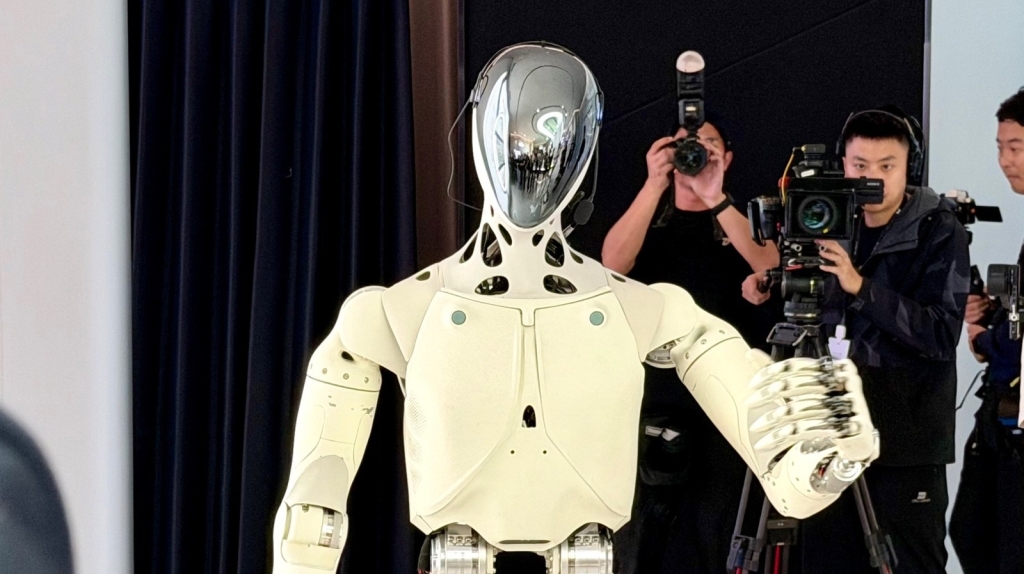
Scientists Are Trying To Build Empathy Into Robots – Here’s How
The humanoid robot market is evolving at breakneck speed, with companies racing to develop not just today’s robotic assistants but also the thinking, feeling machines of tomorrow. While most current AI companions rely on scripted empathy—asking follow-up questions and offering predetermined emotional responses—one pioneering researcher is taking a radically different approach: teaching robots to actually understand human emotions through facial expressions and social cues.
Dr. Angelica Lim, an associate professor of computing science at Simon Fraser University in Canada, is leading a groundbreaking initiative to build genuine empathy into artificial intelligence systems. Her work represents a fundamental shift in how we think about human-robot interaction, moving beyond the superficial emotional mimicry that dominates current chatbots and humanoid robots.
“The problem with current AI is that it’s overly empathetic in a way that can actually be harmful,” Lim explains to CBC News. “We’re trying to avoid creating systems that are so emotionally reactive that they trigger delusions or psychological dependencies. Instead, we want robots that can read the room and respond appropriately to human emotional states.”
This mission puts Lim at the forefront of what could become the next major breakthrough in robotics technology. While companies like OpenAI offer ChatGPT bots with different “personalities,” these remain predetermined scripts that cannot truly understand what’s happening with the user. Lim’s approach aims to create robots that can interpret subtle human signals—facial expressions, tone of voice, body language—and adjust their behavior accordingly.
Her team is developing sophisticated algorithms that analyze facial expressions in real-time. During demonstrations, the robot attempts to tell jokes, and when it receives no laughter in response, it recognizes the lack of engagement and delivers a self-aware quip: “Oh. Well, this one kills in the robot-verse. Tee hee?” This level of social awareness represents a quantum leap from current AI systems that simply follow programmed conversational patterns.
The technology builds on foundational work and platforms that are already a decade old, but Lim’s team is pushing the boundaries of what’s possible. “We’re not just trying to make robots that pretend to understand us,” she says. “We want them to actually treat us like real humans, with all the complexity and nuance that entails.”
Interestingly, Lim isn’t alone in recognizing the importance of emotional intelligence in robotics. Apple recently made its second-most expensive acquisition ever, purchasing an Israeli AI startup for $2 billion. Among the startup’s patents is technology for deeply analyzing facial expressions and voice inputs—capabilities that align closely with Lim’s research goals.
While Apple’s specific plans for this technology remain unclear, the acquisition signals growing industry recognition that emotional intelligence will be crucial for next-generation AI products. For Lim’s team, however, the focus extends beyond commercial applications to understanding the unwritten social rules that humans navigate instinctively.
“There are different things that humans automatically know,” Lim explains. “They just know. And we want robots to just know too. But it’s incredibly difficult because no one has ever written down these rules. Part of what our lab does is try to figure out what those rules are and how to encode them into AI systems.”
This research touches on fundamental questions about human nature and machine intelligence. How do we teach machines to understand context, subtext, and the subtle emotional signals that govern human interaction? How do we balance the benefits of empathetic AI with the risks of creating systems that could manipulate or exploit human emotions?
The implications extend far beyond simple human-robot interaction. Empathetic AI could revolutionize fields like mental health care, education, customer service, and elder care. Robots that can genuinely understand and respond to human emotions could provide companionship for the elderly, support for people with autism or social anxiety, or more effective therapeutic interventions.
However, the technology also raises significant ethical concerns. If robots become too good at reading and responding to human emotions, could they be used to manipulate people? Could they create unhealthy emotional dependencies? Lim’s cautious approach—focusing on appropriate rather than excessive empathy—reflects these legitimate concerns.
The race to build empathetic robots is intensifying as the technology matures. Companies across the globe are investing heavily in AI that can understand and respond to human emotions. The potential market for emotionally intelligent robots is enormous, spanning healthcare, education, entertainment, and personal assistance.
As this technology develops, it will likely transform not just how we interact with machines, but how we think about emotions, empathy, and what it means to be human. The robots of the future may not just be tools or servants, but genuine companions capable of understanding and responding to our emotional needs.
The work being done by researchers like Angelica Lim represents a crucial step toward that future—one where robots can truly understand us, not just mimic understanding. As this technology continues to evolve, it promises to blur the lines between human and machine interaction in ways we’re only beginning to imagine.
tags
humanoid robots, AI empathy, emotional intelligence, robotics breakthrough, facial expression analysis, social robots, Angelica Lim, Simon Fraser University, empathetic AI, human-robot interaction, Apple AI acquisition, mental health robots, future of robotics, AI emotional awareness, robot companions, artificial emotional intelligence, social cue recognition, next-gen AI, empathetic technology, robot emotional intelligence, AI emotional analysis, humanoid robot development, emotional robotics, AI emotional understanding, robot emotional awareness, empathetic machine learning, AI emotional recognition, future robot companions, emotional AI systems, robot social intelligence, AI emotional response, empathetic humanoid robots, emotional robot technology, AI emotional processing, robot emotional learning, empathetic AI development, AI emotional comprehension, robot emotional understanding, emotional AI breakthrough, empathetic robot technology, AI emotional intelligence, robot emotional awareness, empathetic machine technology, AI emotional recognition systems, robot emotional comprehension, empathetic AI systems, AI emotional understanding technology, robot emotional intelligence development, empathetic AI research, AI emotional awareness systems
,


Leave a Reply
Want to join the discussion?Feel free to contribute!