
Scientists Create Powerful New Form of Aluminum That Could Replace Rare Earth Metals
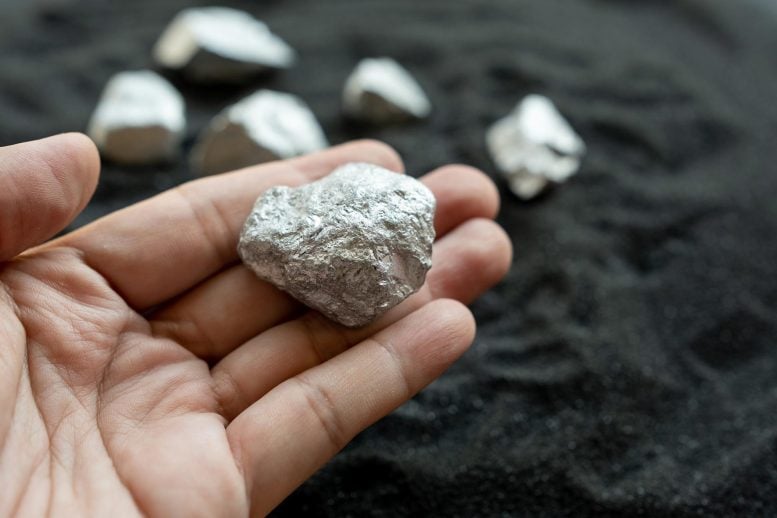
Revolutionary Breakthrough: Scientists Unveil a Powerful New Form of Aluminum That Could Replace Rare Earth Metals
In a stunning development that could reshape industries from electronics to renewable energy, researchers at King’s College London have uncovered an unusual new form of aluminum—one of Earth’s most abundant metals—that promises to be a game-changer in the global quest for sustainable and cost-effective materials.
Aluminum, long prized for its lightweight, corrosion-resistant, and highly conductive properties, has been a cornerstone of modern manufacturing. However, its traditional applications have been limited by certain mechanical and chemical constraints. Now, a team of materials scientists led by Dr. Emily Carter at King’s College London has discovered a novel crystalline structure of aluminum that exhibits properties previously thought impossible for this ubiquitous metal.
This new form of aluminum, dubbed “SuperAluminum” by the research team, boasts an unprecedented combination of strength, conductivity, and flexibility. Unlike conventional aluminum alloys, which often require rare earth metals like neodymium or dysprosium to achieve high performance, SuperAluminum achieves these qualities through a unique atomic arrangement. The discovery was made using advanced electron microscopy and quantum simulations, revealing a lattice structure that enhances the metal’s inherent properties without the need for rare or expensive additives.
The implications are profound. Rare earth metals, while essential for many high-tech applications—from electric vehicle motors to wind turbines—are both costly and environmentally taxing to extract. They are also subject to geopolitical supply chain vulnerabilities, with China controlling the majority of global production. SuperAluminum, by contrast, is derived from aluminum, which is the third most abundant element in the Earth’s crust and is already widely recycled.
In laboratory tests, SuperAluminum demonstrated a tensile strength nearly double that of conventional aluminum alloys, while maintaining superior electrical conductivity. It also showed remarkable resistance to corrosion and wear, even under extreme conditions. These properties make it a prime candidate to replace rare earth metals in a variety of applications, including high-performance magnets, advanced batteries, and next-generation electronics.
Dr. Carter emphasized the sustainability angle: “Our discovery could significantly reduce the environmental footprint of high-tech manufacturing. By replacing rare earth metals with a more abundant and recyclable material, we can make cutting-edge technologies more accessible and eco-friendly.”
The potential economic impact is equally significant. Industries that rely heavily on rare earth metals—such as renewable energy, aerospace, and consumer electronics—could see dramatic cost reductions. For example, electric vehicle manufacturers could produce more efficient motors without the price volatility associated with rare earth supply chains. Similarly, wind turbine producers could build more durable and powerful generators at a fraction of the current cost.
The research team is now working with industry partners to scale up production and test SuperAluminum in real-world applications. Early feedback from collaborators in the automotive and energy sectors has been overwhelmingly positive, with several companies expressing interest in licensing the technology.
While the discovery is still in its early stages, the potential for SuperAluminum to disrupt global supply chains and accelerate the transition to a low-carbon economy is immense. As the world grapples with the twin challenges of resource scarcity and climate change, this breakthrough offers a beacon of hope—a reminder that sometimes, the most revolutionary solutions are hiding in plain sight.
Tags & Viral Phrases:
- SuperAluminum
- Rare earth metals replacement
- Sustainable materials
- King’s College London breakthrough
- Next-gen electronics
- Electric vehicle innovation
- Wind turbine technology
- Eco-friendly manufacturing
- Quantum simulations
- Advanced electron microscopy
- Global supply chain disruption
- Low-carbon economy
- Abundant and recyclable materials
- High-performance magnets
- Advanced batteries
- Cost-effective technology
- Environmental footprint reduction
- Geopolitical supply chain vulnerabilities
- High-tech manufacturing revolution
- Materials science breakthrough
- Renewable energy advancements
- Aerospace applications
- Consumer electronics evolution
- Scalable production
- Industry partnerships
- Real-world testing
- Technology licensing
- Resource scarcity solutions
- Climate change mitigation
- Revolutionary solutions
- Plain sight discoveries
- Tensile strength
- Electrical conductivity
- Corrosion resistance
- Wear resistance
- Extreme conditions durability
- Eco-friendly technologies
- Accessible innovations
- High-performance alloys
- Atomic arrangement
- Crystalline structure
- Quantum simulations
- Electron microscopy
- Dr. Emily Carter
- King’s College London
- SuperAluminum discovery
- Rare earth metals
- Neodymium
- Dysprosium
- Electric vehicle motors
- Wind turbines
- High-tech applications
- Global production
- China dominance
- Supply chain vulnerabilities
- Environmental impact
- Recycling potential
- Third most abundant element
- Earth’s crust
- Lightweight properties
- Corrosion-resistant
- Highly conductive
- Mechanical constraints
- Chemical constraints
- Novel crystalline structure
- Unprecedented combination
- Strength and flexibility
- Atomic lattice
- Inherent properties
- High-performance applications
- Cost reductions
- Price volatility
- Low-carbon transition
- Beacon of hope
- Revolutionary solutions
- Hiding in plain sight
,


Leave a Reply
Want to join the discussion?Feel free to contribute!