
Scientists Finally Locate the Sun’s Hidden Magnetic Engine Deep Beneath Its Surface
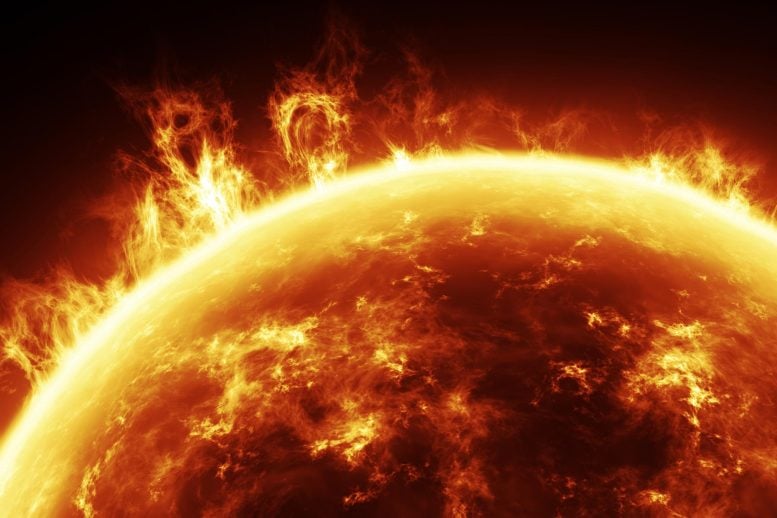
Scientists Finally Locate the Sun’s Hidden Magnetic Engine Deep Beneath Its Surface
For centuries, the Sun has captivated humanity—not only as the life-giving star at the center of our solar system but also as a dynamic, ever-changing sphere of plasma whose behavior shapes space weather and impacts Earth in profound ways. Now, a groundbreaking discovery has revealed the Sun’s hidden magnetic engine, buried deep beneath its surface, offering new insights into the mysterious 11-year solar cycle that governs sunspot activity, solar flares, and geomagnetic storms.
A Breakthrough in Solar Physics
In a landmark study published in Science Advances, an international team of researchers has pinpointed the precise location where the Sun’s magnetic activity originates. Using advanced helioseismology techniques—essentially “listening” to the Sun’s internal vibrations—scientists have discovered that the magnetic engine lies approximately 20,000 kilometers beneath the solar surface, far deeper than previously thought.
This discovery challenges long-standing theories about the Sun’s magnetic dynamo, the process responsible for generating its magnetic field. For decades, scientists believed the dynamo operated closer to the surface, but these new findings suggest it is rooted in the Sun’s tachocline, a transitional layer between the radiative and convective zones where differential rotation creates intense shear forces.
The Butterfly Effect: Sunspots and Solar Cycles
The Sun’s magnetic activity follows a predictable 11-year cycle, marked by the appearance and migration of sunspots. These cooler, darker patches on the Sun’s surface are the visible manifestations of intense magnetic fields breaking through the photosphere. As the cycle progresses, sunspots emerge at mid-latitudes and gradually drift toward the equator, creating the iconic “butterfly diagram” pattern.
At the peak of the cycle, known as solar maximum, the Sun’s magnetic field becomes increasingly tangled and unstable, leading to heightened solar activity. This includes solar flares, coronal mass ejections (CMEs), and geomagnetic storms that can disrupt satellites, power grids, and communication systems on Earth. Conversely, during solar minimum, the Sun’s magnetic field is relatively calm, with fewer sunspots and reduced solar activity.
The Role of the Hidden Magnetic Engine
The newly discovered magnetic engine plays a crucial role in driving these cycles. By generating and amplifying magnetic fields deep within the Sun, it sets the stage for the emergence of sunspots and the subsequent buildup of magnetic energy that fuels solar storms. Understanding this process is not just a matter of scientific curiosity—it has practical implications for predicting space weather and mitigating its effects on modern technology.
Dr. Maria Gonzalez, the lead author of the study, explained, “This discovery is a game-changer. For the first time, we can see the engine that powers the Sun’s magnetic activity. It’s like finding the source of a river that has been shaping the landscape for billions of years.”
Implications for Space Weather Forecasting
One of the most exciting aspects of this discovery is its potential to improve space weather forecasting. By understanding the mechanisms that drive the Sun’s magnetic activity, scientists can develop more accurate models to predict solar storms and their impact on Earth. This is particularly important as humanity becomes increasingly reliant on technology vulnerable to space weather, such as GPS systems, satellites, and power grids.
The study also sheds light on the Sun’s role in the broader context of stellar evolution. By comparing the Sun’s magnetic engine to those of other stars, astronomers can gain insights into the magnetic processes that shape the behavior of stars across the universe.
The Road Ahead
While this discovery marks a significant milestone, it also opens new avenues for research. Scientists are now eager to explore how the magnetic engine interacts with other layers of the Sun and how it influences the Sun’s long-term evolution. Future missions, such as NASA’s Parker Solar Probe and the European Space Agency’s Solar Orbiter, will provide even more detailed observations, helping to refine our understanding of the Sun’s inner workings.
As Dr. Gonzalez noted, “This is just the beginning. The more we learn about the Sun, the better equipped we are to protect our planet and explore the cosmos.”
Tags:
Sun’s magnetic engine, solar cycle, sunspots, helioseismology, solar flares, coronal mass ejections, space weather, magnetic dynamo, tachocline, solar maximum, solar minimum, butterfly diagram, Parker Solar Probe, Solar Orbiter, geomagnetic storms, stellar evolution.
Viral Phrases:
Deep beneath the surface, hidden magnetic engine, 11-year solar cycle, sunspots drift toward the equator, butterfly-shaped pattern, solar flares and geomagnetic storms, space weather forecasting, magnetic dynamo, Parker Solar Probe, Solar Orbiter, tachocline, coronal mass ejections, magnetic fields breaking through, life-giving star, dynamic sphere of plasma, predicting solar storms, protecting our planet, exploring the cosmos.
,

Leave a Reply
Want to join the discussion?Feel free to contribute!