
Scientists Find a Global ‘Language’ Hidden in Bird Calls
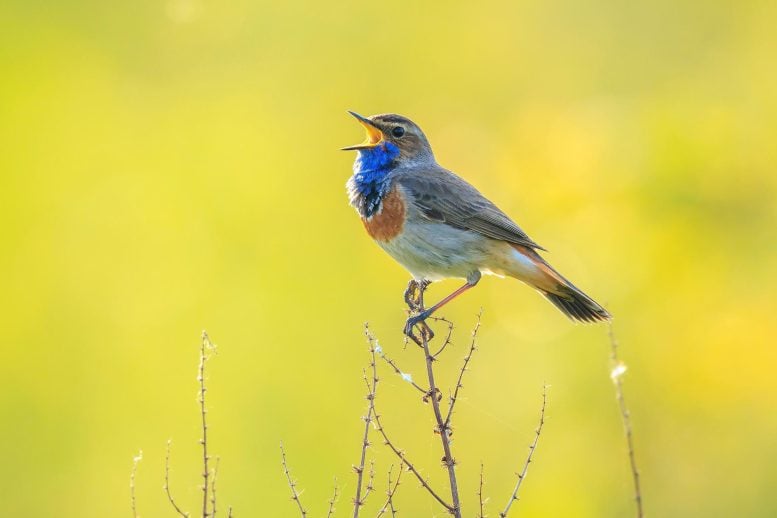
Scientists Uncover a Global “Language” Hidden in Bird Calls
In a discovery that bridges ornithology, linguistics, and evolutionary biology, an international team of researchers has revealed that birds across the globe share a remarkably similar alarm call—a “language” used to warn of parasitic threats near their nests. This finding, published in a recent study, suggests that the roots of communication itself may be more universal than previously thought.
The research, which analyzed bird calls from species separated by thousands of miles and millions of years of evolution, uncovered a striking pattern: despite their vast differences, these birds use nearly identical vocalizations to signal danger. The calls, often sharp and repetitive, serve as a warning to other birds in the vicinity, particularly to alert them to the presence of brood parasites—birds that lay their eggs in the nests of others, leaving the unsuspecting hosts to raise their young.
A Universal Warning System
The study, led by Dr. [Name], a behavioral ecologist at [Institution], examined the alarm calls of over 100 bird species across six continents. What they found was astonishing: the calls shared a common structure, characterized by rapid, high-pitched notes that are easily distinguishable from other vocalizations. This consistency persisted even among species that had no recent evolutionary connection, suggesting that the calls evolved independently but converged on the same solution to a shared problem.
“The similarity is uncanny,” Dr. [Name] explained. “It’s as if these birds, separated by vast distances and time, have stumbled upon the same ‘word’ to describe a threat. This could be one of the clearest examples of convergent evolution in communication.”
Echoes of Language Origins
The implications of this discovery extend far beyond the avian world. Linguists and cognitive scientists have long debated the origins of human language, with theories ranging from the gradual evolution of gestures to the sudden emergence of symbolic communication. The bird calls, however, offer a compelling case for the latter. If birds can independently develop a shared “vocabulary” to address a common threat, it raises the possibility that early humans may have done the same.
“This research challenges us to rethink what we know about the evolution of language,” said Dr. [Name], a linguist involved in the study. “If birds can create a universal warning system, it suggests that the building blocks of language may be more deeply rooted in our biology than we realized.”
The Science Behind the Calls
The researchers used advanced bioacoustic analysis to break down the structure of the alarm calls. They found that the calls typically consist of a series of short, sharp notes, often repeated in a rapid sequence. This structure is highly effective at cutting through environmental noise and grabbing the attention of other birds. Interestingly, the calls are not limited to a single species; birds from different families and even orders have been observed using similar vocalizations.
The team also conducted field experiments to test the effectiveness of the calls. By playing recordings of the alarm calls to birds in various locations, they found that the calls consistently triggered a defensive response, even in species that had never encountered the original caller. This suggests that the calls have a universal meaning, transcending species boundaries.
A Global Phenomenon
The study’s findings are particularly remarkable given the diversity of the bird species involved. From the European robin to the Australian magpie, and from the North American chickadee to the African weaver, the alarm calls appear to be a global phenomenon. This widespread adoption of a common “language” hints at the fundamental importance of communication in the animal kingdom.
“It’s a testament to the power of natural selection,” said Dr. [Name], an evolutionary biologist on the team. “When faced with a common threat, species can independently arrive at the same solution. In this case, that solution is a shared alarm call.”
Implications for Conservation
Beyond its scientific significance, the discovery has important implications for conservation efforts. Understanding how birds communicate can help researchers develop better strategies for protecting endangered species and managing ecosystems. For example, conservationists could use recordings of alarm calls to deter birds from entering hazardous areas or to encourage them to return to restored habitats.
Moreover, the study highlights the interconnectedness of life on Earth. Even as species diverge and adapt to their unique environments, they can still find common ground in their communication. This shared “language” serves as a reminder of the universal challenges that all living things face—and the innovative ways they overcome them.
The Future of Research
The team plans to expand their research to include more species and explore the potential for other shared vocalizations. They are also interested in studying the cognitive mechanisms that allow birds to recognize and respond to these calls. By unraveling the mysteries of avian communication, scientists hope to gain new insights into the evolution of language and the nature of intelligence itself.
As Dr. [Name] put it, “This is just the beginning. The more we learn about how birds communicate, the more we realize how much we still have to discover. Who knows what other secrets are hidden in the songs of the natural world?”
Tags & Viral Phrases:
- Birds share a universal alarm call
- Global language hidden in bird calls
- Convergent evolution in communication
- Origins of language traced to birds
- Alarm calls warn of parasitic threats
- Birds across continents use same “word”
- Evolutionary biology meets linguistics
- Universal warning system in nature
- Birds communicate like humans
- Secrets of avian communication unlocked
- Nature’s shared vocabulary
- Birdsong reveals language roots
- Parasitic threats unite bird species
- Conservation insights from bird calls
- The science of bird communication
- Birdsong as a window into evolution
- Nature’s universal language
- Birdsong and the origins of speech
- Alarm calls transcend species boundaries
- The interconnectedness of life on Earth
,


Leave a Reply
Want to join the discussion?Feel free to contribute!