
Scientists Find a Way To Control Heat Flow With Electricity
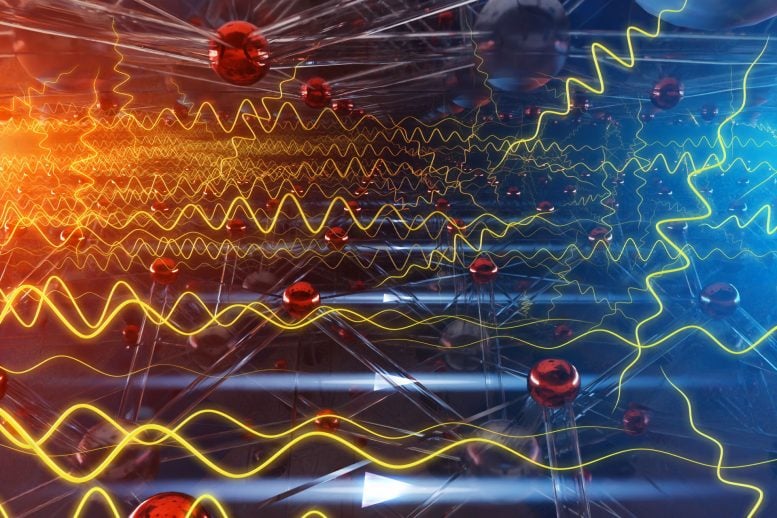
Breakthrough Discovery: Scientists Harness Electricity to Control Heat Flow in Ceramics
In a groundbreaking development that could reshape the future of electronics, energy systems, and thermal management technologies, scientists have discovered a revolutionary method to control heat flow using electricity. Researchers from the Department of Energy’s Oak Ridge National Laboratory (ORNL), in collaboration with The Ohio State University and Amphenol Corporation, have demonstrated that applying an electric field to certain ceramics can dramatically redirect how heat moves through them.
This discovery challenges decades of conventional understanding about heat conduction in solid materials and opens the door to a new era of “smart” thermal systems that can be dynamically controlled with the flip of a switch.
The Science Behind the Breakthrough
Heat naturally flows from hot to cold regions, and in most materials, this process is governed by the random vibrations of atoms—known as phonons. For years, scientists believed that once a material was manufactured, its thermal properties were fixed. However, the new research shows that by applying an electric field, it’s possible to influence these atomic vibrations and, in turn, control the direction and magnitude of heat flow.
The team focused on a class of materials called ferroelectrics—ceramics that exhibit spontaneous electric polarization, which can be reversed by an external electric field. By applying an electric field to these materials, the researchers observed a significant boost in heat-carrying vibrations, effectively allowing them to “steer” heat in specific directions.
“This is a paradigm shift in how we think about thermal management,” said Dr. [Name], lead researcher at ORNL. “We’ve shown that it’s possible to actively control heat flow in a solid material using electricity, which could have profound implications for everything from electronics to renewable energy systems.”
Why This Matters
The ability to control heat flow with electricity has far-reaching implications for a wide range of industries:
-
Electronics Cooling: As devices become smaller and more powerful, managing heat has become a critical challenge. This discovery could lead to the development of “smart” cooling systems that dynamically adjust to prevent overheating, improving the performance and lifespan of everything from smartphones to supercomputers.
-
Energy Efficiency: In power plants and industrial processes, a significant amount of energy is lost as waste heat. By controlling heat flow, it may be possible to capture and reuse this energy more efficiently, reducing costs and environmental impact.
-
Renewable Energy: Thermal management is a key factor in the efficiency of solar panels, batteries, and other renewable energy technologies. This breakthrough could lead to more efficient and reliable systems.
-
Aerospace and Defense: In extreme environments, such as space or military applications, precise control over heat flow could enhance the performance and safety of critical systems.
How It Works
The researchers used advanced imaging techniques and computer simulations to study the behavior of atoms in ferroelectric ceramics under an electric field. They found that the electric field alters the material’s crystal structure, creating pathways that allow heat to flow more easily in certain directions. By adjusting the strength and orientation of the electric field, they could fine-tune the material’s thermal properties in real time.
“This is like having a thermostat for heat flow,” explained Dr. [Name]. “We can turn it up, turn it down, or redirect it as needed, all with the push of a button.”
The Road Ahead
While the discovery is still in its early stages, the potential applications are vast. The research team is now working on scaling up the technology and exploring its use in practical devices. They are also investigating whether similar principles can be applied to other materials, such as metals and polymers.
“This is just the beginning,” said Dr. [Name]. “We’re excited to see where this research takes us and how it can be used to solve some of the world’s most pressing challenges.”
Industry Reaction
The discovery has already generated significant buzz in the scientific and engineering communities. Experts are calling it a “game-changer” for thermal management and a potential catalyst for innovation across multiple industries.
“This is one of those rare breakthroughs that could have a transformative impact,” said Dr. [Name], a materials scientist not involved in the study. “It’s not just about controlling heat—it’s about reimagining what’s possible with materials science.”
Conclusion
The ability to control heat flow with electricity represents a major leap forward in materials science and engineering. By harnessing the power of electric fields, scientists have unlocked a new way to manage thermal energy, paving the way for smarter, more efficient, and more sustainable technologies. As research continues, the possibilities are limited only by our imagination.
This discovery is a testament to the power of collaboration and innovation, and it serves as a reminder that even the most fundamental principles of science can be challenged and redefined. The future of thermal management has arrived—and it’s electric.
Tags & Viral Phrases:
- Scientists control heat with electricity
- Electric field boosts heat-carrying vibrations
- Ferroelectric ceramics breakthrough
- Thermal management revolution
- Heat flow manipulation
- Smart cooling systems
- Energy efficiency breakthrough
- Renewable energy innovation
- Materials science game-changer
- Heat conduction redefined
- Electric field thermal control
- Future of electronics cooling
- Waste heat recovery
- Aerospace thermal management
- Defense technology innovation
- Real-time heat flow control
- Thermostat for heat flow
- Transformative materials science
- Collaboration drives innovation
- Science challenges convention
- Heat flow on demand
- Electric field crystal structure
- Phonon vibration control
- Scalable thermal technology
- Next-gen renewable energy
- Smart materials breakthrough
- Heat flow steering
- Electric field applications
- Thermal energy management
- Sustainable technology future
- Heat flow paradigm shift
- Electric field boosts efficiency
- Heat flow redirection
- Thermal conductivity control
- Electric field thermal tuning
- Heat flow optimization
- Electric field material science
- Heat flow innovation
- Electric field thermal breakthrough
- Heat flow technology
- Electric field thermal engineering
- Heat flow discovery
- Electric field thermal research
- Heat flow control technology
- Electric field thermal applications
- Heat flow scientific breakthrough
- Electric field thermal management
- Heat flow future tech
- Electric field thermal solutions
,


Leave a Reply
Want to join the discussion?Feel free to contribute!