
Scientists Find Key Building Block of Life in 500-Million-Year-Old Fossils
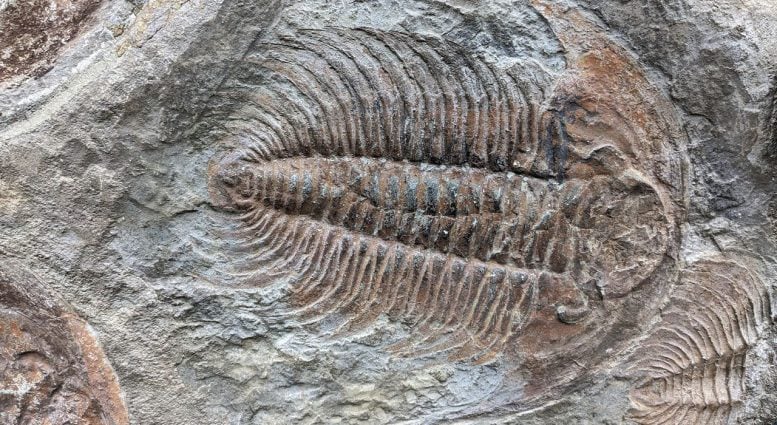
In a discovery that is sending shockwaves through the scientific community, an international team of researchers has uncovered chemical evidence of life preserved within fossils dating back 500 million years. The fossils in question belong to trilobites, ancient marine arthropods whose hard exoskeletons have long been considered the only remnants of their once-living tissue. However, this groundbreaking study suggests that the story of fossil preservation is far more complex—and far more intriguing—than previously imagined.
Led by scientists at The University of Texas at San Antonio, the research team employed cutting-edge analytical techniques to examine the chemical composition of trilobite fossils from the Cambrian period. What they found was astonishing: traces of organic molecules—specifically, the remnants of chitin, a key structural component found in the exoskeletons and soft tissues of arthropods—had survived the ravages of time in a form that defies conventional understanding.
For decades, paleontologists have operated under the assumption that the organic matter in ancient fossils is almost entirely replaced by minerals during the fossilization process. This process, known as permineralization, typically leaves behind only the hard, mineralized structures of organisms, while the original organic materials are thought to be completely degraded. However, the new findings challenge this paradigm, suggesting that under certain conditions, biological carbon can persist in fossils for hundreds of millions of years.
The implications of this discovery are profound. If organic molecules can survive in fossils for such vast stretches of geological time, it opens up new possibilities for understanding the evolution of life on Earth. It also raises tantalizing questions about the potential for finding even older traces of biological material, perhaps pushing back the timeline for the emergence of complex life forms.
The research team used a combination of advanced spectroscopy and microscopy techniques to analyze the fossils. These methods allowed them to detect the chemical signatures of chitin and other organic compounds that would have been invisible to traditional fossil analysis. The presence of these molecules suggests that the fossilization process may have preserved more than just the physical shape of the trilobites—it may have also locked away a chemical record of their biology.
One of the most exciting aspects of this discovery is its potential to reshape our understanding of the fossil record. If similar organic preservation is found in other ancient fossils, it could provide unprecedented insights into the biology and ecology of extinct species. For example, the chemical signatures of soft tissues could reveal details about an organism’s diet, metabolism, and even its environment, offering a more complete picture of life in Earth’s distant past.
The study also has implications for the search for life beyond Earth. If biological molecules can survive for hundreds of millions of years on our planet, it raises the possibility that similar traces of life could persist on other worlds with conditions conducive to fossilization. This could inform future missions to Mars and other celestial bodies, where scientists are eager to find evidence of past or present life.
While the discovery is groundbreaking, it also raises new questions. How common is this type of organic preservation in the fossil record? What specific conditions are required for such molecules to survive for so long? And what other secrets might be hidden within the chemical composition of ancient fossils? These are just a few of the questions that the research team hopes to explore in future studies.
The findings, published in a leading scientific journal, have already sparked widespread interest among scientists and the public alike. They serve as a reminder that even in fields as well-established as paleontology, there is still much to learn about the history of life on Earth. As technology continues to advance, it is likely that more surprises await us in the fossil record, offering new glimpses into the distant past and the incredible resilience of life.
In the meantime, the discovery of organic molecules in 500-million-year-old trilobite fossils stands as a testament to the power of scientific curiosity and the enduring mysteries of our planet’s history. It is a story that underscores the importance of looking beyond the surface—and the minerals—to uncover the hidden stories written in the very fabric of life itself.
Tags and Viral Phrases:
- Ancient fossils
- 500-million-year-old trilobites
- Organic molecules in fossils
- Chitin preservation
- Revolutionary paleontology discovery
- Biological carbon survival
- Earth’s ancient life secrets
- Fossilization breakthrough
- Chemical signatures of life
- Mars life search implications
- Groundbreaking scientific research
- Paleontological paradigm shift
- Hidden stories in fossils
- Science that changes everything
- Unlocking Earth’s past
- Fossil record rewritten
- Trilobite fossil analysis
- Organic preservation mystery
- Life’s resilience over time
- Scientific discovery of the decade
,


Leave a Reply
Want to join the discussion?Feel free to contribute!