
Scientists Found a T. Rex Tooth Embedded in Another Dinosaur’s Skull : ScienceAlert
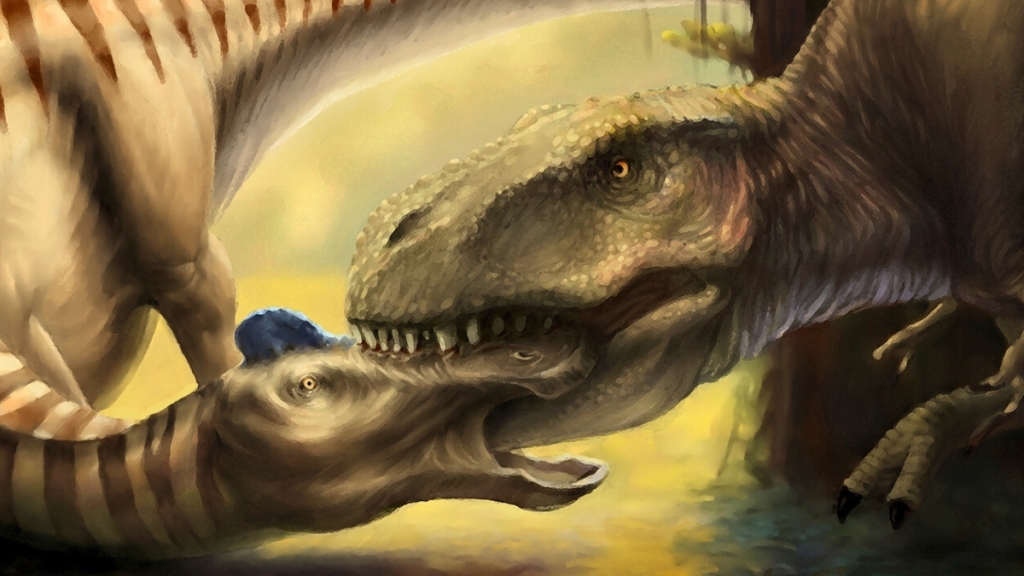
The T. rex Bite Marks That Reveal the Terrifying Truth About Its Hunting Habits
For decades, the Tyrannosaurus rex has been the undisputed king of the dinosaurs—a towering, ferocious predator that ruled the prehistoric world with unmatched ferocity. From blockbuster movies to museum exhibits, the T. rex has been depicted as the ultimate hunter, a relentless carnivore that dominated the food chain. But how much of this portrayal is rooted in scientific fact, and how much is Hollywood exaggeration?
Recent discoveries, including a groundbreaking study published in PeerJ, are shedding new light on the hunting and feeding behaviors of this iconic dinosaur. By examining bite marks on a nearly complete Edmontosaurus skull, paleontologists are piecing together a more accurate picture of how the T. rex hunted, killed, and consumed its prey.
The T. rex: Predator or Scavenger?
For years, scientists have debated whether the T. rex was primarily a predator or a scavenger. Some argued that its massive size and slow speed made it more suited to scavenging carcasses left by other predators. Others contended that its powerful jaws, sharp teeth, and keen senses made it a formidable hunter.
Today, most paleontologists agree that the T. rex was both—a versatile carnivore that actively hunted but also scavenged when the opportunity arose. This behavior is not uncommon in the animal kingdom; modern predators like lions and hyenas exhibit similar flexibility in their feeding habits.
What Did the T. rex Eat?
To understand the T. rex‘s diet, scientists look to the fossils of herbivorous dinosaurs found in the same rock layers. Plant-eating dinosaurs like the horned Triceratops and the duck-billed Edmontosaurus were likely staples of the T. rex‘s menu. Bite marks on the bones of these dinosaurs provide direct evidence of T. rex feeding activity.
But what about hunting behavior? How did the T. rex catch its prey? These questions are harder to answer, as they require piecing together indirect evidence from fossils, footprints, and other clues left behind millions of years ago.
A Rare Fossil Discovery
A recent study by paleontologist John Scannella and Taia Wyenberg-Henzler, a PhD candidate at the University of Alberta, has provided new insights into T. rex hunting behavior. The study focuses on a nearly complete Edmontosaurus skull discovered in 2005 in eastern Montana. This skull, now on display at the Museum of the Rockies in Bozeman, Montana, holds a chilling secret: a partial T. rex tooth embedded in its nasal cavity.
The presence of this tooth, along with numerous bite marks on both sides of the skull, tells a story of a violent encounter between predator and prey. The tooth’s orientation suggests it broke off when the Edmontosaurus faced its attacker head-on, likely during a fatal bite.
The Evidence Speaks Volumes
CT scans of the skull reveal the exact positioning of the embedded tooth, providing critical details about the attack. The lack of healing around the tooth indicates that the Edmontosaurus was either killed or mortally wounded during the encounter. This level of detail is rare in the fossil record, making this discovery particularly significant.
By comparing the shape and size of the tooth’s serrations to those of other carnivorous dinosaurs from the same period, the researchers identified the attacker as a Tyrannosaurus. Further analysis suggests the T. rex was an adult with a skull approximately one meter long.
Bite Marks Reveal Hunting Behavior
The bite marks on the Edmontosaurus skull offer a window into the T. rex’s feeding habits. On the right side of the skull, the bite marks are located behind the eye, while on the left side, they are found along the back third of the lower jaw. This pattern is consistent with the behavior of modern carnivores, which typically target areas with the most flesh.
In duck-billed dinosaurs like the Edmontosaurus, the back third of the skull contains major chewing muscles and would have been one of the fleshiest parts of the head. The presence of bite marks in this area suggests that the T. rex consumed the carcass after killing it, stripping away the flesh before discarding the skull.
A Rare Glimpse into Prehistoric Life
Direct fossil evidence of a dinosaur being killed and eaten by another dinosaur is exceptionally rare. This discovery provides a unique opportunity to understand the hunting and feeding behaviors of large carnivorous dinosaurs. It also highlights the importance of fossil evidence in reconstructing the lives of these ancient creatures.
As Taia Wyenberg-Henzler, the study’s co-author, explains, “This fossil gives us an important glimpse into the potential hunting behaviors of large carnivorous dinosaurs. It’s a rare and valuable piece of the puzzle in understanding how these animals lived and interacted with their environment.”
Conclusion
The T. rex remains one of the most iconic and studied dinosaurs in history. While much of its reputation as a fearsome predator is well-deserved, recent discoveries like the Edmontosaurus skull are helping scientists refine our understanding of its behavior. Far from being a one-dimensional monster, the T. rex was a complex and adaptable carnivore that played a crucial role in its ecosystem.
As paleontologists continue to uncover new fossils and analyze existing ones, our picture of the T. rex and its world will only become clearer. For now, this rare fossil serves as a reminder of the power and precision of one of history’s most formidable predators.
Tags: #TyrannosaurusRex #DinosaurFossils #Paleontology #Edmontosaurus #PrehistoricLife #TrexHunting #DinosaurBehavior #FossilDiscovery #ScienceAlert #JurassicWorld #DinoDiscovery #PrehistoricPredator #Tyrannosaurus #DinoScience #FossilEvidence
Viral Phrases:
- “The T. rex bite marks that reveal its terrifying hunting habits!”
- “This fossil discovery changes everything we thought we knew about T. rex!”
- “A rare glimpse into the deadly world of the T. rex!”
- “How a single tooth unlocked the secrets of T. rex hunting behavior!”
- “The T. rex: Predator, scavenger, or both? Science has the answer!”
- “This fossil is the closest we’ve ever come to witnessing a T. rex attack!”
- “The T. rex’s hunting habits are finally being revealed—and it’s brutal!”
- “A T. rex tooth embedded in a dinosaur skull tells a story millions of years in the making!”
- “The T. rex’s feeding behavior decoded: What bite marks reveal about its diet!”
- “This discovery proves the T. rex was even more terrifying than we imagined!”
,


Leave a Reply
Want to join the discussion?Feel free to contribute!