
Scientists Grew Mini Human Spinal Cords, Then Made Them Repair After Injury : ScienceAlert
Breakthrough in Spinal Cord Injury Treatment: Lab-Grown Human Tissue Shows Stunning Regeneration
In a groundbreaking development that could revolutionize treatment for millions living with paralysis, scientists have successfully demonstrated nerve regeneration in lab-grown human spinal cord tissue using an innovative molecular therapy.
A New Frontier in Regenerative Medicine
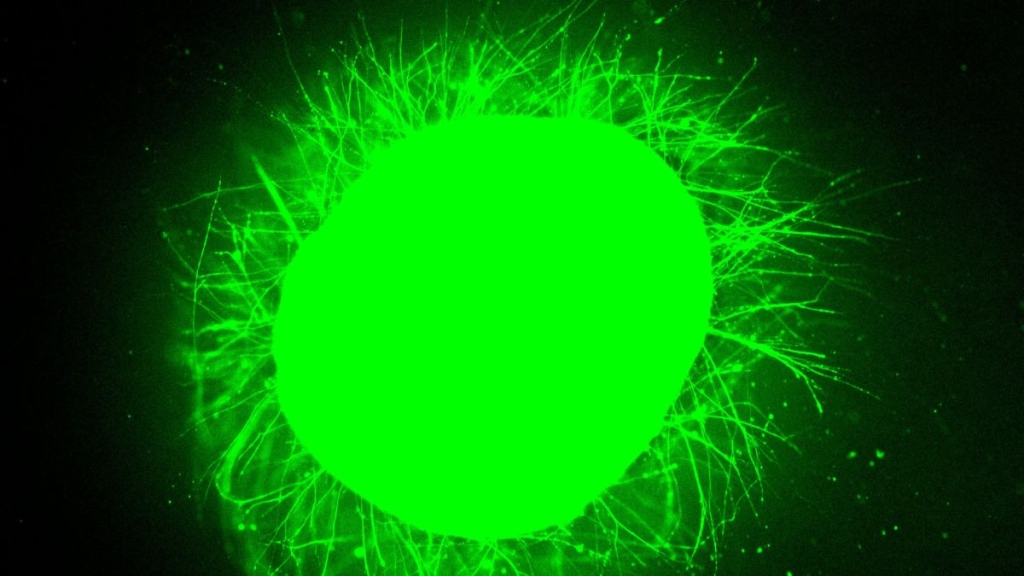
Researchers at Northwestern University have achieved what many in the medical community once considered impossible: reversing the devastating effects of spinal cord injuries in human tissue models. The team grew miniature 3D spinal cord organoids—tiny lab-grown replicas of human spinal tissue—and successfully treated them after inducing paralysis-like injuries.
“We’ve taken a critical step toward translating our previous success in animal models to potential human applications,” explained biomedical engineer Samuel Stupp, who led the research. “This validation in human tissue represents a major milestone on the path to clinical trials.”
The Science Behind the “Dancing Molecules”
The treatment centers on a revolutionary material called IKVAV-PA, which contains supramolecular therapeutic peptides nicknamed “dancing molecules.” These microscopic particles move in coordinated patterns that match the natural motion of receptors on nerve cells, dramatically increasing their effectiveness.
“Imagine trying to shake hands with someone who’s standing perfectly still versus someone who’s moving naturally,” Stupp elaborated. “Our molecules move in ways that allow them to connect more effectively with nerve cell receptors, encouraging regeneration in ways static treatments simply cannot achieve.”
From Lab Dish to Potential Lifesaver
The research process was meticulous and methodical. Scientists used induced pluripotent stem cells from adult donors to grow spinal cord organoids approximately 3 millimeters wide. After months of development, these organoids matured to contain the same cellular architecture found in actual human spinal cords, including neurons, astrocytes, and organized tissue layers.
The team then inflicted two types of injuries on different organoids: precise cuts with scalpels and compression injuries mimicking the crushing trauma common in car accidents. Both injury types triggered immediate nerve cell death, inflammation, and the formation of glial scars—the same biological responses seen in real spinal cord injuries.
Remarkable Results That Defy Expectations
When the IKVAV-PA treatment was applied, the results were nothing short of extraordinary. The liquid therapy immediately formed a gel-like scaffold that provided structural support while the active molecules went to work. Treated organoids showed dramatically reduced inflammation and scarring compared to control groups, with extensive nerve cell regrowth observed throughout the damaged tissue.
“We could clearly distinguish between normal astrocytes and those in the glial scar, which are typically large and densely packed,” Stupp noted. “The treated organoids showed neurite growth resembling the axon regeneration we previously observed in animal models.”
Why This Matters for Millions Worldwide
Spinal cord injuries affect approximately 250,000 to 500,000 people globally each year, with current treatment options limited primarily to stabilization and rehabilitation. The poor regenerative capacity of the central nervous system means that most patients face permanent paralysis, making this breakthrough particularly significant.
The research team’s approach of testing in human tissue organoids before moving to clinical trials represents a crucial advancement in medical research methodology. By validating their treatment in human tissue that accurately mimics the complexity of actual spinal cords, they’ve significantly increased the likelihood of success in future human trials.
The Road Ahead
While the results are promising, researchers caution that human clinical trials remain years away. The consistent success across both mouse models and human tissue organoids, however, provides strong evidence that this therapy could eventually help restore mobility to those living with spinal cord injuries.
“This is validation that our therapy has a good chance of working in humans,” Stupp emphasized. “One of the most exciting aspects of organoids is that we can test new therapies in human tissue without the risks associated with early-stage clinical trials.”
The research, published in Nature Biomedical Engineering, marks a significant milestone in regenerative medicine and offers new hope to millions affected by spinal cord injuries worldwide.
Tags:
spinal cord injury, paralysis treatment, regenerative medicine, dancing molecules, spinal cord organoids, nerve regeneration, stem cell research, Northwestern University, Samuel Stupp, IKVAV-PA, supramolecular peptides, medical breakthrough, central nervous system repair, biomedical engineering, paralysis cure
Viral Sentences:
• Scientists just reversed paralysis in lab-grown human spinal cords
• “Dancing molecules” could be the key to walking again
• This treatment healed spinal cord injuries better than anything before
• Millions could regain mobility thanks to this breakthrough
• Lab-grown human tissue shows stunning nerve regeneration
• The future of paralysis treatment just got a whole lot brighter
• This isn’t science fiction anymore—it’s happening in labs right now
• A major step toward ending paralysis as we know it
• The “dancing molecules” that could make the paralyzed walk again
• Human tissue breakthrough brings paralysis cure closer than ever
,


Leave a Reply
Want to join the discussion?Feel free to contribute!