
Scientists Reveal The Oldest Map of The Night Sky Ever Made : ScienceAlert
Ancient Cosmic Secrets Revealed: The Lost Star Map of Hipparchus Discovered Beneath Medieval Text
In a stunning breakthrough that reads like a Hollywood script, scientists have unlocked one of astronomy’s greatest mysteries—the oldest known map of the night sky, hidden beneath centuries of overwritten text. This isn’t just another archaeological discovery; it’s a technological triumph that bridges ancient wisdom with cutting-edge science.
The Astronomical Detective Story That Defied Time
Picture this: nearly 2,000 years ago, Hipparchus of Nicaea—often called the father of scientific astronomy—meticulously charted the heavens, creating what would become the first comprehensive star catalog in Western civilization. Living from approximately 190 to 120 BCE, Hipparchus wasn’t just any astronomer; he was a mathematical genius who calculated the motions of the Sun and Moon with unprecedented precision and was the first to discover Earth’s precession—the slow wobble of our planet’s axis.
But here’s the tragedy: for millennia, his groundbreaking work existed only in fragments. The only surviving evidence was a critical commentary he wrote on other astronomers’ work, pointing out their errors. His actual star catalog—the crown jewel of ancient astronomy—was believed lost forever.
The Medieval Manuscript That Held the Key
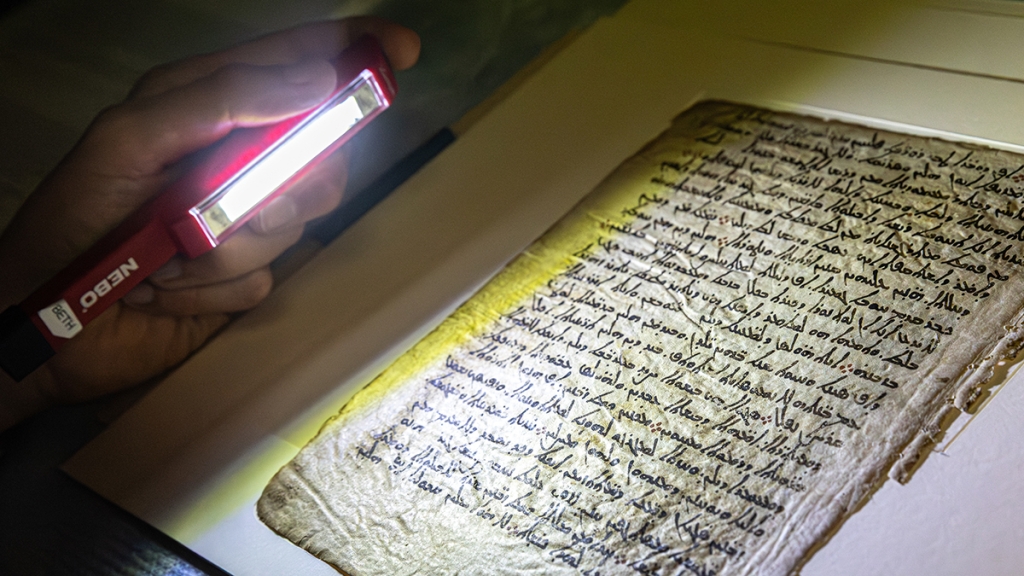
The story begins in the unlikeliest of places: a 6th-century monastery manuscript called the Codex Climaci Rescriptus. In medieval times, parchment was precious and expensive. When monks needed writing material, they didn’t hesitate to scrape clean existing documents and reuse the pages. This particular manuscript had been overwritten with Christian texts in Syriac, a Semitic language.
But something extraordinary was hiding beneath those religious writings. In 2022, researchers conducting a close analysis of the folio noticed faint astronomical notations that didn’t match the overlying text. These weren’t random scribbles—they were references to Earth’s precession that aligned perfectly with Hipparchus’s era.
Particle Accelerator Technology Meets Ancient Astronomy
Now comes the truly mind-blowing part. To reveal these hidden secrets without destroying the fragile manuscript, scientists turned to a particle accelerator—specifically, a synchrotron at the SLAC National Accelerator Laboratory in California. This isn’t your typical X-ray machine; it’s a sophisticated device that accelerates electrons to nearly the speed of light, creating powerful X-rays that can distinguish between different chemical compositions.
Here’s where it gets fascinating: the monks’ overwriting ink was rich in iron, while the ancient Greek text beneath contained calcium. This chemical difference became the key to unlocking history. When the synchrotron’s X-rays hit the manuscript, they could detect these elemental signatures, effectively “seeing through” the medieval text to reveal what lay beneath.
The Discovery Process: A Technological Ballet
The restoration effort has been nothing short of extraordinary. The Codex Climaci Rescriptus, believed to have originated from St. Catherine’s Monastery in Egypt—the oldest continuously inhabited Christian monastery in the world—currently resides at the Museum of the Bible in Washington D.C. Transporting this priceless artifact required military-level precision.
Each page was carefully mounted in custom-made frames, placed in humidity-controlled cases, and carried by hand to the SLAC facility. Even the scanning room’s lighting was meticulously controlled to prevent any further fading of the ancient ink. It’s a delicate dance between preserving history and revealing it.
What They’ve Found So Far
The results are already breathtaking. Victor Gysembergh, a historian from the French National Scientific Research Center (CNRS), has been leading the charge. “The goal is to recover as many of these coordinates as possible,” he explained to KQED. “And this will help us answer some of the biggest questions on the birth of science.”
Why did scientific thinking emerge when it did? How did ancient civilizations achieve such remarkable precision with nothing but the naked eye? The coordinates being uncovered are “incredibly accurate for something that is done with the naked eye,” Gysembergh notes.
Already, researchers have recovered several star descriptions and even a reference to “Aquarius.” But this is just the beginning. The synchrotron is revealing line after line of ancient Greek text, slowly reconstructing Hipparchus’s masterpiece.
The Bigger Picture: Why This Matters
This discovery isn’t just about finding lost text—it’s about understanding the very foundations of scientific thought. Hipparchus’s work represents a pivotal moment in human history when observation, mathematics, and systematic recording began to replace mythology and guesswork in understanding the cosmos.
Think about the implications: Here was a man in ancient Greece, using nothing but his eyes and mathematical reasoning, creating star charts so accurate they’re only now being fully appreciated. It challenges our assumptions about ancient knowledge and demonstrates that the scientific method has deeper roots than many realize.
The Road Ahead: A Global Puzzle
There’s a catch, though. The Codex Climaci Rescriptus contains only about 11 pages currently being scanned, but the manuscript actually runs to approximately 200 pages. And here’s the twist—those pages are scattered across the world in different collections. Completing this cosmic jigsaw puzzle will require international cooperation and careful coordination.
Each page represents another piece of Hipparchus’s celestial map, another fragment of humanity’s first systematic attempt to understand our place in the universe. The scanning process itself is painstakingly slow, but every new revelation brings us closer to seeing the night sky through ancient eyes.
The Human Element: Passion Meets Precision
What makes this story truly compelling is the human passion driving it. Researchers like Gysembergh aren’t just technicians; they’re modern-day explorers, driven by the same curiosity that motivated Hipparchus himself. “I am at the peak of my excitement right now,” Gysembergh told KQED. “Because of this new scan that we started, line after line of text showing up in ancient Greek from the astronomical manuscript.”
This isn’t just about recovering data—it’s about connecting with our intellectual ancestors, understanding their methods, and appreciating their achievements. It’s a reminder that the quest to understand the universe is a human endeavor that spans millennia.
The Future of Ancient Text Recovery
This breakthrough has implications far beyond Hipparchus’s star catalog. The synchrotron technology used here could revolutionize the study of palimpsests (manuscripts with overwritten text) worldwide. From ancient medical texts to lost literary works, countless documents may be hiding secrets beneath their visible surfaces.
As scanning technology improves and becomes more accessible, we may be on the cusp of a new golden age in historical research—one where the invisible becomes visible, and the lost becomes found.
A Cosmic Connection Across Time
When Hipparchus first charted those stars, he could never have imagined that nearly two millennia later, scientists would use technology he couldn’t have conceived to reveal his work. It’s a beautiful irony—ancient wisdom unlocked by modern technology, each advancing our understanding of the other.
This discovery reminds us that knowledge is cumulative, that each generation builds upon the insights of those who came before. Hipparchus laid the groundwork for centuries of astronomical discovery, and now, through this remarkable technological feat, we’re completing a circle that began in ancient Greece.
The night sky Hipparchus mapped was the same one we see today, connecting us across vast stretches of time through our shared wonder at the cosmos. As we continue to scan, analyze, and reconstruct his work, we’re not just recovering lost text—we’re recovering a piece of our intellectual heritage and reaffirming our enduring quest to understand the universe.
Tags: #AncientAstronomy #Hipparchus #StarCatalog #ParticleAccelerator #Synchrotron #CodexClimaciRescriptus #MedievalManuscripts #ScientificDiscovery #ArchaeologyTech #NightSkyMapping #LostKnowledge #HistoricalRecovery #StCatharinesMonastery #ParchmentAnalysis #AncientGreekScience
Viral Phrases: “Oldest map of the night sky discovered,” “Ancient star catalog hidden beneath medieval text,” “Particle accelerator reveals lost astronomical knowledge,” “Hipparchus’s work recovered after 2,000 years,” “Synchrotron technology unlocks ancient secrets,” “Medieval monks unknowingly preserved ancient astronomy,” “Scientific breakthrough in historical manuscript analysis,” “Connecting ancient wisdom with modern technology,” “The father of astronomy’s lost masterpiece found,” “X-ray vision into the past,” “Cosmic detective story spanning millennia,” “Invisible text made visible by cutting-edge science,” “Preserving history through technological innovation,” “The birth of scientific astronomy revealed,” “Ancient Greek precision astounds modern researchers”
Viral Sentences: “Scientists have unlocked one of astronomy’s greatest mysteries—the oldest known map of the night sky, hidden beneath centuries of overwritten text.” “Using a particle accelerator, researchers are revealing ancient Greek astronomical text that medieval monks unknowingly preserved.” “This isn’t just another archaeological discovery; it’s a technological triumph that bridges ancient wisdom with cutting-edge science.” “The coordinates being uncovered are ‘incredibly accurate for something that is done with the naked eye,’ challenging our assumptions about ancient knowledge.” “We may be on the cusp of a new golden age in historical research—one where the invisible becomes visible, and the lost becomes found.”
,


Leave a Reply
Want to join the discussion?Feel free to contribute!