
Scientists Say Your Fingers Hold a Secret of Brain Evolution
Scientists Say Your Fingers Hold a Secret of Brain Evolution
In a stunning new discovery that could reshape our understanding of human evolution, scientists have uncovered a surprising link between prenatal hormone exposure and the dramatic expansion of the human brain. The key to this evolutionary puzzle may be hiding in plain sight—on your own hands.
Researchers have long been fascinated by the extraordinary growth of the human brain compared to our primate relatives. Over millions of years, our brains have expanded at an unprecedented rate, enabling complex language, abstract thinking, and advanced tool use. But what triggered this cognitive leap? According to a groundbreaking study, the answer may lie in the delicate balance of hormones we’re exposed to before we’re even born.
The study, published in a leading scientific journal, reveals that higher levels of estrogen in the womb could play a pivotal role in brain development. Estrogen, often associated with female reproductive health, is now being recognized as a critical factor in shaping the architecture of the developing brain. But here’s where it gets even more intriguing: scientists have found a visible, measurable clue to this prenatal hormone exposure—your fingers.
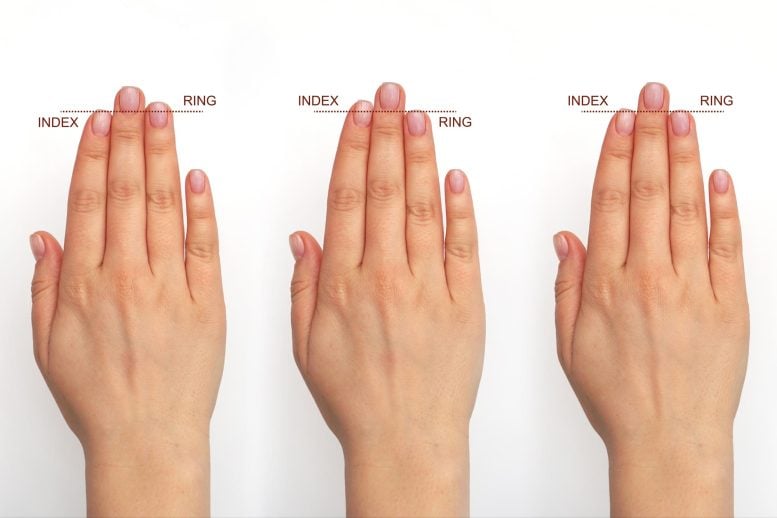
Specifically, the ratio between the length of your index finger and your ring finger, known as the 2D:4D ratio, has been linked to the amount of estrogen a fetus is exposed to in the womb. A lower ratio (shorter index finger relative to the ring finger) is associated with higher prenatal estrogen levels. This seemingly simple physical trait could be a window into the hormonal environment that shaped your brain long before you took your first breath.
The implications of this discovery are profound. If prenatal estrogen levels influence brain growth, it could explain why humans have such advanced cognitive abilities compared to other species. It also raises fascinating questions about the role of hormones in shaping not just our physical traits, but our intellectual potential as well.
But the story doesn’t end there. The study also suggests that this hormonal influence may have been a driving force in human evolution. As our ancestors faced new challenges and opportunities, those with higher prenatal estrogen exposure may have had a cognitive edge, leading to the development of more complex social structures, tools, and technologies. Over time, this could have set the stage for the emergence of modern humans.
What makes this research particularly exciting is its potential to bridge the gap between biology and behavior. By understanding how prenatal hormones shape brain development, scientists may be able to unlock new insights into everything from learning disabilities to mental health disorders. It could also pave the way for innovative approaches to education and cognitive enhancement.
Of course, this is just the beginning. The study opens up a host of new questions: How exactly does estrogen influence brain growth? Are there other hormones at play? And what does this mean for our understanding of gender differences in cognition? As researchers delve deeper into these questions, we can expect even more revelations about the intricate dance between biology and evolution.
In the meantime, the next time you look at your hands, take a moment to appreciate the hidden story they tell. Those fingers, shaped by hormones before you were born, may hold the key to one of the greatest mysteries of human evolution—the incredible growth of our brains. It’s a reminder that the secrets of our past are often closer than we think, waiting to be uncovered by the curious minds of today.
Tags & Viral Phrases:
Prenatal estrogen, brain evolution, finger length ratio, 2D:4D ratio, human cognitive development, hormonal influence, evolutionary biology, brain growth, prenatal hormones, cognitive leap, human ancestors, advanced thinking, abstract reasoning, tool use, social structures, learning disabilities, mental health, gender differences, biological secrets, evolutionary puzzle, cognitive potential, hormonal environment, brain architecture, primate comparison, scientific breakthrough, hidden clues, evolutionary mystery, human intelligence, cognitive edge, biological behavior, education innovation, cognitive enhancement, evolutionary forces, prenatal development, brain expansion, human evolution secrets, finger clues, hormonal shaping, evolutionary advantages, cognitive abilities, evolutionary biology, scientific discovery, evolutionary insights, brain development, evolutionary leap, human uniqueness, evolutionary drivers, prenatal influence, brain size, evolutionary traits, cognitive evolution, evolutionary biology, evolutionary secrets, brain mysteries, evolutionary science, evolutionary breakthroughs, evolutionary research, evolutionary findings, evolutionary clues, evolutionary connections, evolutionary implications, evolutionary questions, evolutionary answers, evolutionary understanding, evolutionary knowledge, evolutionary exploration, evolutionary journey, evolutionary path, evolutionary story, evolutionary history, evolutionary future, evolutionary possibilities, evolutionary potential, evolutionary impact, evolutionary significance, evolutionary relevance, evolutionary importance, evolutionary meaning, evolutionary purpose, evolutionary role, evolutionary function, evolutionary process, evolutionary mechanism, evolutionary theory, evolutionary hypothesis, evolutionary evidence, evolutionary data, evolutionary research, evolutionary study, evolutionary findings, evolutionary conclusions, evolutionary implications, evolutionary insights, evolutionary understanding, evolutionary knowledge, evolutionary exploration, evolutionary journey, evolutionary path, evolutionary story, evolutionary history, evolutionary future, evolutionary possibilities, evolutionary potential, evolutionary impact, evolutionary significance, evolutionary relevance, evolutionary importance, evolutionary meaning, evolutionary purpose, evolutionary role, evolutionary function, evolutionary process, evolutionary mechanism, evolutionary theory, evolutionary hypothesis, evolutionary evidence, evolutionary data.
,


Leave a Reply
Want to join the discussion?Feel free to contribute!