
Scientists Spot Signs of Derelict Soviet Moon Lander on Lunar Surface
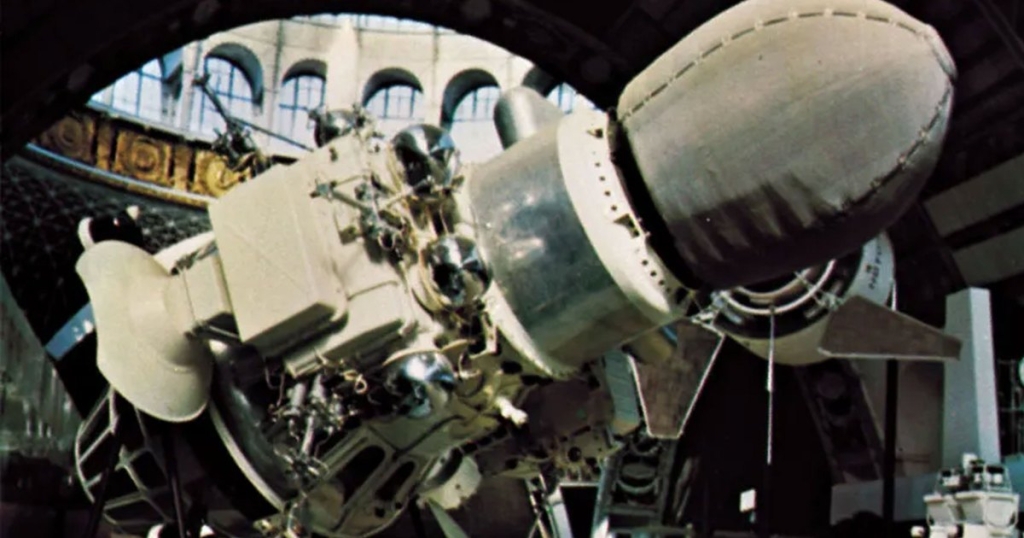
Soviet Moon Probe Luna 9 Found? Competing Claims Spark New Hunt for Historic Relic
In 1966, three years before Apollo 11 made history with the first human steps on the Moon, the Soviet Union achieved a quieter but equally groundbreaking milestone: the first soft landing of a spacecraft on another celestial body. The probe, Luna 9, touched down on the lunar surface, unfurled its petals, and transmitted the first photographs ever captured from the surface of another world—a grainy, high-contrast black-and-white image of a desolate, rocky expanse that captivated millions on Earth.
Yet for more than half a century, the exact location of this historic artifact remained a mystery. Now, two separate teams of scientists claim to have pinpointed the resting place of Luna 9—but their conclusions are at odds, setting the stage for a modern space detective story that blends citizen science, artificial intelligence, and international collaboration.
A Tiny Target in a Vast Expanse
The challenge of locating Luna 9 is immense. The probe’s spherical core stage is just two feet in diameter—about the size of a beach ball—making it nearly invisible to the cameras aboard NASA’s Lunar Reconnaissance Orbiter (LRO), which has been mapping the Moon in extraordinary detail since 2009. According to Mark Robinson, the principal investigator for the LRO’s camera, even the most advanced orbital imagery struggles to confirm the presence of such a small object.
“You can stare at an image, and maybe that’s it, but you can’t really know for sure,” Robinson told The New York Times.
Crowdsourcing the Cosmos
Determined to solve the mystery, Russian science communicator Vitaly Egorov launched a crowdsourcing initiative, inviting volunteers to scour a 62-mile-wide swath of the lunar surface for any sign of the lost probe. Using the horizon features visible in Luna 9’s historic photograph as a guide, Egorov and his team believe they have narrowed down the landing site to a specific location.
“I’m fairly confident,” Egorov told the Times, though he acknowledged the possibility of a margin of error “of several meters.”
To confirm their findings, Egorov has enlisted the help of India’s space agency, which has agreed to task its Chandrayaan-2 orbiter—equipped with higher-resolution cameras—to take a closer look in March.
AI Enters the Hunt
Not everyone is convinced by Egorov’s conclusion. A team from University College London (UCL) has proposed a different landing site, identified using a machine-learning algorithm they’ve dubbed “You-Only-Look-Once–Extraterrestrial Artefact,” or YOLO-ETA.
The algorithm was trained on existing NASA data from known lunar landing sites, enabling it to recognize patterns and anomalies that might indicate the presence of human-made objects. According to the UCL team, a bright pixel near two darker spots—possibly the protective shells Luna 9 used to cushion its landing—could mark the probe’s final resting place. Their findings were published last month in the journal npj Space Exploration.
A Treasure Hunt Across Time
As scientists await the results from Chandrayaan-2, the hunt for Luna 9 has reignited interest in the artifacts left behind by early space exploration. The probe’s twin, Luna 13, which landed on the Moon just months after Luna 9, remains missing as well.
“It’s just a matter of placing bigger and better cameras into orbit around the moon,” said Anatoly Zak, a Russian spaceflight expert and space journalist. “In our lifetimes, we probably will see those sites.”
Why It Matters
The search for Luna 9 is more than an academic exercise. It’s a testament to the enduring legacy of the Space Race and a reminder of the technological leaps made in the 1960s. Locating these early artifacts not only honors the pioneers of space exploration but also provides valuable insights into the long-term effects of the lunar environment on human-made objects.
Moreover, the hunt showcases the power of modern tools—crowdsourcing, AI, and international cooperation—to solve mysteries that have lingered for decades. As space agencies and private companies plan future missions to the Moon, understanding the fate of these early explorers could inform the design and deployment of new technologies.
What’s Next?
With Chandrayaan-2’s high-resolution cameras set to scan the proposed landing sites, scientists are hopeful that the mystery of Luna 9 will finally be resolved. Whether Egorov’s crowdsourced analysis or UCL’s AI-driven approach proves correct, the outcome will mark a significant milestone in the ongoing exploration of our celestial neighbor.
As the world watches, the story of Luna 9 serves as a powerful reminder: even after 60 years, the Moon still holds secrets waiting to be uncovered.
Tags:
Luna 9, Soviet Moon probe, lunar exploration, space history, Chandrayaan-2, Lunar Reconnaissance Orbiter, AI in space, crowdsourcing science, space artifacts, Moon landing, Soviet space program, University College London, Vitaly Egorov, Anatoly Zak, space mystery, extraterrestrial archaeology
Viral Sentences:
- “The first photo from another world—now the hunt for its source begins!”
- “A beach ball-sized probe, lost for 60 years, could soon be found!”
- “AI vs. crowdsourcing: The race to locate Luna 9 heats up!”
- “India’s Chandrayaan-2 to the rescue—will it solve the lunar mystery?”
- “From grainy black-and-white images to cutting-edge AI: The quest for Luna 9!”
- “The Moon still holds secrets—and we’re closer than ever to uncovering them!”
- “A treasure hunt across time: The story of Luna 9 and the dawn of space exploration.”
- “Mark Robinson: ‘You can stare at an image, and maybe that’s it, but you can’t really know for sure.'”
- “Anatoly Zak: ‘In our lifetimes, we probably will see those sites.'”
- “The legacy of the Space Race lives on—one pixel at a time.”
,


Leave a Reply
Want to join the discussion?Feel free to contribute!