
Scientists Suggest That Igniting Oil Spills to Create Fire Tornadoes Might Actually Be Good for the Oceans
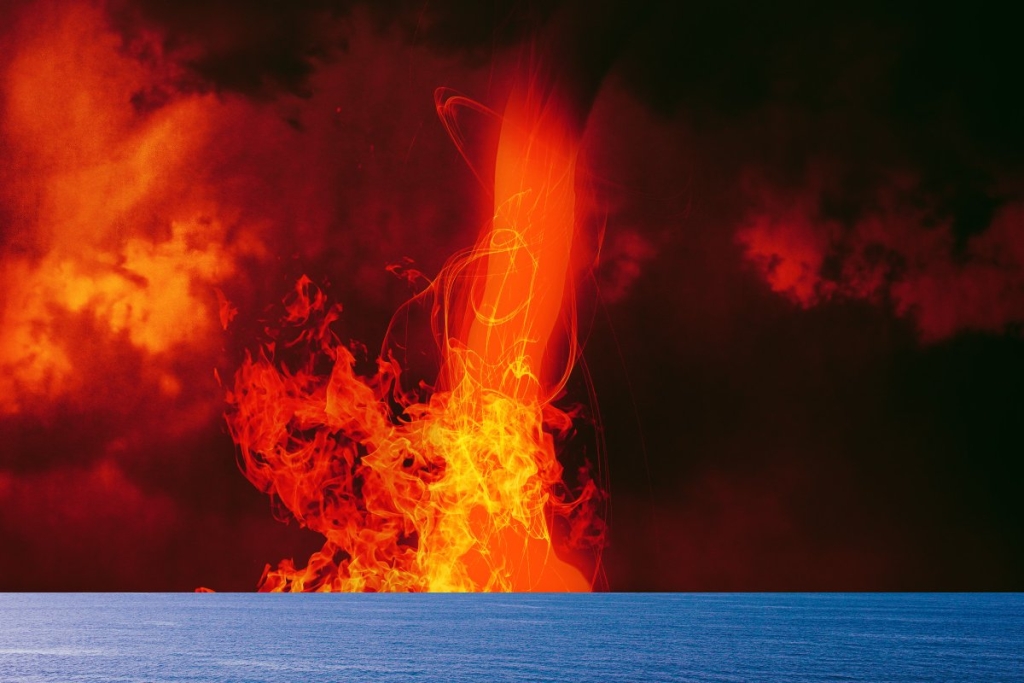
Scientists Propose Using Fire Tornadoes to Clean Up Oil Spills—And It Might Actually Work
In a bold and unexpected twist in environmental science, researchers at Texas A&M University have proposed using massive fire tornadoes—yes, you read that right—as a potential solution to one of the ocean’s most persistent threats: oil spills.
Oil spills have long plagued marine ecosystems, coating coastlines, suffocating marine life, and causing long-term environmental damage. Traditional cleanup methods, such as in-situ burning (where large pools of crude oil are ignited on the water’s surface), are effective but slow and produce significant soot and air pollution. Enter the fire whirl—a spinning vortex of flame that could revolutionize how we approach this crisis.
The Science Behind the Blaze
The concept is as fascinating as it is unconventional. Fire whirls, also known as fire tornadoes, are natural phenomena where intense heat and wind combine to create a spinning column of fire. These whirls burn hotter and faster than traditional fires, making them incredibly efficient at consuming fuel. Researchers at Texas A&M hypothesized that harnessing this chaotic energy could be the key to faster, cleaner oil spill remediation.
To test their theory, the team constructed a controlled environment using three 16-foot walls arranged in a loose triangle. This setup allowed them to generate a fire whirl reaching heights of up to 17 feet. The results were nothing short of remarkable.
A Cleaner, Faster Solution
Compared to traditional in-situ burning, the controlled fire whirl produced 40% less soot while burning off up to 95% of the fuel. This means not only is the process faster, but it also significantly reduces the environmental impact of oil spill cleanup.
Elaine Oran, a professor of aerospace engineering at Texas A&M and one of the lead researchers, described the findings as groundbreaking. “This is the first time anyone has conceived using fire whirls for oil spill remediation, and it’s really just the beginning,” she said. “Our goal is to harness the chaotic nature of fire whirls as a powerful, precise restoration tool to protect coastlines, marine ecosystems, and the environment as a whole.”
Speed is the Game-Changer
One of the most compelling aspects of this method is its speed. Fire whirls burn through crude oil spills nearly twice as fast as traditional in-situ fire pools. This rapid response could be a game-changer for cleanup crews, allowing them to contain and eliminate oil spills before they spread further.
“Imagine being able to stop an oil spill in its tracks before it reaches sensitive habitats or coastal communities,” Oran explained. “That’s the potential we’re looking at with this technology.”
The Road Ahead
While the initial results are promising, the research is still in its early stages. The team is now focused on refining the technique, exploring its scalability, and assessing its long-term environmental impact. If successful, fire whirls could become a vital tool in the fight against ocean pollution.
But this isn’t just about cleaning up oil spills—it’s about rethinking how we approach environmental challenges. By embracing innovative, even unconventional solutions, we can tackle some of the most pressing issues facing our planet today.
Tags & Viral Phrases:
🔥 Fire Tornadoes
🌊 Ocean Cleanup Revolution
🌍 Saving the Planet with Fire
💡 Science Meets Innovation
🚨 Game-Changer for Oil Spills
⚡ Faster, Cleaner, Greener
🔬 Texas A&M Breakthrough
🌪️ Harnessing Chaos for Good
🐠 Protecting Marine Life
🌐 Environmental Game-Changer
🔥🔥 Fire Whirls to the Rescue!
🚀 The Future of Oil Spill Cleanup
🌿 Eco-Friendly Fire? Yes, Please!
🌍 Saving Oceans, One Whirl at a Time
🔥💡 Science That’s Hotter Than Ever!
,

Leave a Reply
Want to join the discussion?Feel free to contribute!