
Scientists Trying to Figure Out How to Disclose News of Alien Life
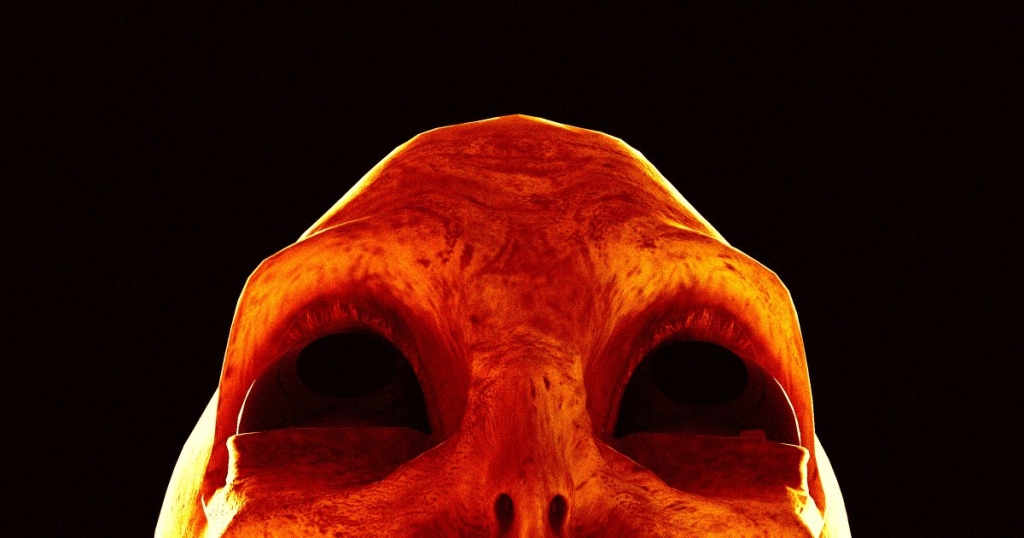
Humanity’s Moment of Truth: The Impossible Challenge of Announcing We’re Not Alone
The universe has been keeping a secret. For decades, scientists have peered into the cosmic darkness, searching for a flicker of life beyond Earth, and yet definitive proof remains maddeningly out of reach. But what happens when that changes? When the data finally speaks with clarity, and we must tell seven billion people that we are not alone? The answer, according to experts, is that the greatest challenge may not be finding alien life—but explaining it to humanity without triggering existential panic, cultural upheaval, or global misinformation chaos.
The Weight of the Announcement
Imagine the scene: telescopes detect a biosignature on a distant exoplanet. Spectrometers register chemical imbalances that can only be explained by biological processes. The scientific community erupts in cautious excitement. But then comes the hard part—how do you tell the world?
Brianne Suldovsky, a science communication expert at Portland State University, puts it bluntly: “The search for life in space isn’t just a science question. It’s a moral question, it’s a philosophical question, for some it’s a religious question.” This isn’t merely about sharing data; it’s about navigating the deepest fears and hopes of human civilization.
The challenge is compounded by decades of science fiction conditioning. From E.T. to Independence Day, popular culture has shaped public expectations about what alien life should look like, how it should behave, and what its discovery means. Reality, however, is likely to be far more subtle—and far more unsettling.
Lessons from a Pandemic World
Suldovsky draws a sobering parallel to the COVID-19 pandemic. During those crisis years, scientists and public health officials struggled to communicate uncertainty, manage fear, and combat misinformation in real-time. But alien life detection presents an even thornier problem: “You’re talking about planetary protection.”
Unlike a virus that can be contained or a climate crisis that can be mitigated, the discovery of extraterrestrial biology represents a fundamental shift in humanity’s understanding of its place in the cosmos. Managing public fear isn’t just about providing information—it’s about helping people process a reality that challenges everything they thought they knew about existence itself.
“The stakes are planetary,” Suldovsky emphasizes. “You’re not just talking about individual health or local ecosystems. You’re talking about the entire human story.”
The Tools We Have—and the Gaps We Face
NASA isn’t walking into this blind. The agency has developed the Confidence of Life Detection (CoLD) scale, a seven-level framework designed to help scientists and communicators distinguish between subtle hints of biology and definitive proof. Level 1 might involve detecting a molecule associated with life, while Level 7 would require independent confirmation of biological behavior in an alien environment.
But even with such frameworks in place, the modern information landscape presents unprecedented challenges. The rise of artificial intelligence and the flood of digital disinformation mean that any announcement about alien life would immediately be met with skepticism, conspiracy theories, and outright fabrication. Deepfakes could manufacture false evidence. Social media algorithms could amplify the most sensational (and least accurate) interpretations.
The Search Intensifies
Despite these communication challenges, the scientific hunt for extraterrestrial life has never been more aggressive. NASA’s recent launch of the Pandora Space Telescope represents a new generation of instruments specifically designed to study transiting exoplanets for biosignatures. Other missions probe the icy moons of Jupiter and Saturn, searching for microbial life in subsurface oceans. Radio telescopes scan the skies for technosignatures—evidence of alien technology.
Each mission generates mountains of data, but the evidence of life is likely to be subtle: a spike in atmospheric methane, an unusual chemical ratio, a pattern that defies geological explanation. These aren’t the dramatic encounters of science fiction, but they could be just as world-changing.
A Call for Interdisciplinary Collaboration
In a 2024 white paper coauthored by Suldovsky and a team of experts, researchers argue that preparing for this moment requires more than just scientific readiness. “It is helpful to view astrobiology discoveries and communication as part of a broader landscape of public trust in science, education, and internal scientific challenges,” they write, emphasizing the need for collaboration with artists, educators, and risk communication specialists.
The paper calls for proactive efforts to build public understanding and trust before the moment of discovery arrives. This means fostering inclusivity in the scientific process, developing clear communication frameworks, and preparing society for the psychological and cultural impact of learning we are not alone.
“The outcome of a future tentative discovery of life depends partly on these proactive efforts,” the researchers conclude—a statement that carries the weight of responsibility for an entire species.
The Clock is Ticking
While definitive proof remains elusive, most scientists believe it’s only a matter of time. The sheer number of potentially habitable worlds in our galaxy—estimated in the billions—makes the existence of extraterrestrial life statistically likely, even if we haven’t found it yet.
When that discovery comes, it won’t just be a scientific milestone. It will be a moment that forces humanity to confront its deepest questions about existence, purpose, and our place in the cosmic order. The challenge won’t be the discovery itself, but in helping seven billion people understand what it means—and ensuring that understanding doesn’t get lost in the noise of fear, misinformation, and cultural upheaval.
As Suldovsky and her colleagues have shown, we have tools and frameworks to help guide this process. But whether we’re ready for the moment when we must tell the world that we are not alone remains one of the greatest unanswered questions of our time.
The universe is waiting. The question is: when it speaks, will we be ready to listen—and to understand?
alien life detection
NASA Pandora telescope
biosignatures exoplanets
extraterrestrial biology communication
planetary protection announcement
science misinformation crisis
CoLD scale life detection
interstellar discovery challenges
cosmic existential questions
humanity not alone proof
astrobiology public trust
space telescope biosignatures
alien life frameworks
scientific communication pandemic
universe extraterrestrial biology
cosmic discovery preparation
planetary protection challenges
alien life evidence
space exploration communication
humanity cosmic significance
,

Leave a Reply
Want to join the discussion?Feel free to contribute!