
Selfish Y chromosome may explain why some families mostly have sons
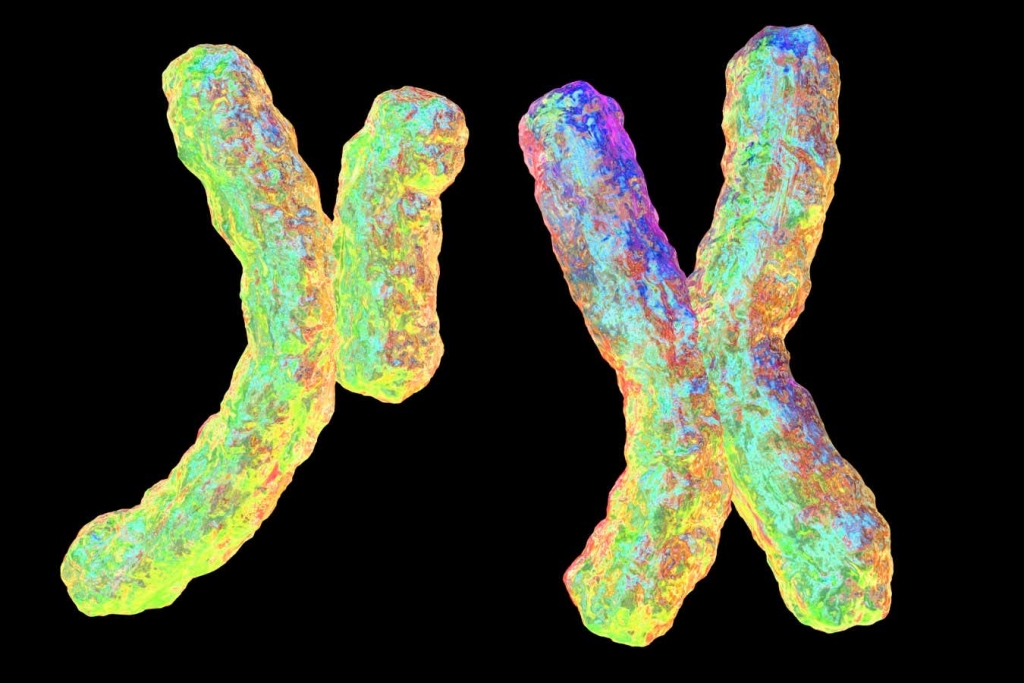
Title: The Mysterious Case of the “Selfish” Y Chromosome: Nature’s Hidden Battle for Gender Control
In a groundbreaking discovery that could rewrite our understanding of human genetics, researchers from the University of Utah have uncovered evidence of a “selfish” Y chromosome that may be actively influencing the gender ratio of offspring in a single family spanning seven generations. This revelation not only sheds light on a long-standing biological mystery but also raises profound questions about the hidden evolutionary battles waged within our own DNA.
The Discovery: A Family Skewed by Nature’s Hand
The story begins with an unusual pattern observed in a family tree stretching back to the 1700s, meticulously documented in the Utah Population Database. Over seven generations, 33 men inherited the same Y chromosome, and their 89 children were strikingly imbalanced: 60 boys and only 29 girls. This 2:1 ratio defies the expected 50:50 probability of male and female births, suggesting an underlying biological mechanism at play.
James Baldwin-Brown, a geneticist at the University of Utah and lead researcher on the study, describes the finding as “a very significant family.” He explains that while selfish genes—those that prioritize their own survival over the organism’s overall fitness—have been identified in various species, they are notoriously difficult to study in humans. “This is a rare opportunity to observe such a phenomenon in our own species,” Baldwin-Brown notes.
The Science Behind the “Selfish” Chromosome
To understand the implications of this discovery, we must first delve into the mechanics of human reproduction. In most mammals, including humans, male cells contain one X and one Y chromosome. During the formation of sperm, these chromosomes are supposed to be distributed equally, resulting in a 50% chance of either a male or female offspring. However, certain genetic variants can disrupt this balance, creating what scientists call “selfish” chromosomes.
These selfish chromosomes employ various strategies to skew the sex ratio in their favor. Some interfere with the ability of sperm carrying the opposite chromosome to navigate toward the egg. Others go a step further, actively destroying sperm that do not carry them. As Nitin Phadnis, another researcher involved in the study, puts it, “That’s a 100-year-old question that we’re still working on today.”
Evolutionary Battles: X vs. Y
The discovery of a potentially selfish Y chromosome in this Utah family hints at a broader evolutionary conflict between the X and Y chromosomes. In some species, these chromosomes engage in a kind of genetic arms race, each evolving mechanisms to outcompete the other. For instance, a selfish X chromosome might produce toxins that kill Y-bearing sperm, while the Y chromosome counters with an antidote.
While such battles have been observed in animals like mice, their existence in humans has remained elusive—until now. The Utah family’s skewed gender ratio provides compelling evidence that similar dynamics may be at play in our own species.
The Challenges of Proving the Theory
Despite the intriguing findings, the researchers face significant hurdles in confirming their hypothesis. The data from the Utah Population Database is anonymized, preventing direct genetic analysis of the individuals involved. Baldwin-Brown expresses a desire to sequence the sperm of living descendants to better understand the mechanism at work, but ethical and logistical challenges make this a daunting task.
SaraH Zanders, a geneticist at the Stowers Institute for Medical Research, offers a cautious perspective. While she finds the study’s findings intriguing, she emphasizes the need for larger sample sizes to rule out statistical noise. “I would like to think that the team has found a selfish Y chromosome,” she says, “but the numbers are still too small to be sure.”
Zanders also raises the possibility of misassigned paternity, a common issue in genealogical studies. However, Baldwin-Brown counters that the robustness of the data makes this unlikely to fully explain the observed pattern.
Broader Implications: Beyond Academic Curiosity
The discovery of a selfish Y chromosome is not merely an academic curiosity; it has far-reaching implications for human health and reproduction. Phadnis points out that such chromosomes could contribute to the surprisingly high rates of male infertility. A mechanism that destroys half of all sperm would naturally reduce fertility, and studies in animals have shown that selfish chromosomes can lead to infertility in some individuals.
The researchers plan to analyze sperm samples from living descendants to look for skewed ratios of X- and Y-bearing sperm. This could provide further evidence of the chromosome’s selfish behavior and its impact on fertility.
The Future of Genetic Research
The study of selfish chromosomes is part of a broader field exploring gene drives—genetic elements that can spread through populations at rates higher than expected by chance. While natural gene drives have been observed in animals, CRISPR gene-editing technology has enabled scientists to create artificial gene drives with potential applications in controlling disease vectors like mosquitoes or managing invasive species.
As researchers continue to unravel the mysteries of our genetic code, the discovery of a selfish Y chromosome serves as a reminder of the complex and often hidden forces shaping our biology. It also underscores the importance of interdisciplinary collaboration, combining genetics, evolutionary biology, and data science to tackle some of the most profound questions about life itself.
Viral Tags and Phrases:
- “Selfish Y chromosome”
- “Nature’s hidden battle for gender control”
- “Evolutionary arms race within our DNA”
- “The mystery of skewed gender ratios”
- “Genetics meets genealogy”
- “CRISPR and the future of gene drives”
- “Infertility and the selfish chromosome connection”
- “The Utah family’s genetic secret”
- “X vs. Y: The ultimate genetic showdown”
- “Unlocking the secrets of human reproduction”
This discovery not only captivates the imagination but also opens new avenues for research into the intricate dance of genetics that shapes our lives. As scientists continue to explore these hidden mechanisms, we may find ourselves on the brink of a new era in understanding the very essence of what makes us human.
,


Leave a Reply
Want to join the discussion?Feel free to contribute!